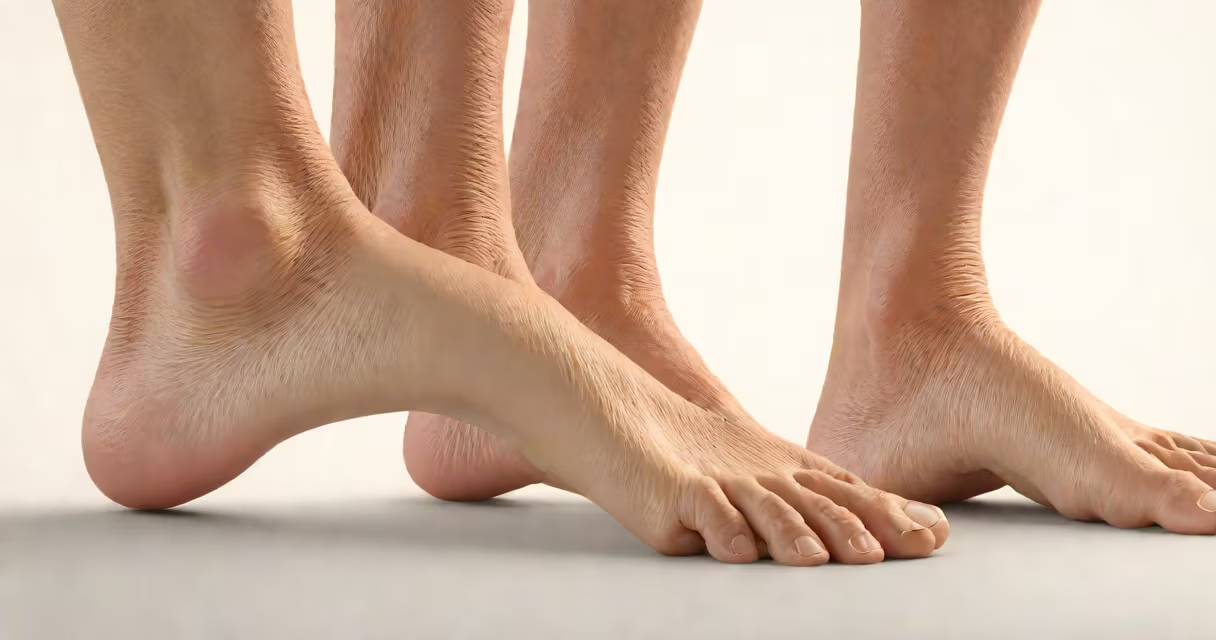
Swollen stiff ankles refer to a condition where both swelling and reduced mobility occur in the ankle joints, typically due to fluid accumulation (edema) or inflammation affecting soft tissues and joints. This combination of puffiness and limited movement can indicate underlying health issues ranging from minor trauma to serious systemic diseases.
Swelling arises when excess fluid builds up in the tissues around the ankle. Stiffness results from pressure on nerves and joints, or from joint inflammation. Together, they impair walking, standing, or wearing shoes comfortably. The condition may affect one or both ankles and often worsens throughout the day, especially after prolonged sitting or standing.
Common triggers include injury, arthritis, venous insufficiency, heart failure, kidney dysfunction, or liver disease. Persistent or worsening symptoms require medical evaluation to rule out life-threatening conditions such as deep vein thrombosis (DVT) or congestive heart failure.
Fluid accumulation in the lower extremities occurs when the body's circulatory or lymphatic systems fail to return blood and interstitial fluid efficiently to the heart. Gravity pulls fluid downward, accumulating in the feet and ankles. This process is known as dependent edema.
When capillaries leak fluid into surrounding tissue, swelling begins. Inflammation from conditions like rheumatoid arthritis or gout can cause joint stiffness and pain. Prolonged immobility, such as during long flights or bed rest, increases risk by slowing circulation.
A 2021 study published in Journal of the American Heart Association found that bilateral ankle swelling was present in 68% of patients hospitalized with acute heart failure. The study linked swelling severity to poor prognosis, emphasizing early diagnosis.
Swollen stiff ankles fall into two broad categories: localized and generalized. Localized swelling usually stems from injury or infection. Generalized swelling often signals systemic illness.
| Type | Typical Causes | Key Features |
|---|---|---|
| Localized | Sprain, strain, gout flare-up, cellulitis | One ankle affected, redness, warmth, sudden onset |
| Generalized | Heart failure, kidney disease, liver cirrhosis, medication side effects | Bilateral swelling, pitting (indent remains after pressing), gradual onset |
Pitting edema-where pressure leaves a temporary dent-is a clinical sign of fluid overload. Non-pitting swelling suggests tissue fibrosis or chronic inflammation, often seen in longstanding untreated conditions.
Medications such as calcium channel blockers (used for high blood pressure) and NSAIDs (like ibuprofen) can cause ankle swelling as a side effect. A 2020 review in Pharmacotherapy reported that 1 in 12 patients on amlodipine developed significant edema within six months.
Swollen stiff ankles that appear suddenly, especially with chest pain, shortness of breath, or rapid weight gain, may signal heart failure or DVT. These require urgent attention. DVT can lead to pulmonary embolism-a potentially fatal complication.
Red flags include unilateral swelling with warmth and redness, which may indicate infection or deep vein thrombosis. Gout-related swelling often presents acutely in the big toe but can extend to the ankle, causing intense pain and stiffness.
I experienced this firsthand while hiking in the Rockies. After a long descent, my right ankle swelled rapidly and became painful to move. A doctor diagnosed a mild sprain, but the stiffness persisted beyond a week. Further imaging revealed early signs of osteoarthritis-something I hadn't considered despite being under 40.
Swollen stiff ankles are often mistaken for simple fatigue or aging. However, swelling that doesn't improve with elevation or rest is not normal. Some people confuse it with varicose veins, which involve enlarged, twisted surface veins but do not typically cause stiffness.
Another confusion arises with diabetic neuropathy. While nerve damage can cause foot swelling, it usually lacks the visible puffiness and joint restriction seen in edema. Diabetic patients may have "stocking-glove" numbness without swelling.
Not all swelling is caused by fluid. Tumor growth or cysts can mimic swelling but don't respond to diuretics or elevation. Imaging such as ultrasound or MRI is needed to differentiate structural causes.
Doctors begin with a physical exam, checking for pitting, skin changes, and symmetry. Blood tests assess kidney function (creatinine, BUN), liver enzymes, and electrolytes. Urinalysis screens for protein loss, a sign of kidney disease.
Echocardiography may be ordered if heart failure is suspected. Doppler ultrasound detects DVT. For joint-related causes, X-rays or MRI evaluate cartilage and bone integrity.
Treatment depends on the root cause. Diuretics reduce fluid retention in heart or kidney disease. Compression stockings support venous return. Anti-inflammatory drugs manage arthritis flares.
When swelling affects both ankles and is accompanied by fatigue, shortness of breath, or abdominal bloating, liver disease should be evaluated. Elevated bilirubin and low albumin levels are key indicators. Extremely swollen ankles may reflect advanced portal hypertension.
Wearing supportive footwear and avoiding prolonged standing reduces mechanical stress. Regular walking improves circulation. Limiting sodium intake to less than 2,300 mg/day-ideally 1,500 mg for those with fluid retention-helps prevent swelling.
Compression socks, worn during travel or long shifts, reduce the risk of edema. Elevating the legs above heart level for 20 minutes twice daily can relieve mild swelling.
One non-obvious fact: ankle swelling can precede a heart attack by weeks. A 2019 study in European Heart Journal found that new-onset bilateral ankle swelling predicted cardiac events in 31% of patients within 12 months, even without chest pain.
Early intervention prevents complications. Ignoring swelling risks skin breakdown, ulceration, and permanent joint damage. If swelling persists beyond 48 hours or worsens, consult a healthcare provider.
Swollen stiff ankles are not just a nuisance-they're a warning sign. Understanding their causes and acting promptly improves recovery and prevents progression to serious illness.