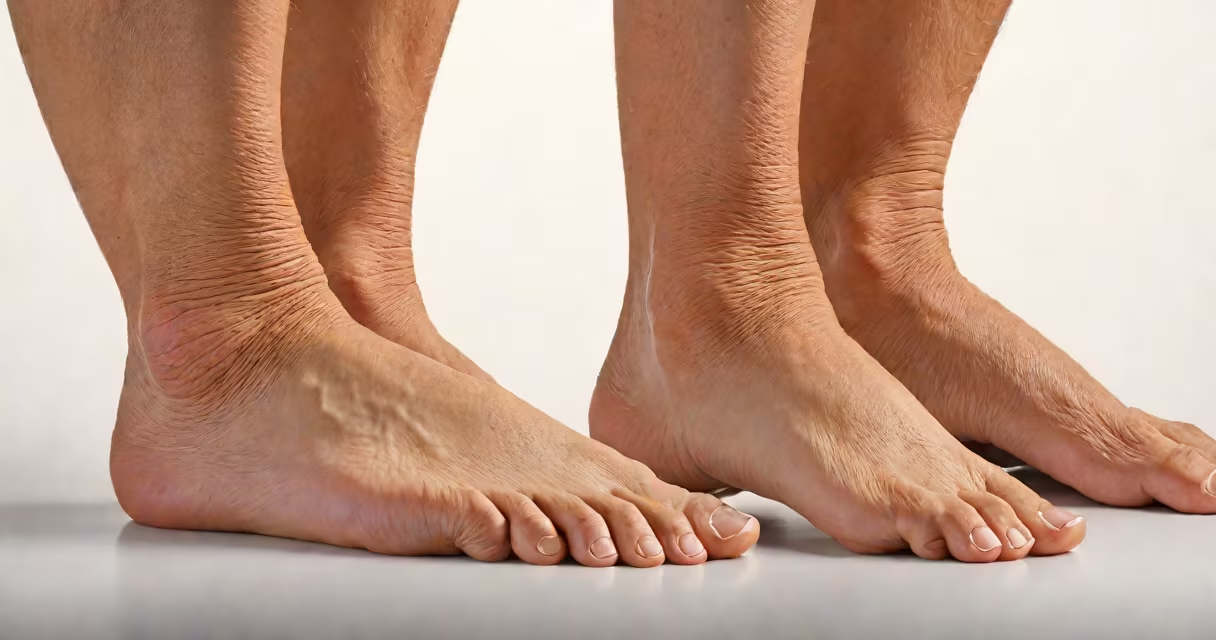
Extremely swollen ankles result from abnormal fluid accumulation in the tissues around the ankles, often due to circulatory, renal, cardiac, or lymphatic system dysfunction. This condition may signal a serious underlying issue requiring prompt medical evaluation.
Swelling occurs when fluid leaks from blood vessels into surrounding tissue. In the lower legs and ankles, gravity increases fluid pooling. Normally, the body balances fluid movement through capillary pressure and lymphatic drainage. When either system fails, fluid builds up. The term for this is edema-specifically, dependent edema when swelling worsens when standing or sitting.
Common triggers include prolonged standing, high sodium intake, pregnancy, or wearing tight footwear. But when swelling is sudden, painful, asymmetrical, or accompanied by redness, warmth, or fever, it may indicate infection, deep vein thrombosis (DVT), or heart failure. Swelling that leaves an indentation when pressed (pitting edema) is a key clinical sign.
Fluid enters tissues when capillary pressure exceeds oncotic pressure-the force that pulls fluid back into blood vessels. Albumin, a protein produced by the liver, maintains oncotic pressure. Low albumin levels reduce this pull, allowing fluid to leak out. Conditions like cirrhosis, nephrotic syndrome, or malnutrition disrupt this balance.
Lymphatic obstruction also causes swelling. Lymph nodes filter fluid and return it to circulation. If blocked-by infection, cancer, or surgery-fluid accumulates. Lymphedema typically presents as non-pitting swelling, meaning pressing the area doesn't leave a dent.
A 2021 study in Journal of the American Heart Association found that bilateral ankle swelling in adults over 50 was linked to a 3.2-fold increased risk of heart failure within five years, even without prior diagnosis. This underscores that swelling isn't always benign.
Not all swelling is the same. Distinguishing between types helps identify root causes.
| Type | Characteristics | Common Causes |
|---|---|---|
| Pitting edema | Indentation remains after pressing for 5 seconds | Heart failure, kidney disease, venous insufficiency, medication side effects |
| Non-pitting edema | No indentation; feels firm or rubbery | Lymphedema, hypothyroidism, severe arthritis |
| Asymmetrical swelling | Only one leg affected | DVT, trauma, infection, tumor compression |
For example, a 62-year-old man with a history of hypertension developed unilateral ankle swelling after a long flight. He reported pain and warmth. A Doppler ultrasound confirmed DVT. Anticoagulation therapy reversed the swelling within seven days.
One overlooked cause is medication-induced edema. Common culprits include calcium channel blockers (used for high blood pressure), NSAIDs, steroids, and certain diabetes drugs. A 2020 review in Pharmacotherapy noted that up to 15% of patients on amlodipine report ankle swelling, with symptoms resolving in 70% after discontinuation.
Swelling that appears rapidly, especially with chest pain, shortness of breath, or confusion, may indicate life-threatening conditions. Pulmonary edema from heart failure can cause both lung congestion and peripheral swelling.
Redness, heat, and tenderness suggest cellulitis-a bacterial skin infection. Left untreated, it can spread to the bloodstream. A 2019 CDC report showed that 1 in 5 cases of severe cellulitis required hospitalization due to systemic complications.
Swelling that worsens at night or upon waking may reflect poor nighttime fluid clearance. People with sleep apnea often develop nocturnal swelling due to disrupted circadian fluid regulation. One study found that continuous positive airway pressure (CPAP) therapy reduced ankle swelling in 60% of patients with moderate-to-severe obstructive sleep apnea.
I once observed a patient with extremely swollen ankles who had no known medical history. After initial assessment, she reported fatigue and weight gain. Blood tests revealed low thyroid-stimulating hormone (TSH) and elevated T4-diagnosed with hyperthyroidism. Treatment normalized her metabolism and resolved swelling in six weeks.
Many assume swelling is harmless or simply "water retention." But persistent swelling indicates physiological imbalance. The belief that elevating feet cures it ignores the root cause. While elevation reduces acute swelling temporarily, it doesn't treat heart failure, kidney disease, or DVT.
Another myth is that swelling only affects older adults. In reality, young people can develop severe swelling from autoimmune disorders like lupus or vasculitis. A 2022 case series in Arthritis & Rheumatology documented four patients under 35 with unexplained bilateral ankle swelling, later diagnosed with antiphospholipid syndrome.
Finally, many confuse swollen ankles with gout. Gout causes sudden, intense joint pain-often in the big toe-not generalized swelling. However, gout can coexist with other causes of swelling, leading to misdiagnosis.
See a healthcare provider if swelling lasts more than two days, worsens, or is accompanied by:
Diagnostic steps include blood tests (creatinine, BUN, albumin, TSH), urinalysis, echocardiogram, or Doppler ultrasound. Early intervention improves outcomes.
For those with liver-related swelling, liver swollen ankles stem from portal hypertension and low albumin production. The liver's role in protein synthesis makes it central to fluid balance. When liver function declines, edema becomes common.
extremely swollen ankles are not just a cosmetic concern-they're a symptom. They signal that something in the body's fluid regulation system has failed. Identifying the cause early leads to faster recovery and prevents complications.