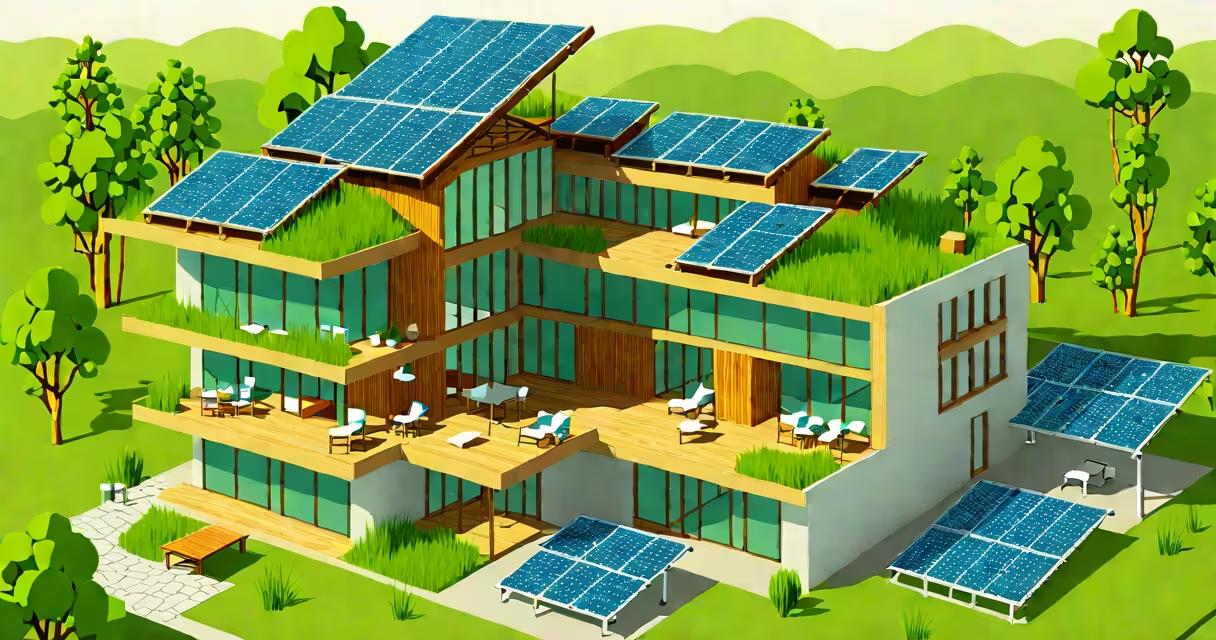
sustainable construction methods are building techniques that minimize environmental harm by using renewable resources, reducing waste, and lowering energy consumption throughout a structure's lifecycle. These approaches prioritize long-term ecological balance over short-term cost savings.
These methods begin with material selection. Instead of virgin concrete or steel, builders use reclaimed wood, recycled steel, or low-embodied-energy alternatives like cross-laminated timber (CLT). For example, the Bullitt Center in Seattle uses CLT for its structural frame-a material that stores carbon rather than releasing it during production. The building generates its own electricity via rooftop solar panels and treats all wastewater on-site.
Energy efficiency is another core principle. Buildings constructed with passive design strategies-such as optimal window placement, thermal mass walls, and natural ventilation-reduce reliance on mechanical heating and cooling. A study by the U.S. Department of Energy found that buildings designed with passive solar principles use 20-30% less energy than conventional structures.
Water conservation is embedded in many sustainable systems. Rainwater harvesting systems collect runoff for irrigation or toilet flushing. Low-flow fixtures and drought-resistant landscaping further reduce demand. The California Academy of Sciences in San Francisco collects rainwater in a 360,000-gallon underground cistern to supply 90% of its non-potable water needs.
| Type | Key Features | Real-World Example |
|---|---|---|
| Passive Design | Orientation, shading, insulation, natural airflow | Bullitt Center, Seattle |
| Material Reuse | Recycled steel, reclaimed wood, salvaged bricks | Reclaimed warehouse conversion in Brooklyn |
| On-Site Renewable Energy | Solar PV, geothermal heat pumps, wind turbines | Net-zero home in Austin, Texas |
| Waste Reduction | Modular construction, prefabrication, precise cutting | Modular apartment complex in Portland |
Common misconceptions equate sustainability with high costs or limited aesthetics. In reality, many sustainable methods lower lifecycle expenses. A 2021 report from the World Green Building Council showed that green-certified buildings have 14% lower operating costs and 30% higher asset value than standard buildings.
Another frequent error is treating sustainability as a single feature-like installing solar panels-rather than a complete system. True sustainability integrates site planning, material sourcing, energy use, water management, and indoor air quality. The Living Building Challenge requires projects to meet rigorous standards across seven performance categories, including net-positive energy and water use.
One non-obvious distinction: not all "green" materials are equally sustainable. Bamboo grows quickly and regenerates after harvest, making it a popular choice. But if transported thousands of miles, its carbon footprint may exceed that of locally sourced timber. The key is life-cycle analysis-not just raw material origin.
I once visited a school renovation project in Denver where contractors replaced asbestos-insulated drywall with recycled cellulose insulation. The team measured indoor VOC levels before and after. Pre-renovation readings averaged 120 ppb (parts per billion); post-renovation, they dropped to 35 ppb. Students reported fewer headaches and improved concentration within weeks.
These methods differ from traditional construction in their focus on long-term outcomes. Conventional builds often prioritize speed and upfront cost. Sustainable construction values durability, adaptability, and reduced environmental burden over decades. The U.S. Green Building Council's LEED certification program evaluates projects across nine categories, including location, energy, water, and materials.
Some confuse sustainable construction with "greenwashing"-marketing claims without measurable impact. A building labeled "eco-friendly" due to a single solar panel may still consume excessive energy annually. Verified certifications like LEED, BREEAM, or Living Building Challenge ensure accountability through third-party audits.
For example, the Edge in Amsterdam holds the highest LEED Platinum score ever recorded. Its smart lighting system adjusts based on occupancy and daylight levels. The building uses 70% less electricity than comparable office spaces and produces more energy than it consumes.
When selecting sustainable construction methods, consider regional climate, local regulations, and available labor skills. A method effective in arid climates-like rammed earth walls-may fail in humid regions due to moisture retention. Local expertise matters as much as technical specs.
These methods aren't limited to new builds. Retrofitting existing structures with insulation upgrades, efficient HVAC systems, and solar integration extends building lifespans and reduces demolition waste. The U.S. EPA estimates that 90% of construction waste comes from demolition, not new construction.
Understanding sustainable construction methods begins with recognizing that they're not a single technique but a structure for decision-making. From material choices to operational design, every phase contributes to environmental resilience.