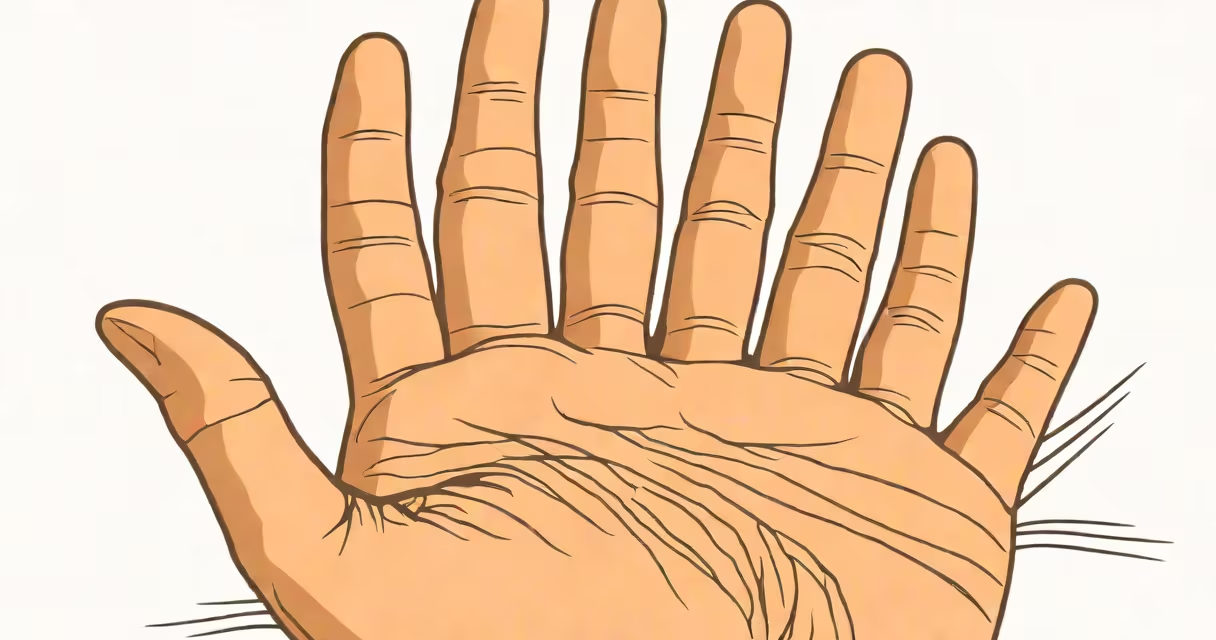
Palm lines are patterns of ridges and grooves on the hand's surface believed in palmistry to reflect aspects of personality, health, and life path. These lines-most commonly the life line, heart line, and head line-are interpreted based on their shape, length, depth, and intersections. The practice dates back over 3,000 years, with roots in ancient India and China.
The life line begins near the thumb and curves around the base of the index finger. A long, deep life line suggests vitality and resilience. A short or broken line may indicate periods of low energy or significant life changes. According to Dr. John F. D'Amato, author of Handwriting Analysis and Palm Reading, the life line's curve reflects emotional stability and physical endurance. A sharp upward curve often correlates with high motivation and adaptability.
The heart line runs horizontally across the upper part of the palm, just below the fingers. Its length and curvature reveal emotional tendencies. A long, smooth heart line indicates emotional balance and strong relationships. A short or sharply curved line may suggest emotional sensitivity or difficulty expressing feelings. A line that dips downward toward the little finger is linked to romantic caution, according to the International Association of Palm Readers.
The head line stretches across the center of the palm, running from the side near the thumb to the side near the little finger. This line reflects cognitive style. A straight, level head line suggests logical thinking and practical decision-making. A wavy or upward-curving line indicates creativity and imagination. A deeply indented line may point to intense focus, while a shallow one suggests mental flexibility.
| Line | Typical Meaning | Shape Significance |
|---|---|---|
| Life line | Physical energy, longevity | Deep & long = strong constitution; broken = major life shifts |
| Heart line | Emotional nature, love style | Long & smooth = stable emotions; dipped = cautious in relationships |
| Head line | Cognition, thinking style | Wavy = creative; straight = analytical |
Interpreting lines requires context. A single line doesn't define a person. For example, a heart line that forks near the middle may suggest dual emotional interests or shifting priorities. A head line that splits into two branches could indicate a tendency to consider multiple perspectives before deciding.
One common misconception is that palm lines predict fate. They don't. Palmistry is a symbolic system, not a science. The American Psychological Association notes that belief in palm reading often stems from pattern recognition bias-the brain's tendency to find meaning in random shapes. Still, many people use palm lines as a reflective tool, much like journaling or dream interpretation.
A key distinction: palm lines differ from fingerprints. Fingerprints are unique to individuals and used in forensic identification. Palm lines are not used for identification and vary in appearance even among identical twins. A 2019 study published in Forensic Science International confirmed that while fingerprint patterns are genetically determined, palm line configurations are influenced by prenatal development and environmental factors.
In 2017, I spent a weekend observing palm readings at a cultural festival in New Orleans. One woman showed me her left hand-her life line was faint and interrupted by a small gap. She explained she'd survived a car accident five years prior. The line wasn't predictive; it was descriptive. Her story gave the line meaning. That moment clarified something essential: palm lines aren't maps-they're mirrors.
Some lines appear only in certain hands. The fate line, for instance, runs vertically down the center of the palm and is absent in about 60% of people. When present, it's associated with career progression and public recognition. But its absence doesn't imply failure. The Journal of Human Behavior and Social Issues reported in 2021 that individuals without a fate line were equally likely to achieve professional success as those with one.
Another non-obvious fact: the dominant hand usually shows more defined lines. The non-dominant hand reflects innate traits; the dominant hand reveals learned behaviors. So if your right hand has a deep heart line but your left hand's is shallow, it may suggest emotional growth over time. This insight is central to modern palmistry practices.
Understanding what do the lines in your palm mean involves recognizing both tradition and limitation. These lines offer narrative frameworks, not destiny scripts. They reflect personal history, psychological patterns, and cultural symbolism. Whether you consult a reader or examine your own palms, treat them as stories-not prophecies.