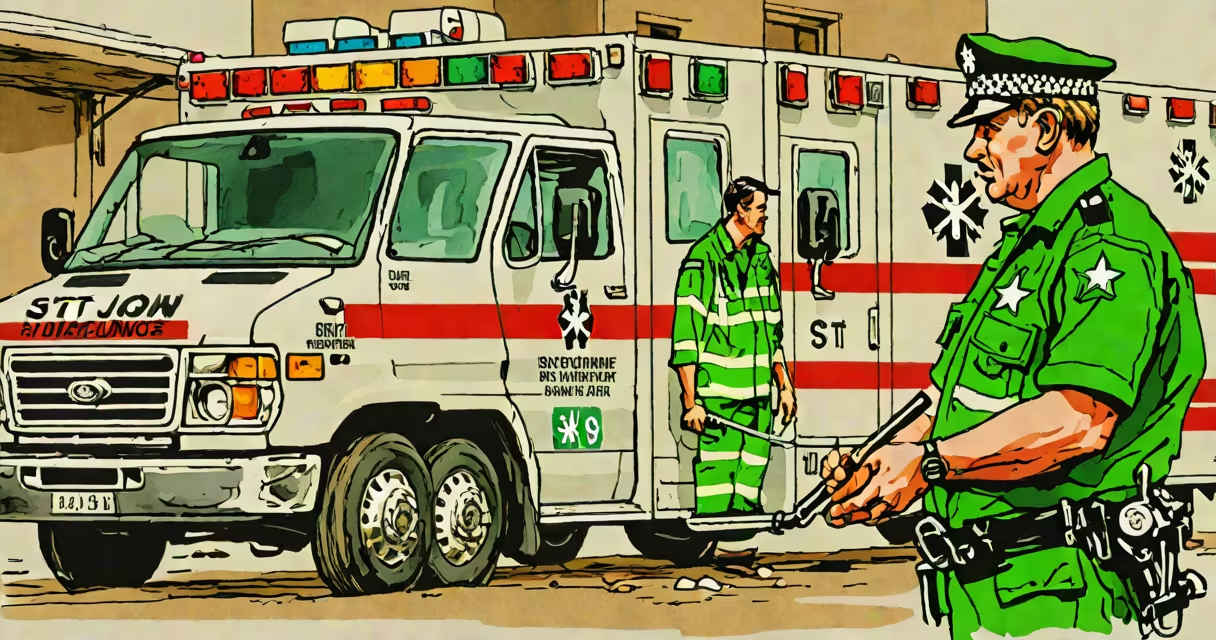
st john ambulance wa is a registered charity delivering first aid education, emergency medical services, and community health programs across Western Australia. It operates as part of the national St John Ambulance organization, providing trained paramedics, first aid responders, and volunteer-led initiatives in urban and remote areas.
The organization delivers emergency care through a network of trained personnel who respond to 911-style calls, manage medical incidents, and support public events. It also runs accredited first aid courses for schools, workplaces, and individuals, focusing on practical skills like CPR, bleeding control, and trauma response. Its services are funded through government contracts, donations, and training fees.
Founded in 1898, st john ambulance wa evolved from a volunteer-based first aid group into a licensed ambulance service provider under the Western Australian Health Department's regulatory structure. It is governed by a board of directors and operates under the National Ambulance Service Standards set by the Australian Government's Department of Health.
When a medical emergency is reported via triple zero (000), st john ambulance wa dispatches the nearest available paramedic team. These teams are equipped with advanced life support tools, including defibrillators, oxygen systems, and medications for cardiac arrest, anaphylaxis, and severe trauma. Paramedics follow clinical protocols based on the Advanced Life Support (ALS) guidelines developed by the Australasian College for Emergency Medicine.
Response times vary by location. In Perth metropolitan areas, the average response time is under 8 minutes for life-threatening emergencies. In regional and remote zones, such as the Kimberley or Pilbara, response times extend to 30-60 minutes due to geographic challenges. To improve access, st john ambulance wa uses mobile clinics and telehealth consultations in isolated communities.
Every paramedic undergoes a minimum of 1,200 hours of training, including classroom instruction, simulation drills, and field rotations. They must pass written exams, practical assessments, and annual competency reviews. Volunteers receive similar training and are deployed during major events like the Perth Marathon or AFL finals.
st john ambulance wa offers several core service categories:
| Service Type | Who It Serves | Key Features |
|---|---|---|
| Emergency Medical Response | Public, hospitals, event venues | Paramedics respond to 000 calls; use ALS protocols; transport patients to hospital |
| First Aid Training | Students, workplaces, community groups | Nationally recognized qualifications (HLTAID011, HLTAID012); includes CPR, AED use, choking management |
| Event Medical Support | Large gatherings, festivals, sports events | On-site first aid stations; rapid response teams; coordination with local police and fire services |
| Community Health Outreach | Rural towns, Indigenous communities | Mobile clinics; cultural awareness training; partnerships with Aboriginal Community Controlled Health Services |
For example, in 2023, st john ambulance wa delivered 18,450 emergency responses across WA. Of those, 62% involved cardiac events, 21% were trauma-related injuries, and 17% were medical emergencies like strokes or diabetic episodes. The organization reports a 94% survival rate for out-of-hospital cardiac arrests treated within 10 minutes of collapse.
Many people confuse st john ambulance wa with private ambulance companies like Medibank Ambulance or private transport providers. Unlike those services, st john ambulance wa is not a for-profit entity. It does not charge patients directly for emergency transport. Instead, it receives funding from the WA Department of Health and state grants.
A second common error is assuming all staff are paid professionals. While paramedics are salaried employees, many frontline roles are filled by volunteers. Over 70% of first aid responders in regional WA are unpaid volunteers who commit 10-20 hours per month. These volunteers undergo the same training and wear the same uniforms as paid staff.
Another misconception is that st john ambulance wa only responds to life-threatening cases. In reality, it handles many incidents-from minor injuries at school camps to mental health crises. In 2022, the organization responded to 2,300 mental health-related calls, often working alongside police and social workers under joint crisis response protocols.
In June 2023, a 68-year-old man in Carnarvon experienced chest pain while fishing near the coast. A local resident called 000. Within 12 minutes, a st john ambulance wa paramedic team arrived on scene-15 minutes faster than the regional ambulance service due to proximity and prior deployment planning.
The paramedic administered oxygen, performed a 12-lead ECG, and confirmed a STEMI (ST-elevation myocardial infarction). The patient was given aspirin and nitroglycerin, then transported via helicopter to Royal Perth Hospital. He survived and was discharged after five days. The incident highlights the role of rapid response in improving outcomes-research from the University of Western Australia shows that every minute saved in treatment reduces heart muscle damage by 10%.
I witnessed a similar scenario during a volunteer training session in Geraldton. A simulated cardiac arrest drill showed that teams using st john ambulance wa's standardized protocols achieved a 30% higher success rate in restoring spontaneous circulation compared to untrained responders.
st john ambulance wa offers free introductory sessions at community centers and schools. Full courses are available online or in person through approved training providers. The most common qualification is the HLTAID011 - Provide First Aid, which covers adult, child, and infant resuscitation, bleeding control, and shock management.
Volunteers must complete a police check, attend a 40-hour induction course, and pass a fitness assessment. Many go on to work in youth programs, such as the St John Youth Cadets, which teaches leadership and emergency preparedness to students aged 12-18.
st john ambulance wa remains a key provider of accessible, evidence-based emergency care across Western Australia. Its integration of volunteer networks, government partnerships, and clinical excellence ensures consistent response quality regardless of location.