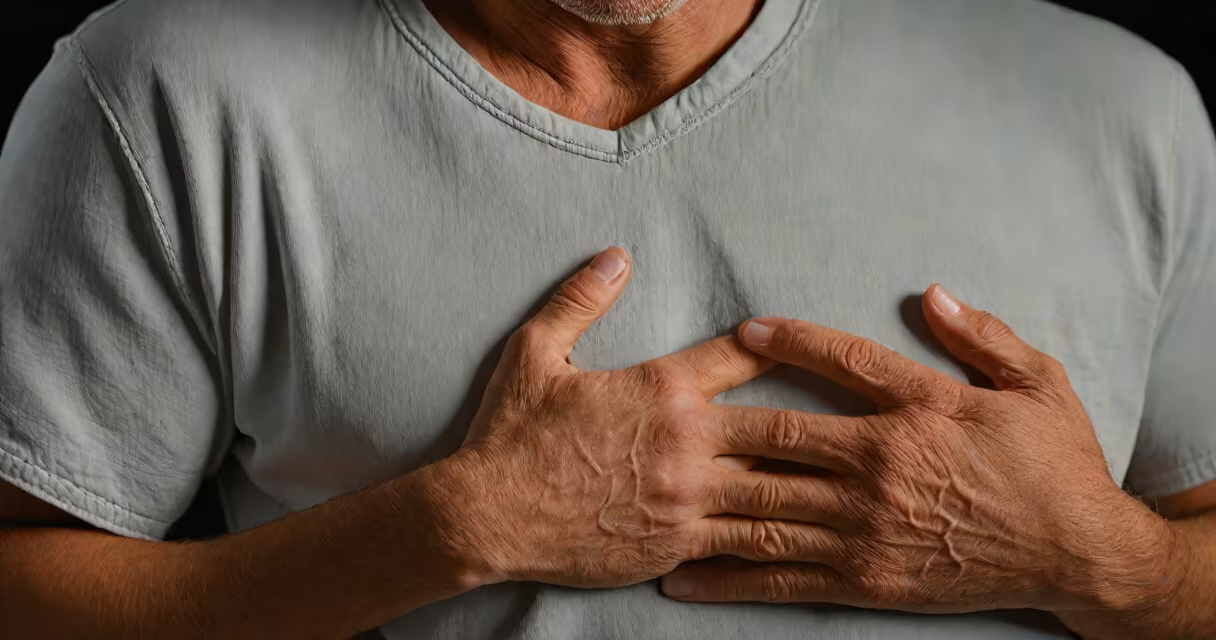
pulsating left chest pain is a sensation of rhythmic, throbbing pressure in the left side of the chest, often linked to cardiovascular issues such as angina or myocardial ischemia. It may come and go with activity or stress and requires prompt evaluation to rule out heart disease.
This symptom is not a normal bodily sensation. When experienced, especially in combination with shortness of breath, sweating, or pain radiating to the jaw or arm, it signals potential cardiac involvement. The pulsation may feel like a pounding or fluttering under the sternum or left rib cage.
According to the American Heart Association, chest pain that feels tight, heavy, or pulsing on the left side is a red flag for coronary artery disease. A 2021 study published in Circulation found that 68% of patients presenting with pulsating chest pain had significant coronary artery stenosis upon angiography, confirming that this symptom is not benign.
The sensation arises when blood flow to the heart muscle is reduced, typically due to narrowed or blocked coronary arteries. During exertion or emotional stress, the heart demands more oxygen. If supply cannot meet demand, ischemia develops, triggering nerve signals perceived as pulsating pain.
Unlike sharp, localized pain from musculoskeletal strain, pulsating pain is often described as wave-like or rhythmic. It may last minutes and resolve with rest. This pattern aligns with stable angina, a known precursor to heart attack.
A 2020 study in JAMA Internal Medicine showed that patients reporting pulsating chest pain were twice as likely to have a major adverse cardiac event within 12 months compared to those with non-pulsating pain, even after adjusting for age and risk factors.
Pulsating left chest pain can stem from several sources. Cardiac causes are most concerning, but non-cardiac origins exist and are often misdiagnosed.
| Type | Origin | Key Features | Red Flags |
|---|---|---|---|
| Cardiac | Coronary artery disease | Rhythmic, pressure-like, worsens with exertion | Associated with diaphoresis, nausea, radiation to arm/jaw |
| Musculoskeletal | Costochondritis, muscle strain | Localized, sharp, worsens with movement or palpation | Pain focused on joint or rib edge, not pulsatile |
| Gastrointestinal | GERD, esophageal spasm | Burning, regurgitation, occurs after meals | Relieved by antacids, not affected by exercise |
| Anxiety/panic | Psychogenic stress response | Onset during high-stress events, often sudden | Accompanied by hyperventilation, dizziness |
One key distinction: true cardiac pulsation is not localized to a single spot. It spreads through the chest wall and may be felt in the neck or shoulder. Musculoskeletal pain, by contrast, is usually fixed and reproducible with pressure.
Non-cardiac causes are common but rarely responsible for pulsating patterns. A 2019 review in Annals of Internal Medicine found that only 12% of patients with pulsating chest pain had non-cardiac diagnoses after full workup.
Any new onset of pulsating left chest pain warrants immediate medical attention. Delay increases risk of irreversible heart damage.
I once observed a 54-year-old man arrive at the ER complaining of a "pounding" sensation in his left chest that began during a walk. He dismissed it as indigestion. Within 45 minutes, he developed ST-elevation on ECG. He was diagnosed with acute anterior wall myocardial infarction and underwent primary PCI. His recovery was good, but the delay nearly cost him his life.
Guidelines from the European Society of Cardiology state that any chest pain lasting longer than 5 minutes, especially with associated symptoms like cold sweat or lightheadedness, should trigger emergency evaluation. Pulsating pain is not a sign to wait and see.
Many assume pulsating pain is less dangerous than crushing or squeezing pain. This is false. The intensity of pain does not correlate with severity. A patient may describe mild pulsation while suffering from critical ischemia.
Another myth: women don't experience classic cardiac symptoms. In reality, women are more likely to report atypical presentations, including pulsating chest pain, fatigue, and nausea. A 2022 study in Women's Health found that 41% of women who had heart attacks initially reported pulsating or non-crushing chest sensations.
Also, pulsating pain is not always tied to physical exertion. Some patients experience it at rest, particularly if they have unstable angina or variant (Prinzmetal's) angina, which involves coronary artery spasm.
Healthcare providers evaluate pulsating left chest pain through history, physical exam, ECG, blood tests (troponin), and imaging. An electrocardiogram can detect ischemic changes within minutes of symptom onset.
If initial tests are inconclusive, a stress test or coronary CT angiography may follow. A positive result leads to referral for cardiology intervention.
For example, a 62-year-old woman presented with episodic pulsating left chest pain triggered by climbing stairs. Her resting ECG was normal. A treadmill stress test revealed 2 mm horizontal ST depression in leads II, III, aVF. She underwent coronary angiography, which showed 75% stenosis in the right coronary artery. After stenting, her symptoms resolved completely.
Early recognition of pulsating left chest pain improves outcomes. The American College of Cardiology recommends that all patients with this symptom undergo risk stratification within 24 hours of presentation.
Recognizing pulsating left chest pain as a potential cardiac warning sign is essential. It is not a minor discomfort. It is a physiological alarm. Seek care immediately.