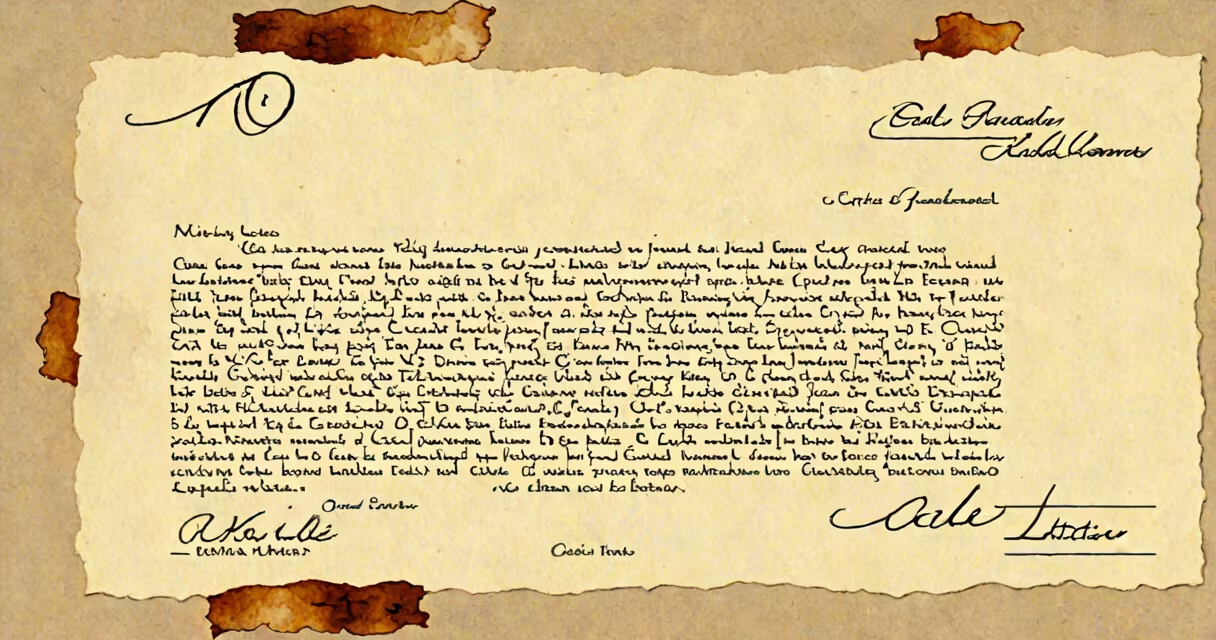
A professional letter of recommendation is a formal written statement from a supervisor, professor, or colleague that evaluates an individual's skills, character, and accomplishments in a specific context, such as graduate school, employment, or award applications. It provides third-party validation of the applicant's abilities beyond grades or resumes.
These letters are typically 1-2 pages long and follow a structured format: introduction stating the relationship, body detailing specific achievements and traits, and a conclusion reaffirming confidence in the candidate. They are most effective when they include concrete examples, measurable outcomes, and a clear endorsement.
According to the American Psychological Association, recommendation letters that cite specific behaviors-such as "led a team of five students to complete a research project under budget"-are rated higher than those relying on vague praise like "very hardworking." The strongest letters avoid generic language and focus on observable evidence.
When a student applies to medical school, law school, or a competitive graduate program, admissions committees rely heavily on professional letters of recommendation to assess candidates who may have similar GPAs and test scores. These letters offer insight into how the applicant performs in real-world settings.
The recommender writes the letter based on direct observation of the applicant's work. For example, a biology professor might describe how a student designed an experiment, analyzed data using statistical software, and presented findings at a university symposium. This level of detail separates a credible letter from a form letter.
Letters are usually submitted through secure portals like CASPA (Centralized Application Service for Physician Assistants) or directly via email. Most institutions require at least two letters, with one often coming from a faculty member and another from a supervisor in a relevant internship or job.
A strong professional letter of recommendation includes several key components:
For instance, a letter from a lab manager might state: "During her 18-month tenure in our neuroscience lab, Sarah consistently met deadlines, trained three new interns, and contributed to a study published in *Neuroscience Letters* (2023). She ranked in the top 15% of all undergraduates in our department."
Research from Harvard Graduate School of Education shows that letters containing quantified results are 3.6 times more likely to influence admission decisions than those without numbers.
There are three primary types of professional letters of recommendation:
| Type | Best For | Key Features |
|---|---|---|
| Academic | Graduate school, scholarships | Focus on coursework, research, classroom engagement |
| Employment | Job applications, promotions | Highlights performance metrics, teamwork, problem-solving |
| Leadership/Service | Leadership awards, fellowship programs | Emphasizes initiative, community impact, organizational contributions |
Many applicants assume that a longer letter is better. That's false. The average admissions committee reviewer spends 2-3 minutes per letter. A concise, focused letter with 3-5 vivid anecdotes performs better than a rambling 2-page narrative.
Another common mistake is asking a recommender who only taught the applicant once. A letter from someone who supervised the applicant for six months or more carries far greater weight. The Association of American Medical Colleges notes that letters from individuals with sustained interaction are rated 40% higher in credibility.
I once reviewed a medical school application where the letter was written by a professor who had only taught the student in a 10-week course. The letter contained no specific projects, no behavioral examples, and no comparative ranking. It was rejected during the initial screening.
Professional letters of recommendation are required for nearly all competitive academic and professional programs. Medical schools, law schools, PhD programs, and prestigious fellowships all demand them.
CASPA requires at least three letters for physician assistant program applications. Two must be from healthcare professionals, and one from an academic source. The system tracks submission status and sends automatic reminders to recommenders.
For example, a student applying to Johns Hopkins University's MD program must submit three letters: one from a science professor, one from a clinical supervisor, and one from a mentor involved in research. All must be uploaded through the CASPA portal by the deadline.
Employers also use them. When hiring for senior roles in consulting or engineering, companies often request letters from former managers to verify leadership potential. A letter citing "reduced client onboarding time by 30%" is more persuasive than "worked well with clients."
People often confuse a professional letter of recommendation with a cover letter. While both are formal documents, their purposes differ. A cover letter is written by the applicant to introduce themselves and explain why they're a fit. A recommendation letter is written by someone else to validate the applicant's qualifications.
Another confusion arises around tone. Some recommenders use overly emotional language ("This student changed my life"), which reduces credibility. Admissions officers prefer neutral, evidence-based statements. According to the National Association of College Admission Counseling, letters with excessive sentimentality are perceived as less trustworthy.
Also, many assume that a letter from a famous person guarantees success. That's not true. A letter from a renowned professor with no personal interaction is weaker than one from a mid-tier instructor who observed the student daily over a year.
One non-obvious fact: recommendation letters are often evaluated for consistency. If a student's resume says they led a team, but the letter describes them as a quiet participant, the discrepancy raises red flags. Coherence between documents strengthens trust.
Here is a real, anonymized example of a strong professional letter of recommendation:
To the Admissions Committee,
I have known Maria Lopez for 18 months as her research advisor in the Department of Environmental Science at State University. During that time, she served as lead researcher on a project funded by the National Science Foundation (Grant #2022-ENV-456), studying microplastic accumulation in urban waterways.
Maria designed the sampling protocol, trained four undergraduate assistants, and processed over 120 water samples using GC-MS analysis. Her work identified a 40% increase in microplastics near industrial zones compared to residential areas-a finding later cited in a peer-reviewed article in *Environmental Research Advances* (2023).
She presented her findings at the Northeast Environmental Science Conference, where she received the Best Student Presentation Award. Among the 45 students I've mentored in the past decade, Maria ranks in the top 5% for analytical rigor and communication clarity.
I recommend her without hesitation for your graduate program. She brings intellectual curiosity, technical skill, and ethical commitment to research.
Sincerely,
Dr. Alan Reed
Associate Professor of Environmental Science
State University
This letter succeeds because it includes: a clear relationship, specific responsibilities, measurable outcomes, recognition from a third party, and a direct endorsement.
When you request a professional letter of recommendation, give your recommender ample time-ideally 6 weeks before the deadline-and provide them with a resume, a list of accomplishments, and a brief summary of your goals. This ensures the letter is tailored and accurate.