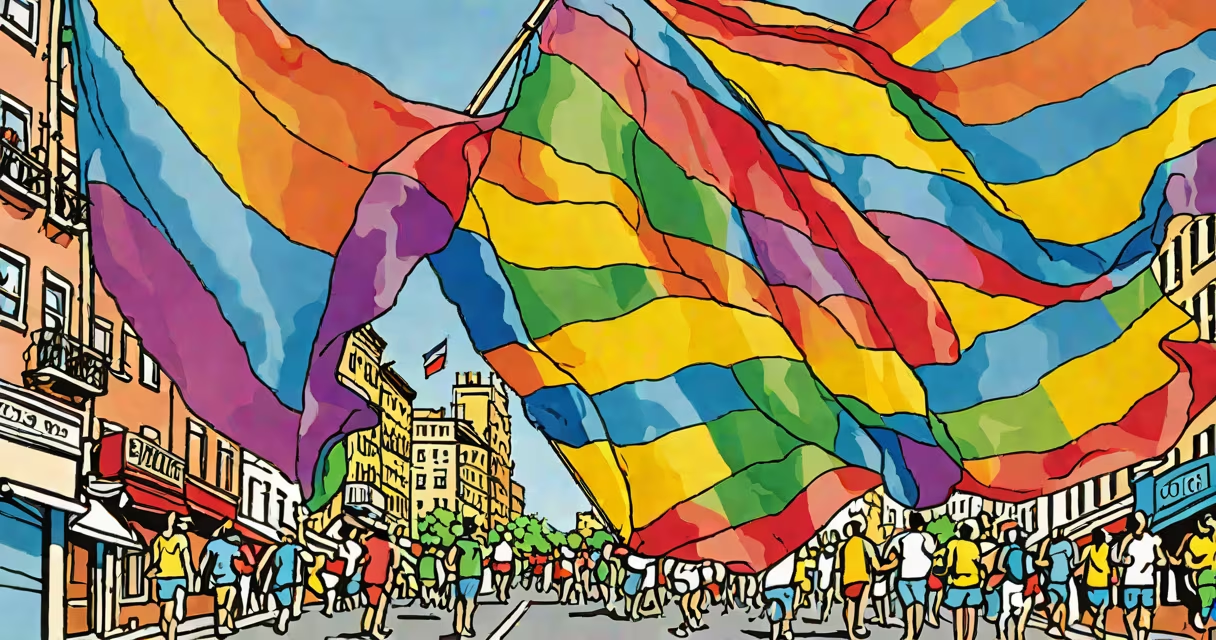
The pride parade flag is a visual symbol of LGBTQ+ identity, unity, and resistance, most widely recognized as the rainbow flag. Its colors represent diversity, inclusion, and the spectrum of human gender and sexual expression. The original design was created in 1978 by Gilbert Baker, who selected eight colors from the rainbow to embody different aspects of life and identity.
Modern pride parade flags extend beyond the original eight-color version. They include updated designs such as the progress pride flag, which adds a chevron with purple, pink, and white stripes to represent transgender and non-binary individuals. These flags are displayed during parades, protests, and public events to affirm visibility and demand equality. Their presence signals both celebration and political statement.
Flags are not interchangeable. The rainbow flag originated as a protest symbol during the gay rights movement. The progress pride flag, introduced in 2018, reflects evolving understandings of gender and sexuality. The blue and black pride flag, often seen at events focused on mental health and suicide prevention, represents mourning and resilience within the LGBTQ+ community. Each variation serves a distinct purpose and audience.
Pride parade flags function as collective identifiers. They communicate belonging, visibility, and advocacy simultaneously. When flown at large gatherings, they create a shared visual language that transcends spoken communication. A single flag can signal support, identity, or political alignment.
Design choices are deliberate. Colors are chosen for their cultural and psychological associations. Red stands for life, orange for healing, yellow for sunlight, green for nature, blue for serenity, and violet for spirit. The addition of the chevron in the progress pride flag includes red, pink, and white-colors associated with transgender identities and inclusivity. These elements are not arbitrary; they stem from community input and historical context.
Flags are displayed at events worldwide. In New York City's annual Pride March, thousands wave handmade versions alongside official banners. In Berlin, pride flags cover entire buildings during the Christopher Street Day celebrations. Their consistent use reinforces global recognition and strengthens transnational solidarity among LGBTQ+ communities.
Different flags serve different identities and narratives. The following table outlines major types, their origins, and meanings:
| Flag Type | Colors | Origin Year | Meaning and Purpose |
|---|---|---|---|
| Rainbow Flag | Red, orange, yellow, green, blue, violet | 1978 | Original LGBTQ+ symbol; represents diversity and unity. Created by Gilbert Baker. |
| Progress Pride Flag | Rainbow with purple, pink, white chevron | 2018 | Includes transgender and non-binary representation. Designed by Daniel Quasar. |
| Blue and Black Pride Flag | Blue and black | 2016 | Represents mental health awareness and suicide prevention. Used in LGBTQ+ communities facing high rates of depression and self-harm. |
| Transgender Pride Flag | Light blue, pink, white | 1999 | Created by Monica Helms. Blue for boys, pink for girls, white for those who are transitioning or intersex. |
Each flag has a documented origin. The progress pride flag, for example, was designed by Daniel Quasar, a non-binary activist, in response to growing demands for greater inclusion of transgender and non-binary people within mainstream LGBTQ+ spaces. The chevron replaces the traditional rainbow's center, drawing attention to marginalized voices.
Some flags are region-specific. In Japan, the "rainbow with a heart" variant is common, reflecting local interpretations of love and acceptance. In South Africa, pride flags often incorporate indigenous patterns and colors to reflect cultural diversity. These adaptations show that while the rainbow remains central, local expressions shape how symbols are understood.
Many assume the rainbow flag is a universal symbol of all LGBTQ+ identities. This is incorrect. While widely adopted, it was originally intended to represent gay men and lesbians. The addition of new colors and symbols reflects a shift toward inclusivity, but not all members of the community identify with the original design.
Another misconception is that pride flags are static. They are not. The progress pride flag replaced earlier versions in many cities after 2018. Some organizations still use the original rainbow flag exclusively, citing tradition. Others have adopted newer designs to reflect current social values. This evolution is ongoing and reflects internal dialogue within the community.
A lesser-known fact: the original rainbow flag had eight colors. Baker chose them based on spiritual and natural themes-red for life, orange for healing, yellow for sunlight, green for nature, blue for harmony, violet for spirit, and two additional colors for creativity and sex. The design was later simplified to six colors due to manufacturing limitations. The original eight-color version is now preserved in museums and used in special displays.
In June 2023, over 100,000 people attended the Los Angeles Pride Parade. Organizers reported that 67% of float participants flew at least one pride parade flag. Among them, 42% used the progress pride flag, 31% used the original rainbow flag, and 12% used the blue and black pride flag.
One float, sponsored by a youth mental health nonprofit, featured a 12-foot-tall blue and black flag. The organization cited CDC data showing that LGBTQ+ youth are nearly five times more likely to attempt suicide than heterosexual peers. The flag served as both memorial and call to action. Attendees reported feeling seen and supported by its presence.
Another example: a drag troupe from San Francisco marched with a custom 18-foot rainbow flag made from recycled fabric. The group collaborated with local artists to incorporate symbols from Indigenous LGBTQ+ cultures. This flag was not mass-produced-it was hand-stitched over four weeks. Its creation process emphasized care, craftsmanship, and community ownership.
I attended my first pride parade in 2019 in Portland, Oregon. I carried a handmade progress pride flag I'd stitched with my sister. We used fabric scraps from old clothes and added embroidery thread to show the chevron. As we walked through downtown, strangers stopped to ask about the flag's meaning. One woman said, "I didn't know the flag had a triangle for trans people." That moment showed me how education happens through symbols-even small ones.