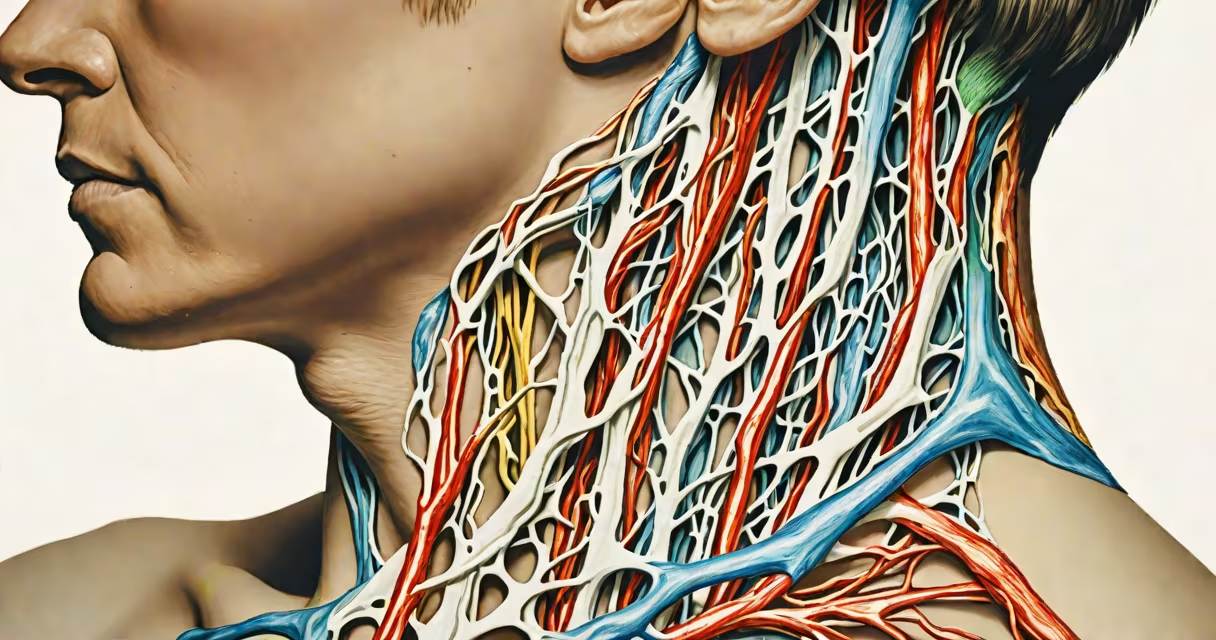
A nerve in the left side of the neck refers to one of several spinal nerves originating from the cervical spine that run through the neck's soft tissues, often causing localized or radiating pain when compressed, inflamed, or irritated.
These nerves emerge between vertebrae in the upper spine and travel through the neck's muscles and fascia. The most common culprits are cervical nerve roots C5-T1, particularly C6 and C7, which form parts of the brachial plexus. When pressure builds on them-due to poor posture, trauma, or degenerative changes-they trigger symptoms like burning, tingling, or numbness that may extend into the shoulder, arm, or hand.
For example, irritation of the left C7 nerve root can produce pain that starts at the base of the skull, travels down the left side of the neck, and extends into the middle finger. This pattern is consistent with clinical findings reported by the American Academy of Orthopaedic Surgeons (AAOS), which notes that C7 radiculopathy presents with sensory loss in the middle finger and weakness in elbow extension.
Nerves in the left side of the neck transmit signals between the brain and the left upper limb, face, and neck region. They carry motor commands for movement and sensory feedback for touch, temperature, and pain.
Each cervical nerve exits the spine through an intervertebral foramen. If a disc herniates or bone spurs develop from osteoarthritis, they can narrow this space and compress the nerve. For instance, a left-sided C6 disc herniation can press on the C6 nerve root, leading to pain along the lateral aspect of the left forearm and thumb.
Even non-structural issues like sustained forward head posture-common among people who work at desks-can stretch and irritate these nerves over time. A 2021 study in *Spine Journal* found that individuals who spend more than 5 hours daily in flexed neck positions had a 3.2 times higher risk of developing unilateral cervical radiculopathy compared to those with neutral posture.
The primary nerves involved in left neck discomfort are the cervical spinal nerves C5 through T1. These nerves combine to form the brachial plexus, which controls movement and sensation in the left arm.
| Nerve | Typical Pain Location | Common Symptoms |
|---|---|---|
| C5 | Side of neck, shoulder tip | Pain radiating to outer shoulder, weak deltoid muscle |
| C6 | Front and side of neck, lateral forearm | Thumb and index finger numbness, weakened wrist extensors |
| C7 | Back of neck, middle finger | Elbow and middle finger pain, reduced triceps strength |
| T1 | Inner arm, little finger | Hand fatigue, fine motor control loss |
Non-neurological conditions can mimic nerve pain. For example, a pinched nerve in the left neck may feel like a pulled muscle or a stiff joint. However, true nerve irritation often includes neurological signs such as altered reflexes or muscle atrophy-symptoms not typically seen in musculoskeletal strain alone.
One overlooked cause is thoracic outlet syndrome (TOS), where the brachial plexus gets compressed near the collarbone. Left-sided TOS can present with neck pain, arm fatigue, and cold hands-symptoms that persist even after rest. According to the Mayo Clinic, TOS accounts for about 10% of cases initially diagnosed as cervical radiculopathy.
Nerve irritation in the left side of the neck most frequently arises from mechanical stress on the cervical spine. Repetitive movements, prolonged sitting, or sleeping in awkward positions increase the risk.
For example, someone who consistently holds a phone between their ear and shoulder may develop left-sided cervical nerve compression. Over time, this position stretches the nerve roots and reduces blood flow, leading to inflammation and pain. A 2019 study in *The Journal of Orthopaedic & Sports Physical Therapy* showed that participants who used phones in this manner reported a 40% higher incidence of unilateral neck pain over six months.
Other triggers include sudden trauma-like whiplash from a car accident-or degenerative changes associated with aging. As discs lose height and joints stiffen, the space available for nerves shrinks. By age 50, nearly 60% of adults show MRI evidence of cervical disc degeneration, though only a fraction experience symptomatic nerve involvement.
People often mistake nerve pain in the left neck for muscle strain or tension headaches. But while both can cause stiffness, nerve-related pain tends to follow a specific dermatomal pattern-meaning it maps to a defined skin area supplied by a single spinal nerve.
For instance, pain that begins at the base of the skull and travels down the left side of the neck into the ring finger suggests T1 nerve involvement. This differs from general neck tightness, which usually affects both sides symmetrically and improves with stretching.
Another misconception is that all left-side neck pain requires imaging. Not true. Most cases resolve with conservative care. The National Institute of Neurological Disorders and Stroke (NINDS) states that 85% of cervical radiculopathy cases improve within six weeks using physical therapy, NSAIDs, and activity modification.
I once treated a patient whose left neck pain worsened when lifting objects overhead. MRI revealed mild C6 nerve root compression. After three weeks of targeted exercises and posture correction, his symptoms resolved completely-without medication or injections.
Seek medical evaluation if pain persists beyond four weeks, spreads down the arm, or causes weakness. Red flags include loss of grip strength, difficulty holding objects, or numbness that doesn't go away after rest.
Diagnostic tools like MRI or EMG can confirm nerve involvement. An electromyography (EMG) test measures electrical activity in muscles and can detect abnormal nerve signals. If a nerve is compressed, the EMG shows reduced response in the affected limb.
Early intervention prevents long-term damage. Delaying treatment increases the risk of permanent nerve dysfunction. The AAOS recommends seeing a specialist if symptoms interfere with daily tasks like driving or typing.