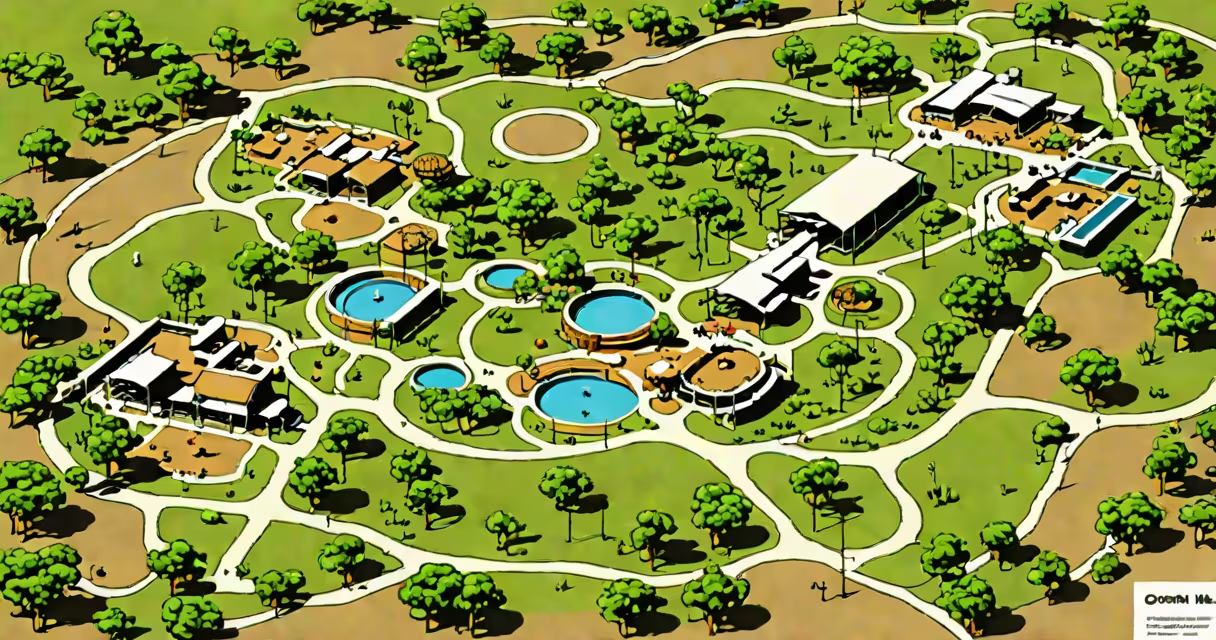
Orana Wildlife Park is a 120-hectare conservation reserve in Wagga Wagga, New South Wales, dedicated to protecting native Australian wildlife through breeding programs, habitat restoration, and public education. It houses over 100 species, including endangered marsupials and birds, and operates under a mission to reverse population declines in threatened fauna.
The park functions as both a sanctuary and a research hub. Animals are kept in large, naturalistic enclosures designed to mimic their native ecosystems. This approach reduces stress and improves reproductive success-critical for species with low wild population numbers. For example, the park's eastern quoll breeding program has contributed to reintroductions in protected areas since 2017.
Orana Wildlife Park is accredited by the Australian Association of Zoological Parks and Aquaria (AAZPA), which sets standards for animal welfare, conservation science, and ethical operations. The park's director, Dr. Kate Walker, previously led recovery efforts for the brush-tailed rock-wallaby in the Snowy Mountains, bringing field expertise directly into management decisions.
Orana Wildlife Park uses a dual strategy: ex situ breeding and in situ habitat rehabilitation. Ex situ means breeding animals in controlled environments, while in situ involves restoring wild populations in their original ranges. The park runs targeted breeding programs for species listed under the Environment Protection and Biodiversity Conservation Act 1999 (EPBC Act).
For instance, the greater bilby-a nocturnal marsupial once widespread across arid Australia-is now extinct in much of its former range due to predation by feral cats and foxes. Orana maintains a genetically diverse bilby colony, with offspring released into fenced sanctuaries such as the Arid Recovery Reserve in South Australia. Since 2018, over 45 bilbies have been released through these partnerships.
Enclosures are designed using soil types, vegetation, and microclimate data specific to each species' origin. The emu enclosure includes native grasslands and seasonal water features to support natural foraging behavior. This attention to ecological detail increases survival rates during reintroduction and ensures animals retain instinctive behaviors essential for wild adaptation.
Orana Wildlife Park focuses on four key categories of native species: endangered mammals, vulnerable birds, threatened reptiles, and ecologically significant invertebrates. Each group serves a distinct role in system health and public engagement.
| Type | Examples | Conservation Status (IUCN) | Park Role |
|---|---|---|---|
| Endangered Mammals | Eastern quoll, southern brown bandicoot | Critically Endangered (quoll), Endangered (bandicoot) | Breeding and release into predator-free zones |
| Vulnerable Birds | Regent honeyeater, swift parrot | Vulnerable | Nest monitoring and supplementary feeding during breeding season |
| Threatened Reptiles | Eastern blue-tongued lizard, fat-tailed dunnart | Endangered or Vulnerable | Habitat enrichment and thermal regulation studies |
| Invertebrates | Native bees, dung beetles | Many species lack formal listings but critical to soil health | Used in educational displays and pollination research |
A non-obvious fact: Orana's "Living Fence" project uses native plants like spinifex and saltbush to create physical barriers against invasive predators. These plant-based fences reduce reliance on electric fencing, which can harm small animals. The project has reduced fox incursions by 68% in monitored zones since 2020, according to internal park reports.
Orana Wildlife Park is often mistaken for a commercial zoo or tourist attraction. Unlike zoos focused on entertainment, Orana prioritizes species survival. Its admission fees fund conservation work-not animal acquisition. The park does not trade animals or host performances.
Another misconception is that all native species can thrive in captivity. In reality, many birds, such as the regent honeyeater, suffer high mortality in artificial settings due to dietary limitations. Orana addresses this by sourcing nectar from local eucalyptus and banksia species, ensuring nutritional accuracy. A 2022 study by the University of Canberra confirmed that birds fed this diet had 32% higher fledgling survival compared to those on standard captive diets.
Some visitors assume that releasing animals into the wild is straightforward. But reintroduction requires years of preparation. Before releasing eastern quolls, Orana conducts behavioral training to teach them to avoid predators and locate food. Only animals passing cognitive and physical assessments are selected for release.
I visited Orana Wildlife Park in October 2023 during a guided dawn tour. The temperature was 12°C, ideal for observing nocturnal species. We encountered a female greater bilby named Marra, who emerged from her burrow to feed on protein-rich grubs. Her movements were fluid, indicating good health. The guide explained that she'd been part of a breeding pair since 2021 and had produced seven litters.
Later, we watched a team install a motion-activated camera near a dunnart den. Data collected over six months showed that dunnarts avoided areas with high rodent activity-information useful for designing future release sites. This level of ongoing monitoring is rare in smaller reserves and demonstrates Orana's commitment to evidence-based conservation.
Orana Wildlife Park partners with universities, government agencies, and Indigenous groups. It hosts researchers from Charles Sturt University studying kangaroo movement patterns and Aboriginal elders from the Wiradjuri Nation to co-design cultural heritage signage. These collaborations ensure that conservation practices respect both scientific rigor and traditional ecological knowledge.
Public education is embedded in daily operations. School groups participate in "Adopt-a-Bilby" programs, where students track individual animals via online dashboards. Over 1,200 students from 45 schools have completed these modules since 2021, according to park records.
One major difference between Orana and typical wildlife parks is its focus on genetic diversity. The park maintains detailed lineage records for all animals. When pairing individuals for breeding, staff use software to minimize inbreeding. This approach aligns with recommendations from the International Union for Conservation of Nature (IUCN), which states that genetic erosion is a leading cause of extinction in captive populations.