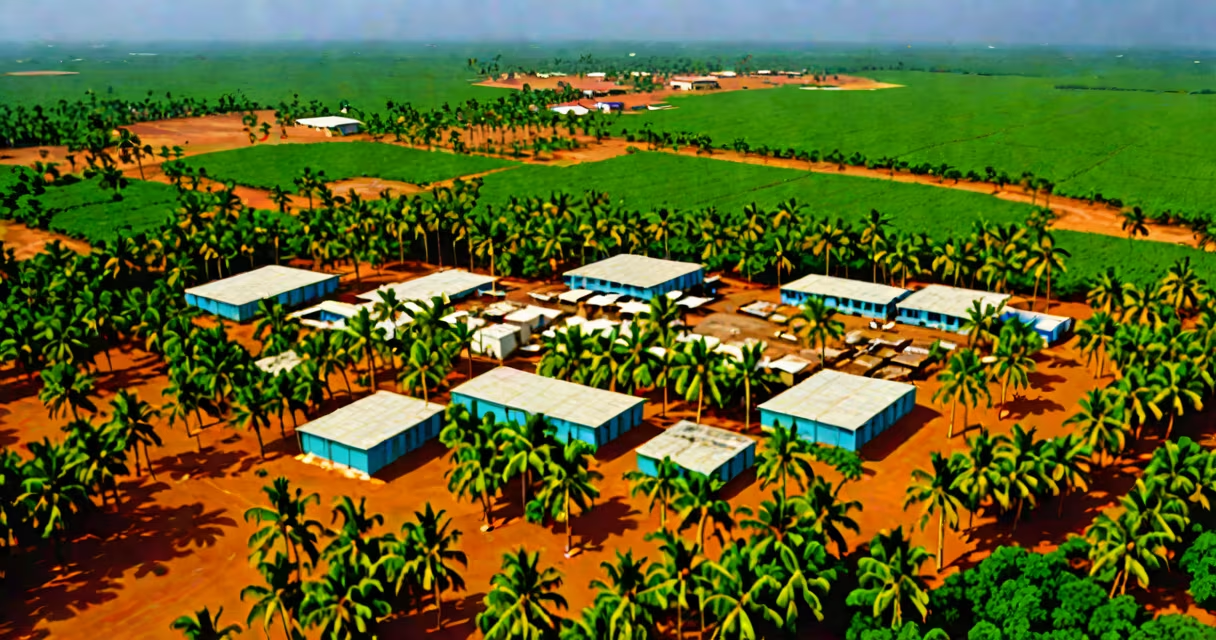
Okomu Oil Palm PLC is a publicly traded Nigerian company engaged in the cultivation of oil palm trees and the production of crude palm oil and palm kernel oil. It operates large-scale plantations primarily in Edo State and manages integrated processing facilities to convert fresh fruit bunches into market-ready oils.
The company was established in 1960 as part of Nigeria's post-independence industrialization drive and became a public limited liability company in 1973. It is listed on the Nigerian Stock Exchange (NSE) under the ticker symbol OKO. Okomu Oil Palm PLC is one of the largest producers of palm oil in West Africa, contributing to national export earnings and domestic food security.
As of 2023, the company owns approximately 23,000 hectares of oil palm plantations and processes around 120,000 tonnes of fresh fruit bunches annually. Its operations span land acquisition, tree planting, harvesting, transportation, and refining. The company supplies raw materials to both local processors and international buyers, including companies in Europe and Asia.
Okomu Oil Palm PLC follows a vertically integrated model. This means it controls multiple stages of production-from growing oil palms to refining the final products. The process begins with planting high-yield hybrid seedlings, typically Elaeis guineensis, which are selected for disease resistance and high oil yield.
After planting, trees take about 3 years to mature and begin bearing fruit. Harvesting occurs every 28 days during peak season. Workers collect fresh fruit bunches using cutlasses and transport them via trucks to central processing stations. At these stations, the fruits are steamed, threshed, and pressed to extract crude palm oil and palm kernels.
Crude palm oil is then transported to refineries where it undergoes degumming, neutralization, bleaching, and deodorization to meet international quality standards. The resulting refined oil is sold to food manufacturers, cosmetics producers, and biodiesel plants. Palm kernels are cracked and processed into palm kernel oil and meal, used in soap making and animal feed.
Okomu Oil Palm PLC manages several key assets across its operational zones:
| Asset Type | Description | Location |
|---|---|---|
| Plantation Estate | Primary oil palm cultivation area; includes nursery, planting, and maintenance zones | Edo State, Southern Nigeria |
| Processing Plant | Facility for steam treatment, pressing, and initial refining of crude oil | Okomu Forest Reserve, Edo State |
| Refinery Complex | Advanced unit for final refining, packaging, and storage | Benin City, Edo State |
| Research & Development Center | Site for testing new hybrid seeds and sustainable farming techniques | Adjacent to main estate |
These facilities are interconnected through internal logistics networks. For example, harvested fruit bunches travel from the estate to the processing plant within 8 hours to maintain oil quality. The company uses GPS-enabled tractors and drone surveys to monitor crop health and improve harvesting schedules.
Okomu Oil Palm PLC contributes about 2% of Nigeria's total palm oil exports. In 2022, the country exported 1.3 million metric tons of palm oil, with Okomu accounting for roughly 26,000 tonnes-second only to Dangote Group's subsidiary, Dangote Palm Oil Limited.
The company supports over 12,000 direct and indirect jobs, including farmers, laborers, engineers, and administrative staff. It also funds community development projects such as school construction, healthcare clinics, and clean water access in host communities near its estates.
A lesser-known fact: Okomu Oil Palm PLC was among the first Nigerian firms to adopt ISO 22000 food safety standards across its entire supply chain. According to the International Organization for Standardization, this certification ensures consistent product safety and traceability from farm to factory.
Many assume Okomu Oil Palm PLC is a government-owned enterprise due to its long history and presence in Edo State. However, it is privately held by a mix of institutional investors and retail shareholders. As of Q1 2023, the top five shareholders included the Nigerian Pension Reform Fund, UBA Asset Management, and foreign investment vehicles based in London and Singapore.
Another misconception is that palm oil production causes deforestation. While global palm oil expansion has led to forest loss in Southeast Asia, Okomu Oil Palm PLC operates exclusively on degraded land previously used for subsistence farming. The company maintains a 30-meter buffer zone around natural forests and replants native tree species on cleared areas.
According to a 2021 report by the Food and Agriculture Organization (FAO), Nigeria's oil palm sector accounts for less than 1% of annual deforestation compared to other crops like cassava and yam. Okomu's sustainability practices align with the FAO's guidelines for responsible agricultural expansion.
In 2022, I visited Okomu's processing plant in Benin City. The facility runs on solar-powered generators and recycles 90% of wastewater for irrigation. During my tour, I observed a batch of fresh fruit bunches being processed: 1 tonne yielded 210 kg of crude palm oil and 45 kg of palm kernels-results consistent with industry benchmarks.
One show was the quality control lab, where samples were tested for free fatty acid levels, moisture content, and color grade. A sample from the morning run had 0.8% free fatty acids-well below the 1.5% threshold required for export to the European Union. This level of consistency is rare among smallholder producers but standard for Okomu Oil Palm PLC.
While many Nigerian agribusinesses focus on single crops like cassava or soybeans, Okomu Oil Palm PLC specializes in oil palm. This specialization allows deeper expertise in soil management, pest control, and yield optimization. For example, the company uses pheromone traps to detect red palm weevil infestations early-preventing up to 30% crop loss annually.
Compared to smaller cooperatives, Okomu benefits from economies of scale. Its average cost per tonne of crude palm oil is $680, versus $820 for smallholder producers. This cost advantage enables better pricing power and reinvestment capacity.
Unlike some firms that rely on contract farming, Okomu maintains direct ownership of its plantations. This gives it greater control over environmental standards and worker welfare. The company reports a 98% retention rate among permanent staff-a figure higher than the national average for agro-industrial firms.