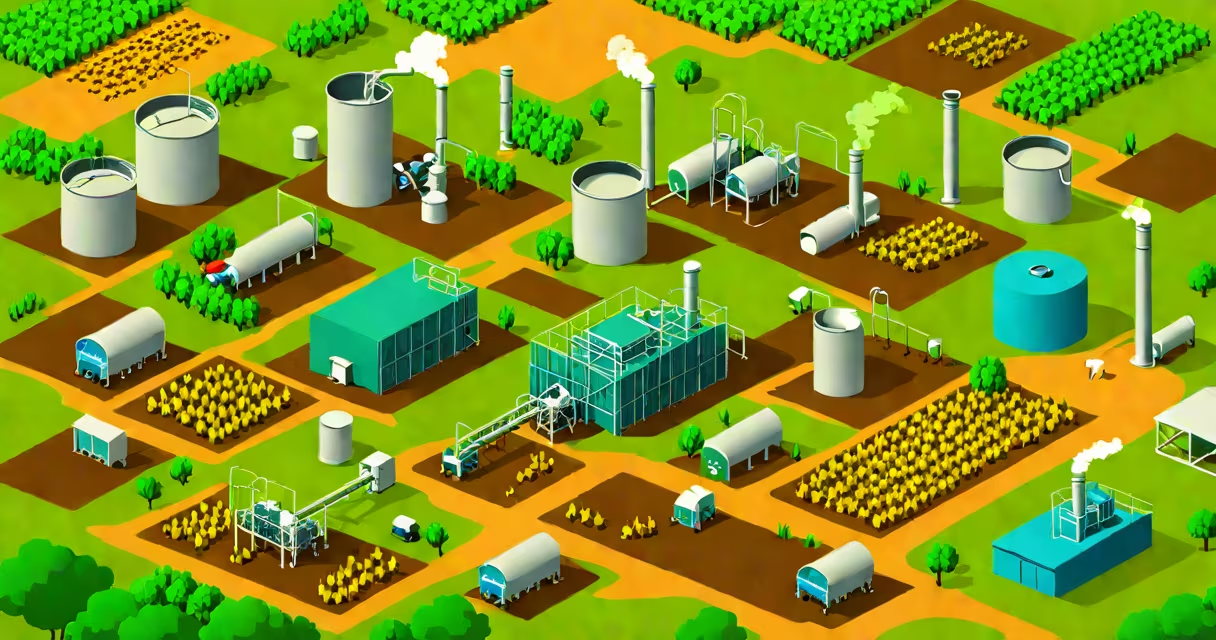
Bio mass waste refers to organic material derived from plants, animals, and food processing byproducts that can be converted into energy through thermal, chemical, or biological processes. It includes crop residues, manure, food scraps, and forestry byproducts. The U.S. Department of Energy estimates that over 1 billion tons of biomass waste are generated annually in the United States alone, much of which ends up in landfills or is burned openly.
Unlike fossil fuels, biomass waste is renewable and carbon-neutral when managed properly. When burned or digested, it releases CO₂, but that CO₂ was recently absorbed from the atmosphere during plant growth, creating a closed carbon cycle. This makes biomass waste a key component in decarbonizing energy systems, especially in rural and industrial settings.
The International Energy Agency (IEA) reports that biomass accounts for 55% of global renewable energy consumption, with waste-based biomass making up a growing share. Countries like Sweden and Germany have integrated biomass waste into district heating networks, reducing dependence on natural gas and coal.
Biomass waste generates energy through three primary methods: combustion, gasification, and anaerobic digestion. Combustion involves burning dry biomass in a boiler to produce steam, which drives turbines to generate electricity. Gasification heats biomass in low-oxygen environments to produce syngas-a mixture of hydrogen, carbon monoxide, and methane-used for power generation or synthetic fuel production.
Anaerobic digestion is the most efficient method for wet or high-moisture waste. Microorganisms break down organic matter in sealed tanks without oxygen, producing biogas rich in methane. This biogas can be burned for heat or upgraded to biomethane for injection into natural gas grids. A typical farm-scale digester processes 100 tons of manure and food waste monthly, generating enough electricity to power 20 homes.
For example, the city of San Francisco's Recology facility uses anaerobic digestion to process 100,000 tons of food waste annually. The resulting biogas powers 15,000 vehicles and supplies 10 megawatts of electricity-enough for 10,000 homes. The digestate, a nutrient-rich sludge, is sold as fertilizer, closing the loop on resource recovery.
Biomass waste falls into four categories based on origin and composition:
| Type | Source | Energy Yield (MJ/kg) | Common Processing Method |
|---|---|---|---|
| Agricultural residue | Corn stover, rice husks, wheat straw | 15-18 | Combustion, gasification |
| Food waste | Restaurant scraps, expired produce | 10-14 | Anaerobic digestion |
| Animal manure | Cattle, poultry, swine | 12-16 | Anaerobic digestion |
| Forestry residues | Tree tops, branches, bark | 18-22 | Combustion, pyrolysis |
Each type requires tailored preprocessing. Crop residues must be dried and shredded to reduce moisture below 20%. Food waste needs screening to remove plastics and metals. Manure often undergoes dilution and pH adjustment before entering digesters. Forestry waste may require chipping and size reduction to ensure consistent feeding.
One overlooked detail: untreated food waste contains high levels of sodium and chlorine, which corrode metal components in gasifiers. A 2022 study by the National Renewable Energy Laboratory (NREL) found that washing food waste streams reduced corrosion rates by 68% in pilot-scale gasifiers.
Biomass waste is deployed in agriculture, urban waste management, and industrial energy systems. In India, small-scale biomass cookstoves using rice husk and cow dung serve 40 million households, replacing kerosene and reducing indoor air pollution. The World Health Organization notes that such stoves cut respiratory illness rates by 30% compared to open fires.
Industrial applications include cement plants using wood chips and waste paper to replace coal. The Holcim plant in Switzerland burns 120,000 tons of biomass waste annually, cutting CO₂ emissions by 140,000 tons per year. These facilities often integrate waste heat recovery systems, boosting efficiency to 85%.
Urban centers use centralized biogas plants to handle municipal solid waste. Oslo's waste-to-energy facility processes 400,000 tons of household and commercial waste yearly. It produces 180 gigawatt-hours of electricity and 300,000 cubic meters of biomethane, fueling public buses and heating buildings.
Bio mass waste is often mistaken for biofuels like ethanol or biodiesel. While both come from organic matter, biofuels are refined liquid fuels made from oils or sugars, whereas biomass waste is raw or partially processed organic material used directly for energy. Ethanol from corn grain competes with food supply; biomass waste does not.
Another myth is that biomass combustion always increases net carbon emissions. The U.S. Environmental Protection Agency (EPA) clarifies that when biomass waste replaces fossil fuels in energy systems, lifecycle emissions drop by 70-90%. For example, replacing coal with wood waste in a power plant cuts CO₂ output by 85% per megawatt-hour.
I once visited a dairy farm in Wisconsin that installed a 500-kilowatt anaerobic digester to process 120 tons of manure monthly. The system produced 2.5 million kilowatt-hours of electricity annually-enough to power 250 homes-and reduced methane emissions by 90%. The farmer reported saving $30,000 in annual energy costs and selling excess power to the grid.
Finally, biomass waste is not a universal solution. Poorly managed systems can release nitrogen oxides and particulates. The European Environment Agency warns that uncontrolled combustion of untreated biomass leads to higher PM2.5 levels than natural gas. Proper emission controls and continuous monitoring are essential.