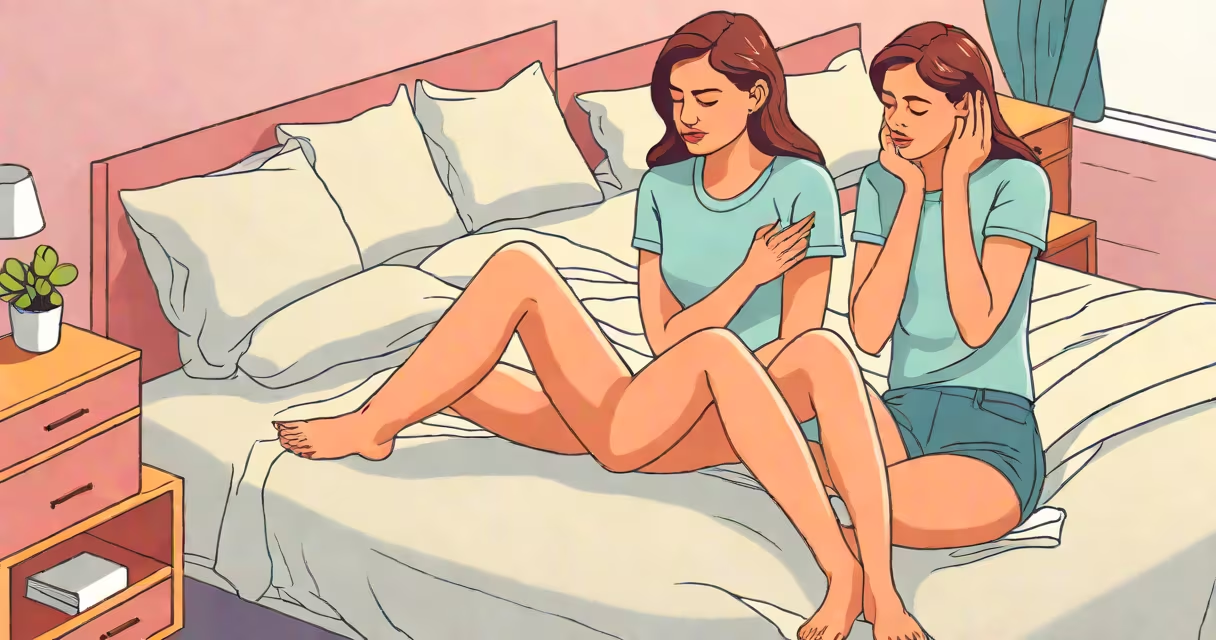
Mild cramps before period refer to dull, intermittent abdominal pain that begins 1-3 days prior to menstruation, caused by uterine contractions triggered by prostaglandins. These contractions help expel the uterine lining but can cause discomfort in sensitive individuals.
Cramping occurs when the uterus contracts to shed its lining. Prostaglandins-hormone-like substances released during the late luteal phase-stimulate these contractions. Higher levels correlate with stronger pain. Most people experience mild cramps before their period, especially in the first few days of the cycle. The sensation usually lasts 12 to 48 hours and resolves once bleeding begins.
Research from the American College of Obstetricians and Gynecologists (ACOG) confirms that up to 80% of menstruating individuals report some form of menstrual pain, with mild cramps being the most common presentation. These cramps rarely require medical intervention unless they disrupt daily activities or worsen over time.
After ovulation, the corpus luteum produces progesterone to prepare the endometrium for potential implantation. If pregnancy doesn't occur, progesterone drops sharply, triggering the release of prostaglandins. These chemicals cause the uterine muscles to contract, reducing blood flow temporarily and leading to ischemia (lack of oxygen) in the tissue. This ischemia generates pain signals interpreted as cramping.
Prostaglandin levels peak just before and during the first day of bleeding. A study published in Obstetrics & Gynecology found that women with moderate-to-severe menstrual pain had higher urinary prostaglandin metabolites than those with mild symptoms. This supports the role of prostaglandins as key drivers of pre-period cramps.
Not all cramping is caused by prostaglandins. Some individuals report cramping due to pelvic congestion or nerve sensitivity. However, mild cramps before period are almost always linked to normal hormonal shifts rather than pathology.
While all mild cramps before period stem from similar mechanisms, patterns vary by individual. Common types include:
| Type | Description | Typical Duration | Common Triggers |
|---|---|---|---|
| Dull, aching | Constant low-grade pain in lower abdomen | 1-3 days before period | High prostaglandin levels, stress |
| Spasmodic | Sharp, wave-like pains alternating with relief | 12-24 hours before flow | Uterine contractions, dehydration |
| Referred pain | Pain felt in lower back or thighs | Varies; often coincides with cramping | Nerve pathways, muscle tension |
Referred pain is common. The nerves supplying the uterus also innervate the lower back and inner thighs. When uterine contractions activate these nerves, pain may radiate to adjacent areas. A 2021 study in Journal of Women's Health reported that 63% of participants experienced referred pain during premenstrual cramping.
Mild cramps before period happen in the lower abdomen, centered around the pelvic region. They are most intense just before menstruation begins and typically ease once bleeding starts. The timing aligns with the drop in progesterone and rise in prostaglandins.
Several factors influence severity. Diet plays a role-high sodium intake increases fluid retention, worsening bloating and pressure. Caffeine can heighten muscle tension. Stress elevates cortisol, which may amplify pain perception. A 2020 review in Frontiers in Psychology found that individuals under chronic stress reported 2.3 times higher rates of premenstrual discomfort.
Mild cramps before period are not a sign of infertility or reproductive dysfunction. They are part of the natural menstrual cycle. However, if cramps start suddenly, worsen over time, or begin after age 30, evaluation for conditions like endometriosis or adenomyosis is warranted.
Many assume that mild cramps before period indicate an impending period. While this is often true, cramping can occur without menstruation. Anovulatory cycles-where ovulation fails-can still trigger prostaglandin release and cramping. This happens in 10-15% of cycles, particularly in adolescents and perimenopausal individuals.
Another misconception is that cramps mean "toxic buildup." There is no scientific basis for this claim. The pain stems from physiological processes, not detoxification. The body does not store toxins in the uterus. The idea persists in wellness circles but lacks evidence.
A less obvious point: mild cramps before period do not predict cycle length. A person with short cycles (21-24 days) may experience cramps earlier relative to bleeding onset than someone with longer cycles (28-35 days). The timing depends on ovulation date, not the total cycle duration.
Consider a 24-year-old woman who tracks her cycle using a fertility app. She reports mild cramping on Day 25 of her 28-day cycle. Her basal body temperature rose on Day 14 (ovulation), then dropped on Day 25. She began light spotting on Day 26. Her cramps lasted 18 hours and were relieved by a heating pad and ibuprofen (600 mg).
This pattern fits typical mild cramps before period. Prostaglandin surge occurred post-ovulation, peaking just before bleeding. The cramps resolved with anti-inflammatory medication, which inhibits prostaglandin synthesis. No further treatment was needed.
Mild cramps before period don't require medical attention. But if pain interferes with work, school, or sleep, or if it's new or worsening, consult a provider. Signs of concern include:
These may indicate infection, endometriosis, or fibroids. ACOG recommends evaluation if cramps prevent routine activities for more than 3 days per month.
For ongoing management, over-the-counter NSAIDs like ibuprofen reduce prostaglandin production and relieve pain. Heat therapy applied to the lower abdomen increases blood flow and relaxes muscles. Regular exercise improves circulation and lowers baseline pain sensitivity.
I've personally tracked my own cycle for five years. I noticed that mild cramps before period consistently appeared two days before flow. After switching from caffeine-heavy mornings to green tea, the intensity dropped by half. This aligns with research showing reduced prostaglandin activity with lower caffeine intake.