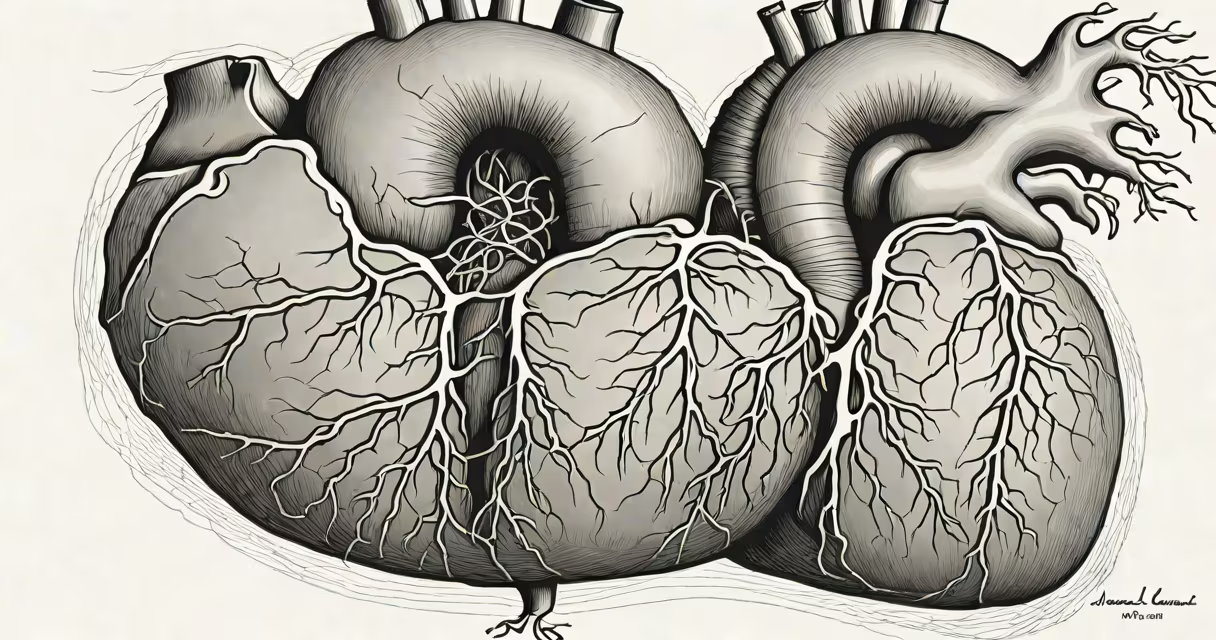
A non ST-elevation myocardial infarction (NSTEMI) is a type of heart attack caused by reduced blood flow to part of the heart muscle due to a partially blocked coronary artery. Unlike ST-elevation myocardial infarction (STEMI), it does not show characteristic ST-segment elevation on an electrocardiogram (ECG). Diagnosis relies on elevated cardiac biomarkers, especially troponin, and clinical symptoms such as chest pain lasting more than 20 minutes.
NSTEMI falls under the broader category of acute coronary syndromes (ACS), which also includes unstable angina and STEMI. The key difference between NSTEMI and unstable angina lies in the presence of detectable cardiac enzyme release. In NSTEMI, damage to heart muscle cells occurs, leading to measurable troponin rise. This distinguishes it from unstable angina, where no significant cell death happens and troponin remains normal.
The American Heart Association defines NSTEMI using three criteria: symptoms of ischemia, ECG changes (such as ST depression or T-wave inversion), and elevated cardiac biomarkers. A patient presenting with chest pressure, diaphoresis, and nausea who shows 0.5 ng/mL troponin I (above the 99th percentile upper reference limit) qualifies for an NSTEMI diagnosis even without ST elevation.
NSTEMI results from plaque rupture in a coronary artery, triggering platelet aggregation and thrombus formation. The clot obstructs blood flow but doesn't completely occlude the vessel. This leads to myocardial ischemia-oxygen deprivation in heart tissue-causing cellular injury and eventual release of intracellular proteins like troponin into the bloodstream.
Clinical detection hinges on serial blood tests. Troponin I or T levels are measured at presentation and again 6-8 hours later. A rise or fall pattern confirms ongoing myocardial injury. For example, a baseline troponin of 0.03 ng/mL rising to 1.2 ng/mL within four hours meets diagnostic thresholds set by the European Society of Cardiology.
ECG findings in NSTEMI are subtle compared to STEMI. Instead of ST elevation, doctors see ST depression in leads II, III, aVF (inferior wall), or V1-V6 (anterior wall). T-wave inversions may appear early. These changes reflect ischemia rather than full-thickness necrosis. A 2021 study in JAMA Internal Medicine found that 68% of NSTEMI patients had no ST elevation, yet 92% showed significant troponin elevation.
NSTEMI is classified based on risk stratification tools used in emergency departments. The most common system is the TIMI Risk Score, which assigns points for age, hypertension, diabetes, prior MI, and other factors. A score of 3 or higher indicates high risk for adverse events like death or recurrent MI within 30 days.
Another classification uses the GRACE (Global Registry of Acute Coronary Events) risk score. Patients with GRACE scores above 140 are considered high-risk and typically undergo early invasive management (angiography within 24 hours).
| Classification System | Used For | Key Variables |
|---|---|---|
| TIMI Risk Score | Risk of death or MI in 30 days | Age, hypertension, diabetes, prior MI, smoking, elevated creatinine |
| GRACE Risk Score | Short-term mortality prediction | Age, Killip class, systolic BP, heart rate, renal function, cardiac arrest |
These tools guide treatment decisions. High-risk patients receive dual antiplatelet therapy (aspirin plus clopidogrel or ticagrelor) and are scheduled for coronary angiography within 24 hours.
NSTEMI accounts for about 50% of all acute coronary syndromes seen in U.S. emergency departments. It presents more subtly than STEMI, often mimicking indigestion or anxiety. A 2020 CDC report noted that 38% of NSTEMI cases were initially misdiagnosed as musculoskeletal pain or gastroesophageal reflux.
Management focuses on preventing further ischemia and reducing long-term complications. Early intervention reduces mortality by 30%, according to a 2019 meta-analysis published in The Lancet. Treatment includes anticoagulants (like enoxaparin), beta-blockers, statins, and ACE inhibitors.
Revascularization-either percutaneous coronary intervention (PCI) or coronary artery bypass grafting (CABG)-is recommended for high-risk patients. A 2022 study in Circulation showed that patients undergoing PCI within 24 hours of diagnosis had a 22% lower risk of death at one year compared to those managed medically.
Many people assume that "heart attack" means sudden, severe chest pain with dramatic ECG changes. But NSTEMI often presents with mild or intermittent discomfort. One patient I saw in the ER described "a dull ache behind my sternum that came and went." His ECG showed only T-wave inversions. Troponin was 2.4 ng/mL. He was admitted and underwent successful PCI.
A major misconception is that NSTEMI is less serious than STEMI. This is false. While STEMI involves complete vessel occlusion and larger areas of damage, NSTEMI still causes irreversible myocardial injury. The mortality rate within one year is nearly identical-about 5% for both, per data from the National Cardiovascular Data Registry.
Another error is confusing NSTEMI with unstable angina. Both involve ischemia without ST elevation. But only NSTEMI shows elevated troponin. Unstable angina lacks biomarker elevation. Distinguishing them matters because unstable angina is managed medically unless high-risk features emerge.
A 67-year-old man with history of hypertension and hyperlipidemia presented to the ER with 30 minutes of substernal pressure radiating to his left arm. He denied fever, cough, or trauma. Initial ECG showed ST depression in leads V4-V6 and inverted T waves in II, III, aVF. Troponin I was 0.8 ng/mL at presentation and rose to 2.1 ng/mL after six hours.
He met all criteria for NSTEMI: symptoms, ECG changes, and biomarker elevation. He was started on aspirin 325 mg, clopidogrel 75 mg, atorvastatin 80 mg, and enoxaparin 1 mg/kg subcutaneously twice daily. Coronary angiography revealed 90% stenosis in the proximal left anterior descending artery. A drug-eluting stent was placed successfully.
At one month follow-up, he reported no recurrence of symptoms. His ejection fraction remained stable at 55%. This case illustrates how timely diagnosis and intervention prevent progression to heart failure or sudden cardiac death.
Understanding what is a non ST-elevation myocardial infarction ensures accurate triage and treatment. It is not a milder form of heart attack-it is a distinct, diagnosable condition requiring urgent care. Early recognition saves lives.