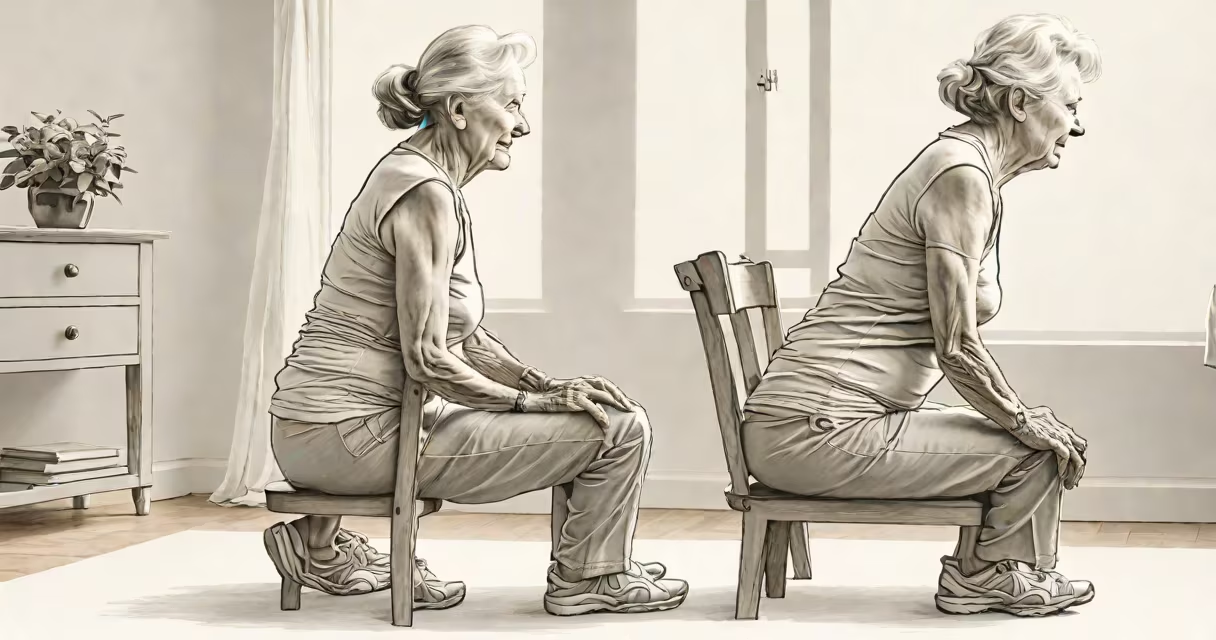
Lower back exercises for elderly are targeted movements designed to strengthen core muscles, improve posture, and reduce chronic pain in adults aged 65 and older. These exercises prioritize safety, joint protection, and functional movement over intensity.
As people age, spinal discs lose hydration, facet joints stiffen, and muscle mass declines-contributing to reduced stability and increased risk of falls. The American Council on Exercise (ACE) notes that 70% of adults over 65 report some form of back discomfort, often linked to poor neuromuscular control and weak stabilizing muscles.
These exercises work by activating deep stabilizers like the transverse abdominis and multifidus-muscles critical for spine alignment during daily tasks such as standing, bending, and walking. They're not about lifting heavy or stretching aggressively. Instead, they focus on controlled motion, breath coordination, and consistent repetition to build resilience.
Each movement targets specific muscle groups that support the lumbar spine. For example, pelvic tilts activate the abdominal wall and glutes while minimizing shear forces on the lower vertebrae. This reduces compression during everyday activities like reaching for objects or getting out of a chair.
Exercises are performed slowly and with full awareness. A 2021 study published in Journal of Aging and Physical Activity found that seniors who practiced mindful movement for 12 weeks showed a 38% improvement in balance and a 29% reduction in self-reported back pain compared to controls.
Proper breathing enhances effectiveness. Inhaling deeply through the nose before a movement and exhaling slowly during exertion increases oxygen delivery to working muscles and reduces strain on the nervous system. This technique is especially useful during seated or lying positions where gravity's pull is minimized.
The following table outlines common lower back exercises for elderly, their primary benefits, and recommended frequency based on guidelines from the National Institute on Aging (NIA).
| Exercise | Primary Muscles Targeted | Frequency | Benefit |
|---|---|---|---|
| Seated Marches | Transverse abdominis, hip flexors | 2 sets of 10 reps, 3x/week | Improves core engagement without spinal loading |
| Pelvic Tilts (lying or seated) | Multifidus, gluteals, rectus abdominis | 3 sets of 12 reps, daily | Reduces anterior pelvic tilt and relieves pressure on L4-L5 |
| Heel Slides (supine) | Hamstrings, lower back extensors | 2 sets of 8 reps, 2x/week | Restores hip range of motion without straining the lumbar spine |
| Wall Angels (standing) | Serratus anterior, rhomboids, deep neck flexors | 2 sets of 6 reps, 3x/week | Corrects forward head posture, which contributes to upper back strain |
These exercises avoid high-impact motions like sit-ups or rapid twisting. They do not require equipment-just a stable chair, a firm surface, and attention to form.
Lower back exercises for elderly are used in clinical settings, assisted living facilities, and home environments. Physical therapists recommend them as part of a conservative treatment plan for degenerative disc disease, osteoarthritis, and postural imbalances.
A 2020 trial at the University of Pittsburgh Medical Center tracked 112 participants over 6 months. Those who completed a structured program of low-impact lower back exercises reported 45% less interference in daily activities due to pain, according to the Oswestry Disability Index.
They're also used preventively. The Centers for Disease Control and Prevention (CDC) states that 1 in 4 older adults fall annually, and many injuries stem from poor trunk control. Strengthening the lower back improves reaction time and balance during sudden shifts in weight.
Many assume that "back pain" means "spinal surgery." That's false. Most cases result from muscular fatigue or poor biomechanics-not structural damage. The NIA confirms that 85% of back pain in older adults resolves within six weeks with non-invasive care.
Another misconception: stretching the hamstrings fixes lower back pain. While tight hamstrings contribute to pelvic tilt, aggressive stretching can worsen nerve tension. A 2019 review in Spine Journal found that combining hamstring flexibility training with core activation produced better outcomes than stretching alone.
Some confuse these exercises with yoga or Pilates. While both involve controlled movement, yoga often includes poses like downward dog or forward fold-positions that increase lumbar flexion and may stress degenerated discs. Pilates focuses on reformer machines and advanced control, which aren't accessible to frail individuals.
Lower back exercises for elderly are distinct because they emphasize minimal joint load, seated or supine positioning, and progressive overload via duration and repetition-not resistance.
Mary had chronic lower back pain for five years. She avoided walking more than 10 minutes and struggled to stand from a seated position. Her physical therapist prescribed a routine including seated marches and pelvic tilts, performed twice daily.
After four weeks, she reported being able to walk to her mailbox unassisted. After eight weeks, her pain score dropped from 7/10 to 3/10 on the Numeric Pain Rating Scale. Her therapist added heel slides to maintain hip mobility. Six months later, she joined a community walking group.
This outcome aligns with research showing that consistent, low-intensity exercise improves functional independence in older adults with chronic back issues.
I observed a 75-year-old man in a senior center perform pelvic tilts during a weekly wellness session. He initially struggled to feel his core engage. After 10 minutes of cueing-"imagine pulling your belly button toward your spine"-he achieved visible contraction. Over three sessions, he began standing taller and reporting less stiffness in the morning.
That moment confirmed what multiple studies show: neural recruitment improves with practice. The brain learns to activate stabilizing muscles even when strength is low.
If pain radiates down the leg, causes numbness, or worsens at night, consult a healthcare provider. These symptoms may indicate sciatica or spinal stenosis-conditions requiring medical evaluation.
Always start slow. Begin with 5-minute sessions and increase duration gradually. Stop if you feel sharp pain or dizziness. Use a sturdy chair with armrests for support.
lower back exercises for elderly are not a quick fix. They are a daily commitment to long-term mobility, dignity, and independence. With consistency, they deliver measurable improvements in quality of life.