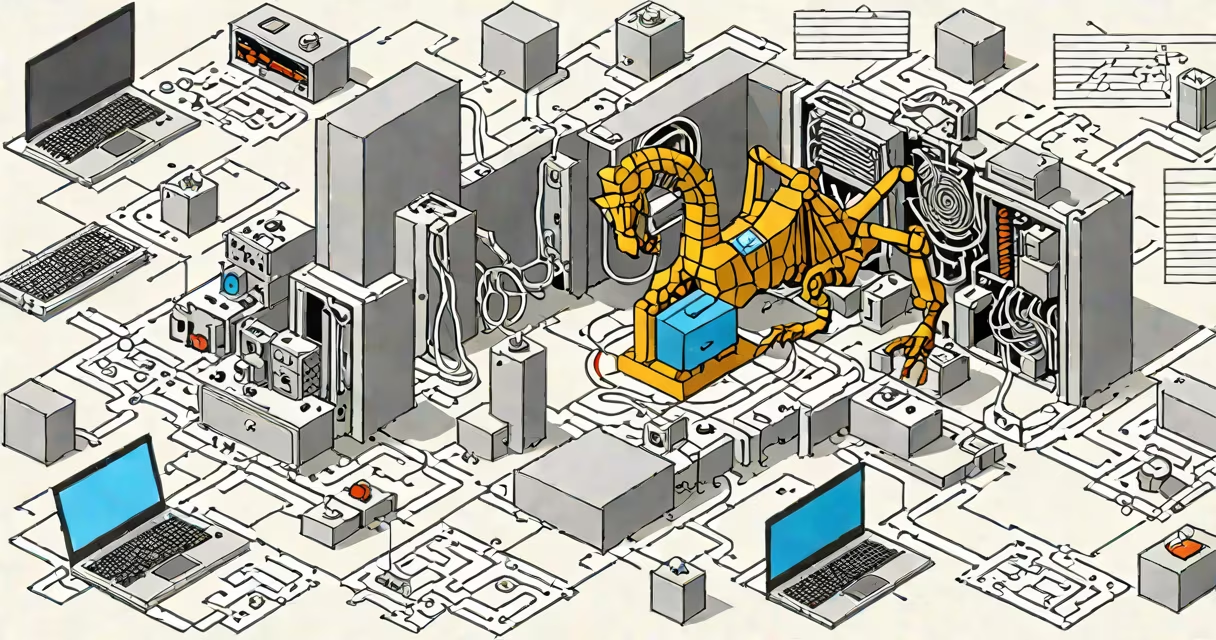
The trojan virus is real-it's a type of malicious software that disguises itself as legitimate software to gain access to a system, then performs harmful actions without the user's knowledge. Unlike viruses or worms, it doesn't replicate itself but relies on deception to infiltrate systems.
Trojans exploit human trust. They appear harmless-like a free game, a fake update, or a document from a trusted sender-but once executed, they open backdoors, steal credentials, or install additional malware. The name comes from the ancient Greek story of the wooden horse used to sneak soldiers into Troy, reflecting how these threats hide inside something trustworthy.
According to the FBI's Internet Crime Complaint Center (IC3), cybercrime losses exceeded $10 billion in 2022, with trojan-based attacks accounting for a significant portion. These attacks aren't theoretical-they've compromised banks, government agencies, and individual users worldwide.
Trojans don't spread automatically. They require user action to activate-usually clicking a file, enabling macros, or downloading an attachment. Once launched, they run in the background, often undetected by standard antivirus tools unless specifically designed to catch them.
After gaining entry, a trojan may perform several tasks: keylogging keystrokes to capture passwords, redirecting web traffic to phishing sites, or connecting to a remote server controlled by attackers. This allows hackers to steal data, install ransomware, or turn the infected device into part of a botnet used for distributed denial-of-service (DDoS) attacks.
A 2021 report by Kaspersky Lab identified over 1.2 million unique trojan samples detected globally in a single year. Many were delivered via email attachments labeled "Invoice.pdf" or "Your Account Statement," mimicking real business communication.
Trojans vary widely in function. Here are common categories:
| Type | Function | Example |
|---|---|---|
| Backdoor trojans | Allow remote access to a system | DarkComet, which gives attackers full control over a victim's machine |
| Banking trojans | Steal financial login details | Zeus, known for targeting online banking sessions |
| Downloader trojans | Install additional malware | Emotet, which spreads through email and downloads ransomware |
| Remote access trojans (RATs) | Enable surveillance and control | NetWire, used in targeted espionage campaigns |
Each type exploits different vulnerabilities. For example, banking trojans often manipulate browser sessions using man-in-the-browser techniques, altering transactions in real time without user awareness.
Many assume trojans are outdated or only affect older systems. That's incorrect. Modern trojans adapt quickly. Some use encrypted communications to avoid detection, while others mimic legitimate processes to blend into system activity.
A common misconception is that trojans spread like viruses. They do not self-replicate. A trojan requires a user to execute it-making social engineering the primary delivery method. Phishing emails, fake software updates, and malicious ads are the most frequent vectors.
Another error: thinking antivirus software always catches trojans. While updated AV tools detect many variants, new trojans emerge daily. The average time between a trojan's release and its detection by major vendors is under 48 hours, leaving a window of vulnerability.
In 2016, the U.S. Department of Justice dismantled a network of trojans used in Operation Tovar, which disrupted the GameOver Zeus botnet. This trojan stole millions in financial assets and infected over 1 million computers across 100 countries.
Even high-profile targets aren't immune. In 2020, a trojan disguised as a Microsoft Office update was used in a campaign targeting government employees in Europe. The malware bypassed multiple layers of security by exploiting trusted software signing certificates.
One non-obvious fact: some trojans are designed to remain inactive for months. They lie dormant until triggered by a specific event-such as a date, location, or command from a remote server. This makes them harder to detect during routine scans.
Prevention hinges on behavior and layered defense. Never download software from untrusted websites. Avoid opening email attachments from unknown senders-even if they appear to come from someone you know.
Keep operating systems and applications updated. Patching closes known vulnerabilities that trojans exploit. Use a firewall and enable real-time scanning on your antivirus software. Configure your browser to block automatic downloads and warn about suspicious sites.
I once encountered a trojan during a penetration test on a small business network. The attacker had sent a fake invoice with a .zip file containing a backdoor trojan. The employee opened it during lunch. Within minutes, the system began communicating with a server in Eastern Europe. We stopped it before data exfiltration occurred, but the incident highlighted how easily trust can be abused.
Yes, the trojan virus is real. It's not a myth, not a scare tactic. It's a proven, active threat used in cyberattacks worldwide. Understanding its mechanics and recognizing its signs is essential for anyone using digital systems.