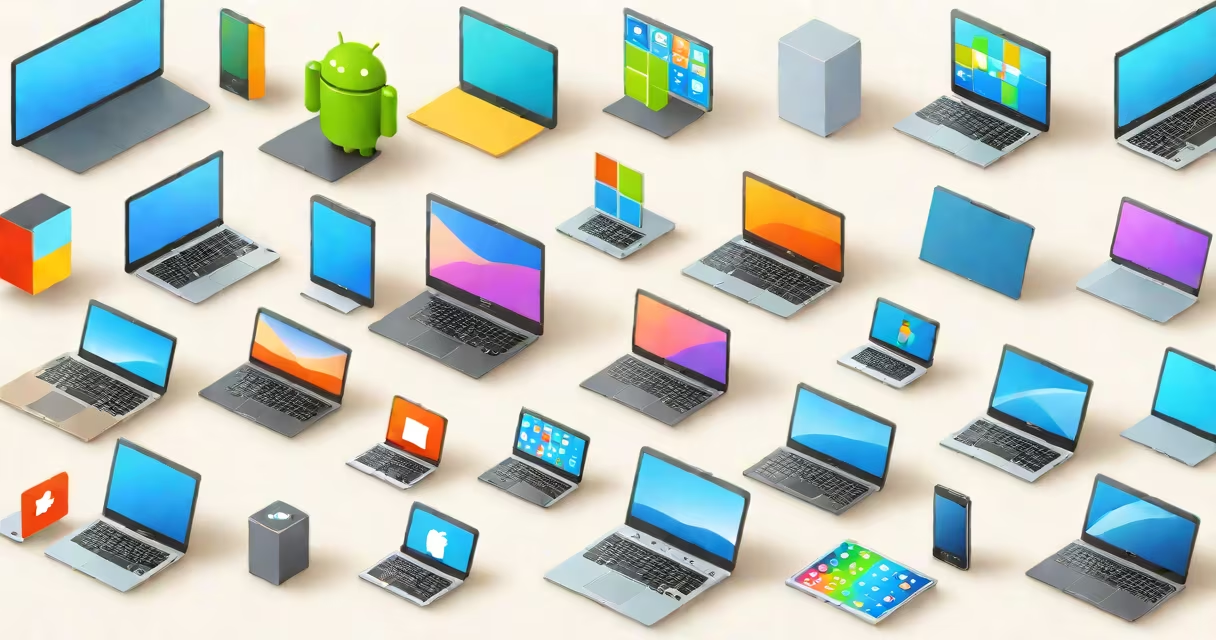
A popular operating system is a software platform that manages computer hardware, runs applications, and provides a user interface. It serves as the foundation for all digital interactions on devices ranging from smartphones to servers. The most widely used systems include Windows, macOS, Linux, Android, and iOS.
Operating systems handle core tasks like memory allocation, process scheduling, file management, and input/output operations. They act as intermediaries between users and the physical components of a device. Without them, computers and mobile devices would be unusable without direct machine code commands.
Microsoft's Windows dominates desktop and laptop usage globally, with over 76% market share in 2023 according to StatCounter. Apple's macOS holds about 14% of the desktop market, primarily among creative professionals and education institutions. On mobile, Android powers nearly 70% of global smartphone shipments, while iOS accounts for around 29%, per IDC reports from Q1 2024.
At their core, operating systems run on a kernel-the central component responsible for managing system resources. The kernel controls access to CPU time, memory, storage, and peripheral devices. It operates in protected mode, shielding the system from unauthorized or faulty application behavior.
When a user opens an app, the operating system allocates memory, assigns processor time, and checks permissions. For example, when you launch a web browser on Windows, the OS loads the program into RAM, sets up network access through drivers, and displays the interface via the graphical subsystem.
Modern systems use virtual memory to extend available RAM. If a program exceeds physical memory limits, the OS moves inactive parts to disk storage, swapping them back when needed. This allows multiple applications to run simultaneously without crashing the system.
Popular operating systems fall into two broad categories: desktop and mobile. Desktop systems focus on productivity, multitasking, and compatibility with external hardware. Mobile systems prioritize touch input, battery efficiency, and app ecosystems.
| Type | Examples | Primary Use Cases | Market Share (2024) |
|---|---|---|---|
| Desktop | Windows 11, macOS Sonoma, Linux distributions | Office work, programming, video editing | Windows: 76%, macOS: 14% |
| Mobile | Android 14, iOS 17 | Communication, social media, mobile gaming | Android: 70%, iOS: 29% |
Linux is a free and open-source alternative used extensively in servers, embedded systems, and developer environments. Distributions like Ubuntu and Fedora offer customizable interfaces and strong security features. Over 90% of the world's top 500 supercomputers run Linux, according to the TOP500 list (June 2023).
Android is based on the Linux kernel but uses a custom runtime environment called ART (Android Runtime). It supports millions of apps from Google Play and third-party stores. iOS, built on Darwin (a Unix derivative), enforces strict app review policies and tight integration between hardware and software.
Many assume that "operating system" refers only to the visible desktop or home screen. In reality, the OS includes background services, device drivers, and system libraries. The visual layer is just one part of a much larger architecture.
Another misconception is that mobile operating systems are simpler than desktop ones. Android and iOS actually manage complex workflows-location tracking, biometric authentication, push notifications, and background sync-with higher power constraints than desktops. A single Android phone may run over 100 background processes at once.
Some confuse "popular" with "best." Popularity reflects adoption, not quality. While Windows leads in desktop usage, many developers prefer macOS or Linux for stability and command-line control. Similarly, Android's dominance doesn't mean it's superior to iOS in all scenarios-Apple's closed system often delivers better long-term performance and security updates.
In a small business setting, a team might use Windows 11 machines for accounting, email, and customer relationship management. These systems connect to shared printers, cloud storage, and enterprise databases through built-in networking protocols.
For example, a graphic designer using Adobe Photoshop on a MacBook Pro relies on macOS to coordinate GPU acceleration, color profiles, and file system permissions. The OS helps high-resolution images render smoothly and that the application doesn't interfere with other running tools.
On the mobile side, a user running a fitness tracker app on an Android phone accesses GPS, heart rate sensors, and Bluetooth connectivity through the OS's permission model. The app requests access, the OS prompts the user, and if granted, the app gains controlled access to hardware.
I once tested a Raspberry Pi running Ubuntu Server for a home automation project. The OS handled SSH login, Python scripts for sensor reading, and automatic backups-all without a GUI. This demonstrated how lightweight, efficient versions of Linux operate reliably on low-power hardware.
Understanding the differences between platforms helps clarify why certain systems dominate specific markets.
One non-obvious fact: iOS devices receive security updates for up to five years after release, while Android phones typically get only two years of major OS updates. This difference affects long-term device security and privacy.
The term "popular operating system" describes systems with widespread adoption due to usability, system strength, and hardware availability. Windows, macOS, Linux, Android, and iOS meet this criterion through sustained user engagement and continuous development.