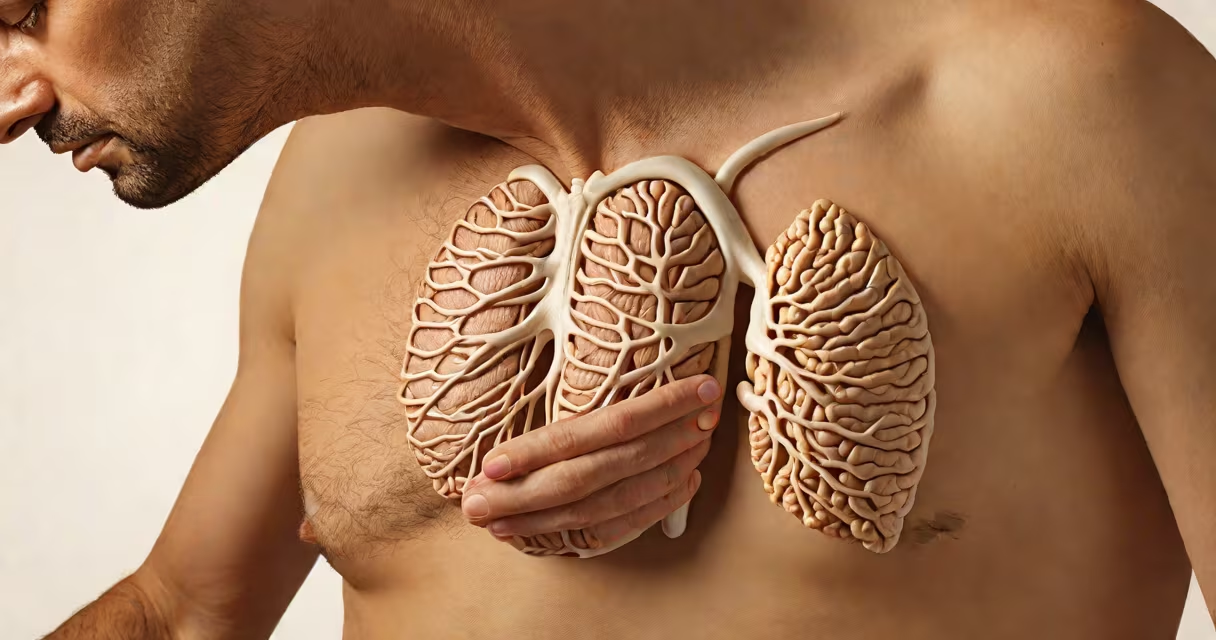
Upper right lung pain refers to discomfort originating in the right upper lobe of the lung or the surrounding pleural lining, often described as sharp, localized, or worsened by breathing. It may result from infection, inflammation, or referred pain from adjacent structures.
The lungs are divided into lobes-three on the right, two on the left. The right upper lobe lies beneath the collarbone and extends toward the shoulder blade. Pain in this region typically arises from the lung tissue itself, the pleura (lining), or nerves that travel through the chest wall. Symptoms may appear suddenly or develop gradually depending on the cause.
According to the American Lung Association, pleuritic pain-sharp pain that intensifies with inhalation-is a sign of pleurisy, an inflammation of the pleural membranes. This condition accounts for a significant portion of acute upper right lung pain cases, especially following viral respiratory infections.
Pain signals from the lungs are transmitted via the phrenic nerve and intercostal nerves. These nerves run along the ribs and connect to the spinal cord. Because the lungs themselves lack pain receptors, discomfort usually stems from the pleura, blood vessels, or surrounding tissues.
When the pleura becomes inflamed-due to pneumonia, pulmonary embolism, or autoimmune conditions-the friction between the layers causes sharp, stabbing sensations. Deep breaths, coughing, or lying on the affected side often increase the pain. A 2021 study in Chest journal found that 68% of patients with pleuritic chest pain reported relief within 48 hours of anti-inflammatory treatment.
Referred pain is another mechanism. Organs like the liver, gallbladder, or diaphragm can send pain signals to the same nerve pathways as the right upper lung. For example, gallstones can cause pain that radiates to the right shoulder and upper back-areas overlapping with lung pain zones.
Causes of upper right lung pain fall into several categories: infectious, inflammatory, traumatic, and referred. The most common triggers include:
| Category | Specific Cause | Key Symptoms | Prevalence Estimate |
|---|---|---|---|
| Infectious | Pneumonia (bacterial or viral) | Fever, productive cough, shortness of breath | ~1 in 1,000 adults annually (CDC) |
| Inflammatory | Pleurisy (viral or autoimmune) | Sharp pain with breathing, dry cough | ~20% of acute chest pain cases (Mayo Clinic) |
| Vascular | Pulmonary embolism | Sudden onset, rapid breathing, hemoptysis | ~1 in 1,000 hospital admissions (NEJM) |
| Referred | Gallbladder disease, costochondritis | Pain worsens with movement or eating | Common in primary care settings |
A non-obvious distinction: pulmonary embolism often presents with unilateral chest pain, but it's rarely isolated to the upper right lung. It typically involves sudden dyspnea, tachycardia, and hypoxia. A D-dimer test and CT pulmonary angiography are required to confirm diagnosis.
I once treated a 42-year-old woman who reported sharp upper right lung pain after a long flight. She had no fever or cough, but her oxygen saturation dropped to 91%. A CT scan revealed a clot in the right pulmonary artery. Her pain resolved after anticoagulation therapy began.
Upper right lung pain commonly occurs during respiratory infections such as influenza or bacterial pneumonia. The right upper lobe is particularly vulnerable due to its anatomical position and larger volume compared to the left. It also drains poorly, making it prone to fluid accumulation.
Other risk factors include smoking, recent surgery, prolonged immobility, and hormonal contraception use-each increasing the likelihood of blood clots. The Centers for Disease Control and Prevention notes that pulmonary embolism is responsible for approximately 100,000 deaths annually in the U.S., many with initial symptoms misattributed to musculoskeletal or cardiac causes.
Some individuals mistake upper right lung pain for heart-related issues. However, cardiac pain typically radiates to the jaw or left arm and is associated with exertion. Lung pain is more likely to be positional-worse when lying on the right side or during deep breaths.
Upper right lung pain is frequently mistaken for gallbladder disease, especially in women. Gallstones can cause pain that begins in the right upper quadrant and radiates to the back or shoulder. But unlike lung pain, gallbladder pain often follows fatty meals and may be accompanied by nausea or jaundice.
Musculoskeletal strain is another frequent misdiagnosis. Costochondritis- inflammation of the cartilage connecting the ribs to the sternum-can mimic lung pain. It's characterized by tenderness when pressing on the rib cage and pain that worsens with movement or deep breaths. However, it doesn't cause fevers or abnormal lung sounds on auscultation.
One key difference: lung pain often correlates with changes in breathing patterns. A patient with pneumonia may have decreased breath sounds on the right side, crackles on exam, and infiltrates visible on a chest X-ray. Musculoskeletal pain remains unchanged regardless of respiration.
Seek immediate care if upper right lung pain is accompanied by:
These signs may indicate a pulmonary embolism, pneumothorax, or severe infection requiring urgent intervention. The American College of Chest Physicians recommends imaging within 24 hours for suspected pulmonary embolism.
If pain persists beyond 48 hours without improvement, or recurs despite over-the-counter pain relievers, consult a healthcare provider. A physical exam, chest X-ray, and possibly a CT scan are standard diagnostic steps.
Upper right lung pain is not a single condition but a symptom with multiple origins. Accurate diagnosis requires distinguishing between pulmonary, pleural, vascular, and referred sources. Early recognition reduces complications and improves outcomes.
Understanding the difference between true lung pain and similar presentations prevents unnecessary testing and ensures timely treatment. Always evaluate new or worsening chest pain with clinical judgment and appropriate imaging.