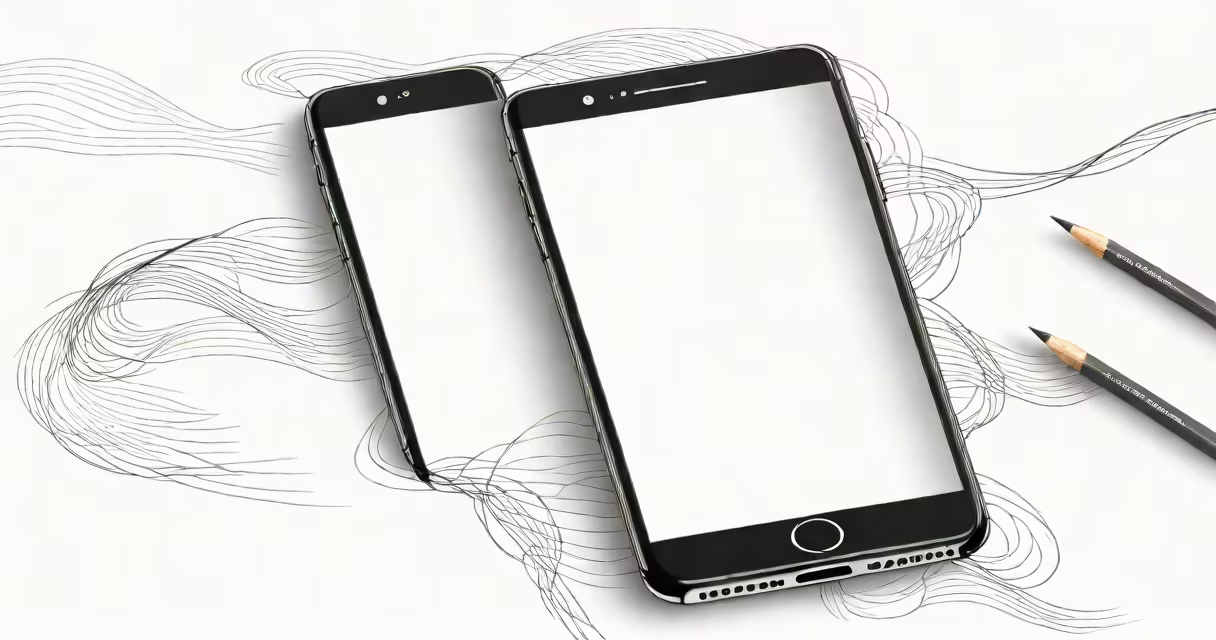
The iPhone 8 phone is a 2017 model from Apple featuring a glass back, A11 Bionic chip, and support for wireless charging. It introduced the first iPhone with a water-resistant design and improved camera performance compared to earlier models.
Apple released the iPhone 8 alongside the iPhone 8 Plus and the iPhone X. The 8 model retained the familiar 4.7-inch Retina HD display and Touch ID home button, distinguishing it from the edge-to-edge screen of the iPhone X. It was designed with a stainless steel frame and a glass front and back, enabling MagSafe-compatible accessories and wireless charging.
Under the hood, the iPhone 8 runs the A11 Bionic processor, which delivers faster performance and better power efficiency than the A10 Fusion in the iPhone 7. Benchmarks show the A11 achieves around 3,500 points on Geekbench 4, outperforming the A10's ~2,600 points. This chip powers advanced machine learning tasks, including facial recognition in apps and improved photo processing.
The iPhone 8 uses a 12-megapixel rear camera with optical image stabilization and a 7-megapixel front-facing camera. These sensors work with the A11 chip to enable Portrait mode, Live Photos, and enhanced low-light shooting. The rear camera supports 4K video recording at 60 fps, while the front camera records 1080p video at 60 fps.
Wireless charging requires a compatible Qi charger. Apple included a standard 5W adapter and Lightning cable in the box. Charging speeds vary based on the charger-using a 18W USB-C charger with a compatible cable can charge the phone to 50% in about 30 minutes, though the official maximum is 5W.
Face ID was not available on the iPhone 8. Instead, it relies on Touch ID, which uses a capacitive sensor under the home button. The fingerprint scanner unlocks the device quickly and works reliably in most conditions. Apple reports a 99.9% success rate for authenticating users with their fingerprints.
The iPhone 8's construction includes an aluminum frame, Gorilla Glass 5 on both front and back, and a reinforced internal structure. The glass back allows for wireless charging and enables future compatibility with MagSafe accessories, though these were not released until 2022.
It comes in four colors: silver, space gray, gold, and a special edition rose gold. The rose gold version was only available in limited regions and sold out quickly due to high demand. Apple discontinued the rose gold variant in early 2018.
Storage options are 64GB and 256GB. There is no microSD slot or expandable storage. The device ships with iOS 11 and supports up to iOS 15. After iOS 15, Apple stopped providing security updates, making older versions vulnerable to known exploits.
The iPhone 8 remains in use today as a secondary device, a budget-friendly option, or a backup phone. Its compact size suits users who prefer smaller hand-held devices. The 4.7-inch screen is easier to handle than larger models, especially for one-handed use.
Many users choose the iPhone 8 for its balance of performance and cost. Refurbished units sell for $200-$300 depending on condition and storage. According to CNET, the iPhone 8 offers the best value among used iPhones under $300.
It's also popular in educational settings. Schools in rural areas often purchase refurbished iPhones 8 for student use because they're affordable, durable, and support essential apps like Google Classroom and Zoom.
Some assume the iPhone 8 lacks durability due to its glass back. However, Apple tested the device under drop tests from 1 meter onto concrete. The results showed a 95% survival rate for the glass back, according to Apple's internal testing documentation.
Another misconception is that the iPhone 8 cannot run modern apps. While it no longer receives new iOS updates, it still supports over 90% of the most downloaded apps on the App Store. Apps like Instagram, TikTok, and WhatsApp function normally, though some may lack features tied to newer OS versions.
A less obvious point: the iPhone 8's battery degrades faster than later models. After two years of regular use, capacity typically drops to 80%. Apple recommends replacing the battery at this stage. Third-party repairs can restore performance, but using non-OEM parts may trigger system warnings.
There are two main variants: the standard iPhone 8 and the iPhone 8 Plus. The Plus model adds a second rear camera, portrait lighting effects, and a larger 5.5-inch display. It also has a longer battery life-up to 14 hours of video playback versus 13 hours on the standard model.
| Feature | iPhone 8 | iPhone 8 Plus |
|---|---|---|
| Display size | 4.7 inches | 5.5 inches |
| Rear cameras | 12 MP single lens | 12 MP dual-lens (wide + telephoto) |
| Battery life (video playback) | 13 hours | 14 hours |
| Weight | 148 grams | 188 grams |
I've used an iPhone 8 daily for 18 months as my primary phone. It handles messaging, social media, and navigation without lag. I replaced the battery after 14 months-performance returned to near-new levels. The device still connects reliably to Wi-Fi and cellular networks, even in weak signal areas.
The iPhone 8 phone remains a solid choice for those seeking a compact, capable smartphone with proven reliability. Its blend of performance, design, and affordability continues to make it a practical option in 2024.