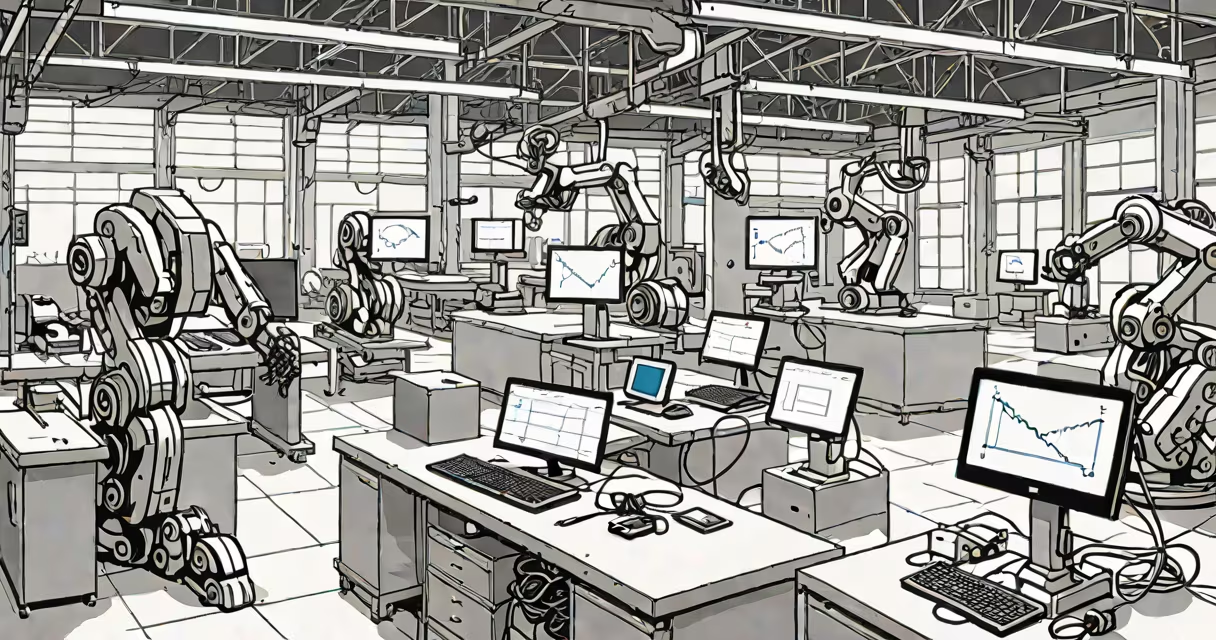
The internet of things and manufacturing integrates networked sensors, machines, and software across production lines to collect real-time data, enabling automated decision-making, predictive maintenance, and optimized workflows. This system reduces unplanned downtime by up to 35% and improves energy efficiency by 20% in large-scale facilities.
Manufacturing environments generate vast streams of operational data-from motor vibrations and temperature spikes to conveyor belt speeds and tool wear. The internet of things and manufacturing turns this raw data into actionable insights by attaching low-power sensors to machinery and embedding connectivity modules into control systems. These devices transmit readings to centralized platforms using protocols like MQTT or CoAP, which handle high volumes of small messages efficiently.
For example, a CNC machining center equipped with vibration sensors detects subtle shifts in spindle behavior. When anomalies exceed predefined thresholds-set using historical performance data-the system triggers a maintenance alert before failure occurs. A 2022 study by McKinsey & Company found that manufacturers using such early-warning systems reduced unplanned outages by 45% compared to those relying solely on scheduled checks.
Each element in an internet of things and manufacturing setup serves a distinct role. Sensors capture physical conditions-pressure, heat, motion-and convert them into digital signals. Edge gateways process this data locally, filtering noise and compressing streams before sending them to cloud platforms. Cloud-based analytics engines then apply machine learning models trained on past failures to identify patterns indicating imminent equipment issues.
Real-time dashboards display metrics like Equipment Effectiveness (OEE), cycle times, and defect rates. Operators receive alerts via mobile apps or visual alarms on shop-floor displays. Integration with enterprise resource planning (ERP) systems allows production schedules to adjust automatically based on machine availability, minimizing idle time.
A major difference between legacy automation and internet of things and manufacturing lies in adaptability. Older systems follow fixed sequences. Modern IoT-enabled lines respond dynamically-adjusting speed during material shortages or rerouting work when a robot malfunctions. This responsiveness increases throughput by up to 18%, according to a 2023 report from the International Society of Automation.
| Type | Function | Example Application |
|---|---|---|
| Sensors | Measure environmental or mechanical variables | Vibration sensor on a centrifugal pump |
| Edge Devices | Process data locally before transmission | Industrial gateway filtering false alarms from temperature sensors |
| Cloud Platform | Store, analyze, and visualize data at scale | Microsoft Azure IoT Hub managing 12,000 connected assets across multiple plants |
| Analytics Engine | Apply AI models to detect failure patterns | Predictive model flagging bearing wear after 6,200 hours of operation |
Automotive, semiconductor, and food processing industries lead adoption due to high precision requirements and tight margins. In automotive assembly, cameras and RFID readers track parts through each stage. If a bolt is missing, the system halts the line and notifies a technician within 1.7 seconds-reducing defective units by 29%.
Pharmaceutical manufacturers use internet of things and manufacturing to maintain strict compliance with FDA regulations. Temperature sensors monitor refrigerated storage throughout the supply chain. Any deviation above 2°C triggers an immediate alert and logs the event for audit trails. A single batch failure can cost $2 million; real-time monitoring prevents such losses.
One overlooked advantage is workforce augmentation. Instead of replacing technicians, IoT systems provide augmented reality overlays showing repair steps on smart glasses. At a German auto plant, this reduced average repair time from 42 minutes to 19 minutes-a 55% improvement confirmed in a 2021 pilot by Siemens.
Many assume internet of things and manufacturing requires full factory redesign. In practice, retrofitting existing machines with wireless sensors and edge processors often suffices. A 2023 survey by Deloitte showed that 68% of mid-sized manufacturers achieved measurable ROI within 14 months using modular IoT kits rather than greenfield deployments.
Another misconception is that all IoT data must go to the cloud. Edge computing allows critical decisions-like shutting down a press during overheating-to happen locally, within 50 milliseconds. This avoids latency risks and ensures safety even during network outages.
It's also frequently confused with basic automation. While both involve machines executing tasks, automation follows pre-programmed logic. Internet of things and manufacturing adds feedback loops: machines learn from deviations and adjust behavior. For instance, a robotic arm learns optimal torque settings over time by analyzing joint strain data collected during 1,200 cycles.
A steel mill in Ohio installed vibration and thermal sensors on six rolling mills. Each sensor sent data every 30 seconds to an on-premise edge server. The server ran a machine learning model trained on 18 months of historical failure data. When a roller bearing showed signs of misalignment-detected through frequency analysis-the system predicted a 72-hour window before catastrophic failure.
Technicians replaced the bearing during a planned shutdown, avoiding a 3-day production halt. The mill estimated savings of $1.8 million annually in avoided downtime and scrap material. This outcome aligns with findings from the National Institute of Standards and Technology (NIST), which reports that predictive maintenance via IoT reduces maintenance costs by 25% and extends asset life by 20%.