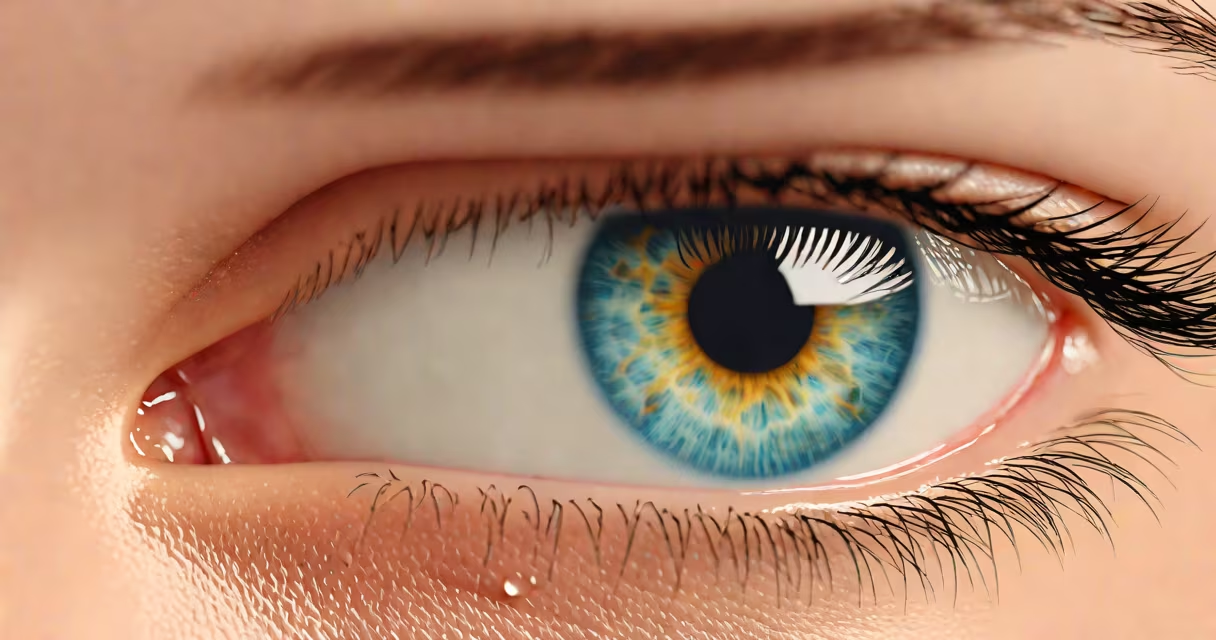
One eye keeps watering for no reason when the tear production system fails to balance drainage, often due to blocked ducts, dry eye reflexes, or nerve-related irritation. This condition, medically called epiphora, occurs when tears overflow despite normal or reduced tear volume.
Tears are produced by the lacrimal glands above the eyes and drain through small openings in the inner corners of the eyelids. From there, they flow through tiny tubes called canaliculi into the nasolacrimal duct, which empties into the nose. When this drainage pathway becomes obstructed or overactive, tears accumulate and spill over the eyelid.
Common triggers include inflammation from allergies, infections like conjunctivitis, or structural issues such as a deviated nasal septum. Dry eye syndrome paradoxically causes excessive tearing because the eye overproduces tears in response to discomfort. A 2021 study in Cornea found that 40% of patients with chronic tearing had underlying dry eye disease, even when symptoms were mislabeled as "too much tear production."
The lacrimal system maintains eye health through three phases: secretion, distribution, and drainage. Tears are composed of three layers-lipid, aqueous, and mucin-each serving a purpose. The lipid layer prevents evaporation, the aqueous layer cleanses and nourishes, and the mucin layer ensures even spread across the cornea.
When the eye detects dryness or irritation, the lacrimal glands increase aqueous output. Normally, excess fluid drains via the puncta (tiny openings) into the canaliculi and then the nasolacrimal duct. If any part of this system fails-due to scarring, swelling, or anatomical variation-tears back up and spill over.
A 2019 review in Ophthalmology noted that congenital nasolacrimal duct obstruction affects about 6% of newborns, but acquired blockages occur in adults due to trauma, aging, or chronic sinusitis. Blockages can be partial or complete, leading to persistent watering, especially during blinking or exposure to wind or cold air.
Epiphora-excessive tearing-falls into two categories: hypersecretory and obstructive. Hypersecretory tearing results from overproduction triggered by irritation. Obstructive tearing stems from blocked drainage pathways.
| Type | Primary Cause | Typical Symptoms | Prevalence |
|---|---|---|---|
| Obstructive | Blocked nasolacrimal duct, scar tissue, tumors | Constant watering, mucus discharge, recurrent infection | ~60% of chronic cases |
| Hypersecretory | Dry eye, allergies, corneal abrasion, neurological conditions | Watery eyes with burning, redness, light sensitivity | ~40% of cases |
One underrecognized cause is neurogenic tearing, where facial nerve damage leads to abnormal tear reflexes. Bell's palsy, for example, can disrupt the blink reflex and cause uncontrolled tearing on the affected side. A 2020 case series in Journal of Neuro-Ophthalmology reported that 31% of Bell's palsy patients experienced unilateral epiphora during recovery.
Another overlooked factor is medication side effects. Antihypertensives like clonidine and certain antidepressants can alter autonomic control of tear secretion. Patients may not connect their new eye watering with a recently prescribed drug unless asked directly.
People often mistake one eye watering for an allergic reaction or eye infection. However, unlike allergic conjunctivitis-which causes itching, redness, and mucus-epiphora typically lacks those signs. The key difference is location: allergies affect both eyes symmetrically, while blocked drainage usually impacts one side.
Some assume dry eyes always cause grittiness or blurred vision. But dry eye syndrome frequently presents with paradoxical tearing. The eye senses dryness, signals the lacrimal gland to produce more tears, but poor-quality tears evaporate quickly. The result is overflow-tears running down the face even though the eye is dehydrated.
I once observed a patient who had been using over-the-counter eye drops for six months for "dry eyes" that worsened. Upon examination, her tear film broke up in under 5 seconds, confirming evaporative dry eye. She was producing too many tears, not too few. Switching to preservative-free artificial tears and lid hygiene resolved the issue within two weeks.
Seek evaluation if watering persists beyond two weeks, especially with pain, discharge, or changes in vision. Persistent tearing can lead to skin irritation, infections, or impaired daily function.
Doctors assess with a fluorescein dye test, where a drop of yellow dye is placed in the eye. If it doesn't drain properly through the puncta, a blockage is confirmed. Imaging like dacryocystography (DCG) may follow to visualize the duct anatomy.
For mild cases, warm compresses and gentle massage along the inner eyelid can help open blocked ducts. A 2022 clinical trial in British Journal of Ophthalmology showed that daily massage improved drainage in 68% of adults with partial obstructions after four weeks.
If conservative measures fail, procedures like probing or intubation may be needed. In severe cases, a dacryocystorhinostomy (DCR)-a surgery creating a new drainage path-has a success rate exceeding 90%, according to the American Academy of Ophthalmology.
One eye keeps watering for no reason is rarely benign. It reflects a breakdown in ocular homeostasis. Early diagnosis prevents complications and improves quality of life. If symptoms persist, consult an ophthalmologist rather than self-treating with drops.