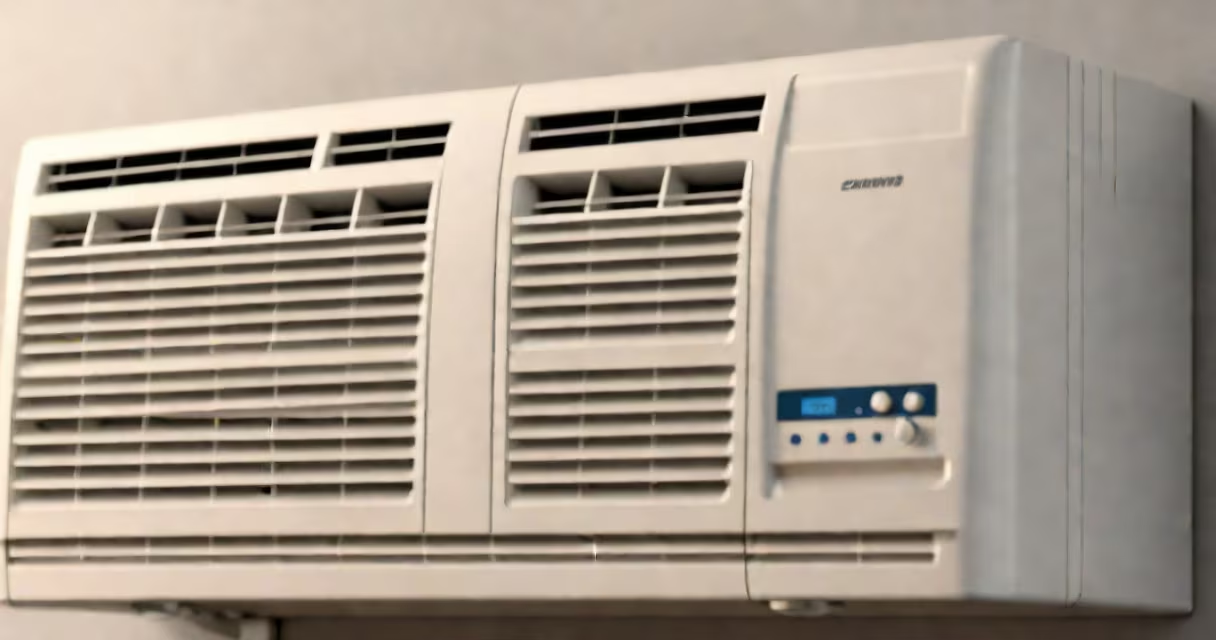
When your air conditioner runs but fails to lower indoor temperature, it indicates a breakdown in one or more components of the cooling cycle. This issue stems from blocked airflow, low refrigerant, electrical faults, or mechanical failure.
Central air conditioners cool by circulating refrigerant through evaporator and condenser coils. The indoor unit absorbs heat from room air, transferring it outdoors via the outdoor condenser. If any part of this process fails, cooling stops even if the fan runs.
The most common causes include clogged filters, dirty coils, low refrigerant, a malfunctioning thermostat, or a failed compressor. These problems often develop gradually, making early signs easy to overlook until discomfort becomes noticeable.
Air conditioners rely on a closed-loop refrigeration system. The compressor pressurizes refrigerant gas, sending it to the condenser coil where it releases heat and turns into liquid. The liquid flows through an expansion valve, drops in pressure, and enters the evaporator coil inside the indoor unit. As warm indoor air passes over the cold coil, heat transfers to the refrigerant, which then returns to the compressor to repeat the cycle.
If any step in this sequence fails, cooling halts. For example, if the outdoor condenser coil is blocked by dirt or debris, heat cannot escape. The system continues running but cannot reject heat, leading to high pressure and eventual shutdown.
According to the U.S. Department of Energy, a dirty condenser coil can reduce efficiency by up to 30%. A clogged filter restricts airflow, causing the evaporator coil to freeze-a condition known as "icing." Once ice forms, heat transfer stops entirely.
Failures fall into three categories: airflow issues, refrigerant problems, and mechanical failures. Each has distinct symptoms.
| Failure Type | Common Signs | Typical Cause |
|---|---|---|
| Airflow Restriction | Warm air from vents, longer run times, uneven cooling | Dusty filters, blocked return grilles, dirty blower wheel |
| Refrigerant Leak | Weak cooling, frost on indoor coils, hissing sounds | Corroded copper lines, worn fittings, manufacturing defects |
| Compressor Failure | No cooling, loud buzzing or clicking, tripped breaker | Overheating, worn bearings, electrical short |
Refrigerant leaks are particularly dangerous because they require professional handling. Refrigerants like R-410A are regulated under the Clean Air Act. Improper disposal or release contributes to ozone depletion and violates EPA rules.
I once diagnosed a 15-year-old central AC that ran continuously but never dropped below 78°F indoors. After checking the thermostat and confirming correct settings, I inspected the indoor unit. The evaporator coil was coated in ice. The filter had not been changed in 18 months. Removing the filter revealed a dense layer of pet dander and dust. After replacing the filter and defrosting the coil, cooling returned within 30 minutes.
Most cooling failures happen during peak summer months when demand exceeds system capacity. Units installed in hot climates like Phoenix or Houston face higher stress. A 2022 study by the National Renewable Energy Laboratory found that systems operating above 90°F ambient temperature experienced a 22% drop in cooling output due to reduced condenser efficiency.
Units older than 10 years are twice as likely to fail compared to newer models. The average lifespan of a residential AC is 12-15 years. After that, parts degrade faster, and repairs become cost-prohibitive.
Many homeowners assume that turning the thermostat down to 65°F will speed up cooling. This doesn't work. The system runs at a fixed rate. Setting it too low increases runtime, raises energy bills, and risks freezing the coil. The ideal setting is 72-75°F for comfort and efficiency.
One widespread error is assuming that cleaning the outdoor unit fixes internal problems. While clearing leaves and grass clippings from the condenser improves performance, it won't resolve a refrigerant leak or compressor failure. These require technician intervention.
Another myth is that adding refrigerant boosts cooling. Overcharging refrigerant increases pressure, damages the compressor, and reduces efficiency. Only certified technicians can safely charge refrigerant using gauges and weight-based measurements.
Some believe that running the AC on "fan-only" mode cools better. This is false. Fan-only circulates air without engaging the cooling coil. It may feel like cooling due to air movement, but temperatures remain unchanged.
Start with simple checks before calling a technician:
If cooling still doesn't resume, turn off the system and wait 10 minutes before restarting. This resets the control board and may clear a temporary fault.
For units with a reset button, press it once. Do not repeatedly reset. Repeated attempts can damage the control board.
Call a licensed HVAC technician if:
Technicians use manifold gauges to measure refrigerant pressure. Correct levels depend on outdoor temperature and system model. For example, a 12,000 BTU unit operating in 95°F weather requires 115 psi on the high side and 75 psi on the low side. Deviations indicate undercharge or overcharge.
if the air conditioner is not cooling is not a single problem-it's a symptom. Diagnosing it correctly saves time, money, and discomfort. Start with filters and airflow. If those don't resolve the issue, seek qualified help. Ignoring warning signs leads to costly repairs or premature replacement.