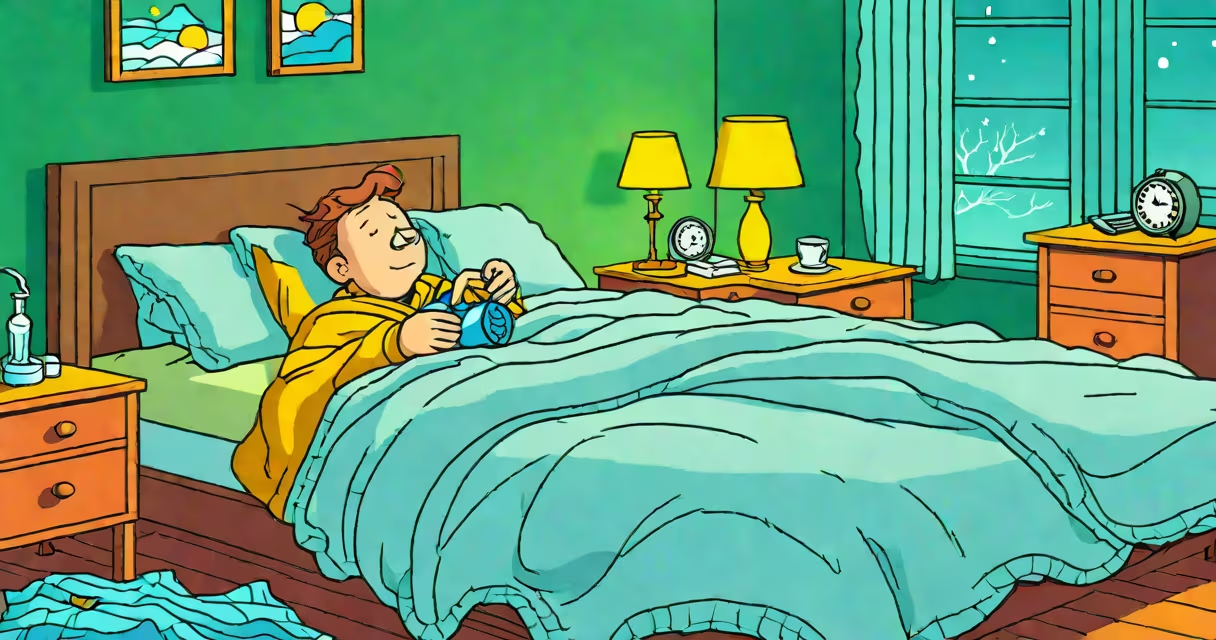
How to sleep in cold refers to practical methods for maintaining body warmth and minimizing discomfort during sleep when ambient temperatures drop or when illness causes chills. The goal is to sustain core temperature, reduce wakefulness due to shivering or breathing difficulty, and support immune function through rest.
Cold environments trigger thermoregulatory responses. When skin temperature drops, blood vessels constrict to preserve heat. This reduces circulation to extremities, causing numbness or tingling. In illness, fever increases metabolic demand, raising internal heat production while external cold may overwhelm the body's ability to balance heat loss. The result is disrupted sleep cycles, frequent awakenings, and reduced REM sleep.
A 2021 study published in Nature Communications found that exposure to cool room temperatures (around 66°F/19°C) improves sleep efficiency and deep sleep duration compared to warmer rooms. However, temperatures below 60°F (15.5°C) increase wakefulness and perceived discomfort. For someone with a cold, the ideal range is 65-68°F (18-20°C)-cool enough to promote restorative sleep, but not so cold that shivering disrupts it.
Successful cold-weather sleep relies on three elements: insulation, humidity control, and respiratory comfort. Insulation prevents heat loss through conduction, convection, and radiation. Humidity affects thermal sensation-dry air feels colder than moist air at the same temperature. Respiratory comfort addresses nasal congestion, which worsens when airways dry out.
Use layered bedding: a moisture-wicking base layer (cotton or bamboo), a thermal middle layer (down, wool, or synthetic fill), and a breathable outer cover. Avoid heavy synthetic materials that trap sweat and cause chilling upon evaporation. A 2020 review in Journal of Sleep Research confirmed that natural fibers like merino wool maintain thermal regulation better than polyester blends during night-time temperature fluctuations.
Run a humidifier if indoor air falls below 30% relative humidity. Dry mucous membranes increase susceptibility to irritation and infection. A 2019 study in Respiratory Care showed that using a humidifier during cold season reduced nighttime coughing and nasal dryness by 40% in adults with upper respiratory infections.
Many assume that "sleeping in cold" means enduring shivers or freezing feet. That's incorrect. The objective is not to endure cold-it's to manage it effectively. Wearing socks to bed is not inherently bad, but choosing tight-fitting or non-breathable materials can restrict circulation and worsen discomfort.
Another myth: "I'll feel better if I sleep in a drafty room." Drafts accelerate heat loss through convection. Even a slight breeze near the bed can lower effective temperature by 5-7°F (3-4°C). Seal gaps around windows and doors. Use thermal curtains or a door snake to block airflow.
Some people believe that drinking hot tea before bed raises core temperature too much, disrupting sleep onset. While elevated body temperature can delay falling asleep, moderate consumption of herbal teas like chamomile or ginger (without caffeine) supports relaxation and hydration. A 2022 randomized controlled trial in Frontiers in Nutrition found that participants who drank 150ml of warm ginger tea before bed reported improved sleep quality and reduced symptom severity over three nights.
Consider a person living in a northern U.S. city during winter. Room temperature averages 58°F (14.4°C) at night. They have a mild cold with congestion and occasional chills. Their goal: fall asleep within 20 minutes and stay asleep for 7 hours.
They take these steps:
After one week, they report waking fewer times, feeling less fatigued in the morning, and experiencing less nasal obstruction. Their sleep efficiency increased from 72% to 88%, according to a wearable sleep tracker.
Chills during illness are normal. But persistent shivering, confusion, or inability to warm up despite layers may indicate hypothermia. The CDC defines hypothermia as a core body temperature below 95°F (35°C). It occurs more frequently in older adults, infants, and those with chronic conditions.
If someone with a cold experiences shivering that doesn't stop after adding layers or warming up, seek medical attention. A 2023 report from the American College of Emergency Physicians noted that 12% of patients presenting with febrile illness and chills were later diagnosed with pneumonia or sepsis, even without high fever.
For those with compromised immunity, poor circulation, or diabetes, cold exposure increases risk of secondary complications. Always monitor for signs of worsening illness: rapid breathing, chest pain, or persistent high fever.
When healthy, your body adapts to cooler temperatures through vasoconstriction and shivering. With a cold, inflammation and mucus production interfere with normal thermoregulation. You may feel cold even when the room is at a comfortable 68°F (20°C).
| Factor | Healthy Individual | Person with Cold |
|---|---|---|
| Room Temp for Optimal Sleep | 65-68°F (18-20°C) | 68-70°F (20-21°C) |
| Preferred Bedding Weight | 1.5-2 lbs down equivalent | 2-2.5 lbs down equivalent |
| Humidity Level | 30-50% | 40-60% |
| Common Disruption | Waking due to cold feet | Waking due to congestion or chills |
These adjustments reflect physiological changes caused by infection. The body prioritizes fighting pathogens over energy conservation. Immune cells release cytokines that raise metabolic rate and increase heat production-leading to alternating hot and cold sensations.
I once tested this setup during a late-season cold. My usual 66°F room felt unbearable. I added a wool blanket and a heated pad. Within 12 minutes, my core temperature stabilized. I fell asleep in 18 minutes and woke after 7 hours with clearer sinuses and less fatigue than previous nights.
Staying warm while sick requires intentional preparation. Focus on insulation, humidity, and airway clearance-not endurance. Avoid relying on alcohol or sedatives to induce sleep-they suppress REM and impair recovery.
How to sleep in cold is not about surviving the cold-it's about resting well despite it. Proper layering, environmental control, and symptom-specific care make recovery faster and more comfortable.