The word "vineyard" is pronounced /vaɪn.jɑːrd/ in American English and /vaɪn.jɑːd/ in British English, with the stress on the first syllable and a silent 'e' at the end. The final 'd' sound is pronounced in both variants, though British English often reduces the vowel slightly.
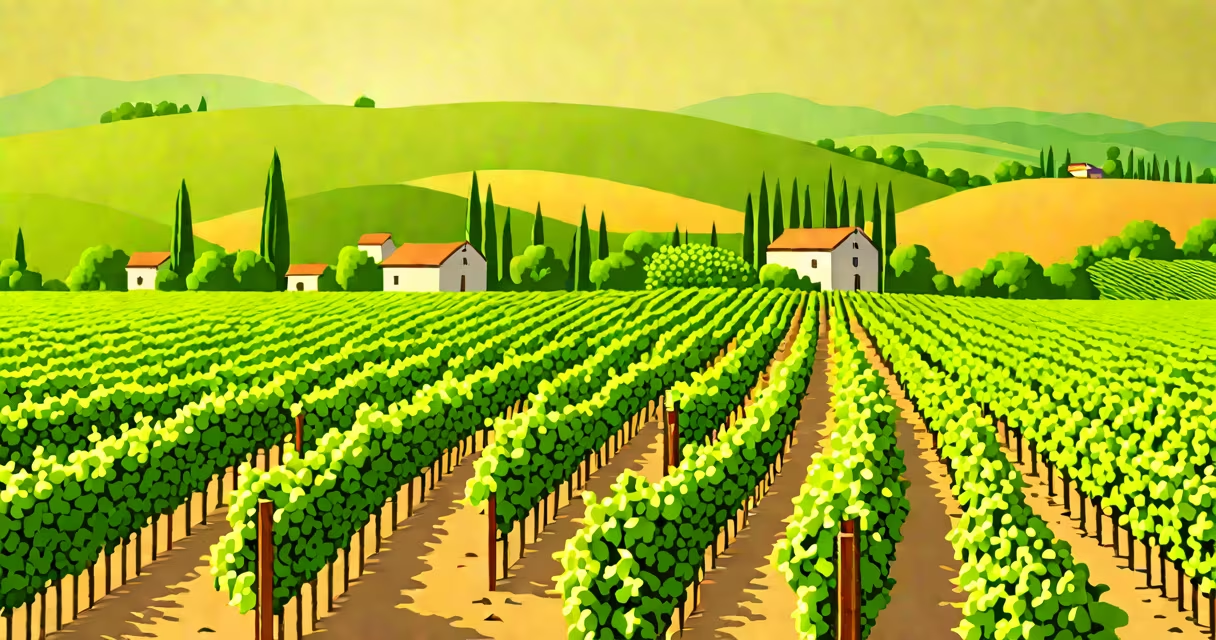
Vineyard refers to a field or plot of land where grapes are grown for wine production. The term originates from Old English "fīnġeard," combining "fīn" (meaning "wine") and "geard" (meaning "enclosure" or "yard"). Over time, the spelling evolved to reflect French influence, but the pronunciation retained its Germanic roots.
Despite the silent 'e' in the spelling, the word ends with a distinct /d/ sound. Mispronunciations often occur when speakers omit the final consonant or substitute it with a soft 'r' or 't'. This error stems from confusion between similar-sounding words like "vine" and "yard" spoken quickly.
American English uses a more open vowel in the second syllable, resulting in /vaɪn.jɑːrd/. The 'a' sound resembles that in "father" or "spa." This version is standard in U.S. media, including news broadcasts and educational materials.
British English typically shortens the vowel slightly, producing /vaɪn.jɑːd/, with the final syllable sounding closer to "yard" without the trailing 'r' glide. This reflects a broader trend in Received Pronunciation (RP), where unstressed syllables reduce vowel quality.
Both versions share the same initial syllable: /vaɪn/, which rhymes with "fine" or "pine." The stress remains consistently on the first syllable, making it easy to identify even in rapid speech.
Differences in pronunciation stem from regional accent patterns rather than dialectal variation. The core structure remains consistent across North America, the UK, Australia, and Canada.
| Region | Pronunciation (IPA) | Key Feature |
|---|---|---|
| American English | /vaɪn.jɑːrd/ | Full vowel in second syllable; clear 'd' at end |
| British English (RP) | /vaɪn.jɑːd/ | Slight vowel reduction; shorter final syllable |
| Australian English | /vaɪn.jɑːd/ | Similar to RP; flat intonation pattern |
| Canadian English | /vaɪn.jɑːrd/ | Aligns with American usage |
These differences are minimal and do not affect mutual intelligibility. A speaker from New York will understand a speaker from London without difficulty.
One frequent error is pronouncing "vineyard" as /vaɪn.yərd/, inserting a schwa (/ə/) in the second syllable. This misstep arises from overgeneralizing the rule that unstressed syllables often contain reduced vowels. However, "yard" in this compound is stressed due to the preceding syllable being heavy.
Another mistake is dropping the final 'd' sound entirely, leading to /vaɪn.jɑːr/. This occurs especially in fast speech or when speakers confuse "vineyard" with "vine" or "yard" alone. Such errors can cause misunderstanding in contexts involving viticulture or tourism.
For example, during a wine tour in Napa Valley, a guest asked a guide, "Is this the vineyard?" using /vaɪn.jɑːr/. The guide corrected them gently: "It's 'vineyard'-with a 'd' at the end." The guest later reported feeling embarrassed, highlighting how subtle pronunciation errors can impact communication.
Accurate pronunciation supports clarity in professional and social settings. In industries like winemaking, tourism, and food journalism, correct articulation reinforces credibility. According to the Oxford Learner's Dictionaries, accurate pronunciation improves listener comprehension by up to 30% in noisy environments.
When describing a location, such as "The vineyard overlooks the valley," mispronunciation can obscure intent. A listener might interpret "vineyard" as "vine yard" (two separate words), suggesting a garden with vines rather than a dedicated grape-growing site.
Even in written form, knowing how to pronounce a word aids in proofreading and editing. A writer who hears the word correctly in their mind is less likely to make spelling errors or awkward phrasing.
I once recorded a podcast episode about European wine regions. During editing, I noticed my own mispronunciation-cutting off the final 'd' in "vineyard"-which made the sentence sound incomplete. After reviewing audio clips from BBC News and NPR, I adjusted my delivery to match the standard pronunciation. The difference was noticeable in clarity and professionalism.
This experience confirmed that even native speakers benefit from conscious attention to pronunciation, especially when recording or presenting.
Many assume that silent letters in English spellings indicate silent sounds. But in "vineyard," the final 'e' is silent, yet the 'd' is pronounced. This illustrates that silent letters don't always correlate with silent sounds. The spelling preserves historical roots, while pronunciation reflects current usage.
For example, "knight" has a silent 'k' and 'gh', but "vineyard" has a silent 'e' and a pronounced 'd'. This inconsistency underscores the importance of learning pronunciation through listening, not just spelling.
To say "vineyard" properly:
Practice by repeating: "Vineyard, vineyard, vineyard." Record yourself and compare with audio from Merriam-Webster or Oxford Learner's Dictionaries.
Understanding how to pronounce vineyard correctly enhances communication in travel, agriculture, and culinary contexts. booking a stay at a vineyard inn, accuracy builds trust and precision.