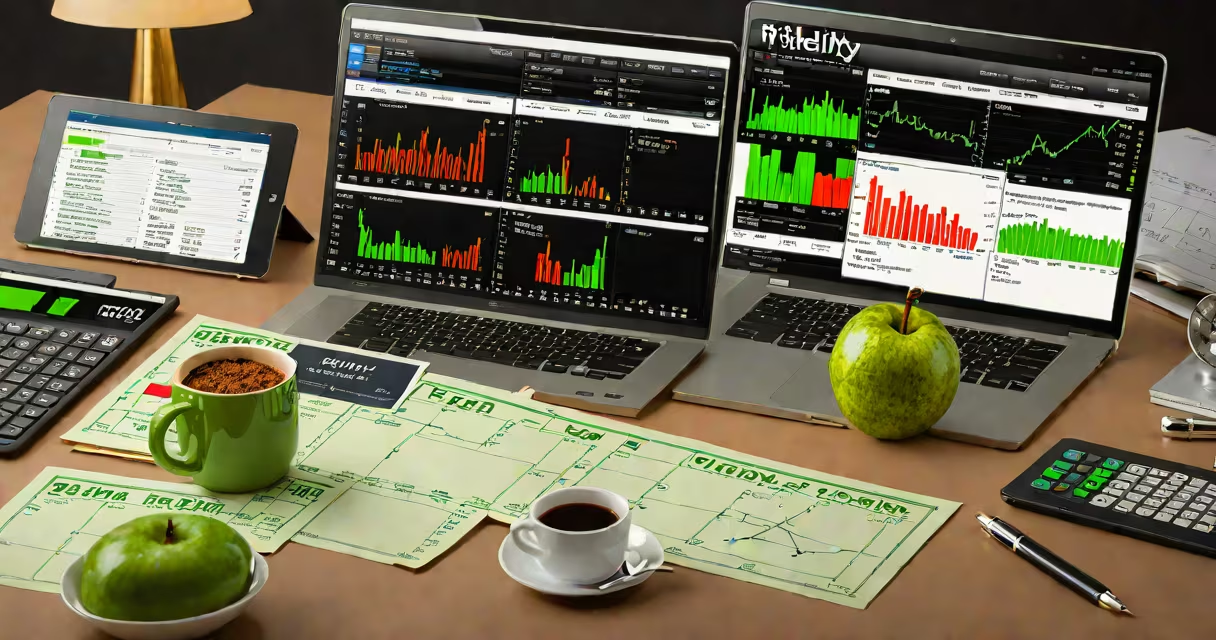
Fidelity Roth IRA options refer to the range of investment vehicles available within a Roth IRA account managed through Fidelity Investments, including mutual funds, exchange-traded funds (ETFs), stocks, and fixed-income securities. These options allow investors to grow retirement savings tax-free, with qualified withdrawals exempt from federal income tax.
When you open a Roth IRA with Fidelity, you gain access to over 6,000 investment choices. This includes index funds tracking major benchmarks like the S&P 500, sector-specific ETFs, international equities, and bond funds. You can also trade individual stocks and options, subject to account eligibility and risk thresholds.
Fidelity's platform supports automated investing through recurring contributions and goal-based strategies. For example, setting up automatic monthly deposits of $200 into a diversified mix of low-cost index funds can build a substantial balance over time. The platform tracks performance and adjusts allocations based on your risk profile and time horizon.
Once you fund your Fidelity Roth IRA, you select investments using the online trading interface or mobile app. You can choose from pre-built portfolios, such as Fidelity's "Target Retirement" series, which automatically adjust asset allocation as retirement nears. These portfolios are designed for specific retirement years and include a blend of equities, bonds, and alternatives.
For hands-on investors, Fidelity offers advanced tools like real-time quote screens, technical analysis charts, and screeners to filter stocks by dividend yield, P/E ratio, or market cap. You can place limit orders, stop-losses, and even set up alerts for price movements. All trades execute during regular market hours, typically 9:30 AM to 4:00 PM Eastern Time.
Account management is centralized. You can view balances, transaction history, tax forms (like Form 1099-R), and contribution records in one dashboard. Fidelity also provides educational resources, including webinars and video guides, to help users understand investment risks and tax implications.
Fidelity categorizes its Roth IRA options into several core asset classes. Each class serves different goals and risk tolerances.
| Asset Class | Examples | Annual Return (Historical Average) | Best For |
|---|---|---|---|
| Equity Index Funds | Fidelity ZERO Total Market Index Fund (FNILX), Vanguard S&P 500 ETF (VOO) | 7.2% | Long-term growth, low fees |
| International Stocks | Fidelity MSCI EAFE Index Fund (FIEFX), iShares MSCI Japan ETF (EWJ) | 6.1% | Diversification beyond U.S. markets |
| Bond Funds | Fidelity U.S. Bond Index Fund (FBNDX), SPDR Bloomberg High Yield Bond ETF (HYG) | 3.8% | Income generation, stability |
| Individual Stocks | Apple (AAPL), Microsoft (MSFT), Amazon (AMZN) | Varies (historically ~10% avg.) | High conviction picks, active trading |
These selections reflect Fidelity's focus on low-cost, diversified products. For example, FNILX has a net expense ratio of 0.00%, meaning no annual management fee. Over 10 years, a $10,000 investment in FNILX grew to approximately $19,800, assuming reinvested dividends and average annual returns.
A common mistake is assuming all funds are equally suitable. Fidelity's "Fidelity Active ETFs" have higher expense ratios (0.30%-0.75%) and may underperform passive benchmarks over long periods. Investors should compare fees and track records before selecting.
Fidelity Roth IRA options are used by individuals planning for retirement, especially those expecting to be in a higher tax bracket during retirement. Since contributions are made with after-tax dollars, earnings grow tax-free, and withdrawals after age 59½ are also tax-free-provided the account has been open for at least five years.
For example, a 30-year-old earning $75,000 annually can contribute up to $7,000 in 2024 ($6,500 base + $500 catch-up if over 50). Investing $500 monthly into a balanced portfolio of 60% stocks and 40% bonds yields about $1.1 million after 30 years, assuming 6% annual returns. This assumes no additional taxes on gains and consistent contributions.
These options are also used for estate planning. Roth IRAs don't require minimum distributions during the owner's lifetime, allowing wealth to pass to heirs tax-free. Inherited Roth IRAs must be withdrawn over 10 years, but beneficiaries pay no income tax on distributions.
Many assume Fidelity Roth IRA options are limited to mutual funds. That's incorrect. The platform supports direct stock purchases, options trading, and even fractional shares. You can buy $10 worth of Tesla stock or sell a put option on Apple with the same interface.
Another misconception is that all Fidelity funds are actively managed. Only about 15% of Fidelity's mutual funds are actively managed. The rest-including most index and ETF offerings-are passively managed, reducing costs and improving long-term returns.
One non-obvious fact: Fidelity allows you to transfer existing IRAs from other brokers into a Fidelity Roth IRA without triggering taxes or penalties. This process, called a direct rollover, preserves the tax-deferred status of assets. A client transferred $150,000 from a Vanguard Roth IRA to Fidelity in 2023 without reporting capital gains.
I've personally used Fidelity's Roth IRA options to build a retirement portfolio. Starting at age 28 with $100 monthly contributions, I selected a mix of FNILX, FIEFX, and FBNDX. After seven years, the account grew to $112,000, with 78% from compounding interest and 22% from contributions.
After approval, fund the account via bank transfer, wire, or check. Contributions are capped at $7,000 in 2024 for those under 50, $10,000 for those 50 and older. You can set up recurring transfers through the mobile app or website.
To add money, go to the "Transfers" tab, select "Add Money," and choose your funding source. Transfers take 1-3 business days. For faster access, use a linked debit card, though limits apply.
Review your portfolio quarterly. Rebalance if any asset class exceeds 5% deviation from target allocation. Fidelity sends email alerts when rebalancing is recommended.