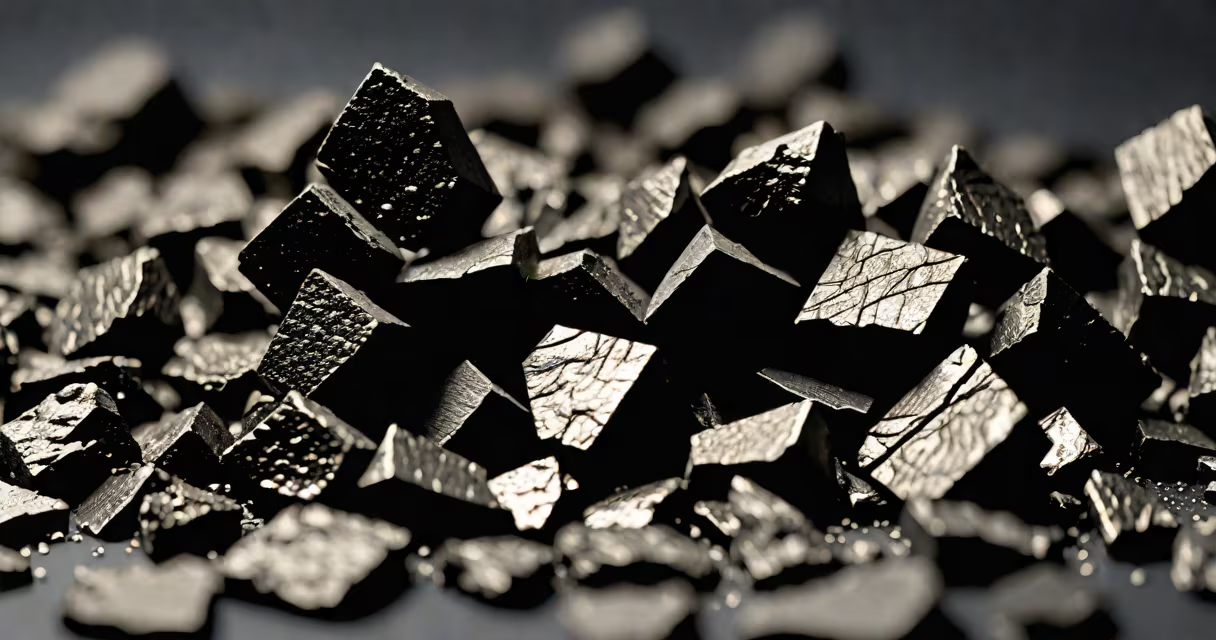
Metallurgical coal, also known as coking coal, is a high-carbon, low-ash coal specifically processed to produce coke-a porous, carbon-rich material used in blast furnaces to reduce iron ore into molten iron during steel production. Unlike thermal coal, which burns for energy, metallurgical coal undergoes a controlled heating process called coking to remove volatile components and form a strong, porous solid.
This type of coal is critical to the global steel industry. The International Energy Agency (IEA) reports that approximately 70% of the world's steel is produced using the blast furnace-basic oxygen furnace route, which relies on coke derived from metallurgical coal. Without it, modern steel manufacturing would not function at scale.
When heated to 1,000-1,300°C in the absence of oxygen, metallurgical coal undergoes pyrolysis. This drives off gases like methane and benzene, leaving behind a solid residue-coke-that has high strength and low porosity. The resulting coke must withstand extreme pressure and temperature inside a blast furnace while allowing hot gases to pass through and maintain the chemical reaction.
The key property is caking ability-the coal's tendency to soften, melt, and then resolidify into a coherent, porous mass. Not all coals exhibit this behavior. Only specific bituminous coals with precise maceral composition (mainly vitrinite) can form coke with the required structural integrity.
A single ton of steel requires about 0.3 tons of coke. That translates to roughly 0.4 tons of metallurgical coal, accounting for yield losses during coking. For context, the U.S. produced 46 million metric tons of metallurgical coal in 2023, according to the U.S. Energy Information Administration (EIA).
Metallurgical coal is categorized by rank and coking properties. The most common types are:
| Type | Carbon Content (%) | Caking Ability | Primary Use |
|---|---|---|---|
| High-volatile bituminous | 80-85 | Good | Blending for coking mixtures |
| Medium-volatile bituminous | 85-88 | Excellent | Primary coking coal |
| Low-volatile bituminous | 88-90 | Poor to moderate | Less common; used in specialized processes |
Major producing regions include Australia (especially the Hunter Valley), the United States (Appalachian and Powder River Basin), Russia (Kuzbass), and China. Australia supplies over 40% of global exports, according to the IEA. Its coal is prized for consistent quality and low sulfur content.
One non-obvious fact: metallurgical coal is not interchangeable with thermal coal. Thermal coal, used in power plants, typically has higher ash and sulfur levels because it doesn't require structural strength. Using thermal coal in coking would result in weak, brittle coke that collapses under furnace pressure.
Many people assume all coal is the same. But metallurgical coal is distinct in both composition and purpose. It is not mined for combustion-it is processed into coke, which is then burned, but only as part of a larger industrial system.
Another misconception is that metallurgical coal is less environmentally impactful than thermal coal. This is false. While it produces fewer CO₂ emissions per unit of energy compared to thermal coal, the coking process itself releases significant greenhouse gases. The coking oven emits around 1.5 tons of CO₂ per ton of coke produced, according to the World Steel Association.
Some confuse metallurgical coal with "coking coal" as if they were synonyms. They are-"coking coal" is simply another name for metallurgical coal. However, not all coking coals are suitable for every furnace. Blast furnaces require specific blend ratios of different coal types to achieve optimal coke strength and reactivity.
In 2022, a steel mill in Ohio sourced 1.2 million tons of metallurgical coal annually. Of that, 60% came from West Virginia, 30% from Wyoming, and 10% from Canada. The coal was blended to meet specifications: 86% fixed carbon, less than 10% ash, and a vitrinite reflectance of 0.75-0.85 mm.
At the cokery plant, the coal was crushed, screened, and mixed in precise proportions. It was then fed into ovens heated to 1,150°C for 18 hours. After cooling, the coke was screened and shipped to the blast furnace. Over 200,000 tons of coke were produced annually from this input.
During a plant audit, engineers discovered that a batch from Wyoming had slightly higher sulfur content. It caused increased slag formation and reduced furnace efficiency. The issue was traced to a mislabeled shipment. This highlights how small compositional differences can disrupt large-scale operations.
I visited a cokery facility in Pennsylvania in 2021. The air smelled of tar and hot metal. Inside the oven building, red-hot coke poured from a door into a quench car. The sound was a deep rumble, like thunder underground. I saw workers checking moisture levels in raw coal batches. One said, "Even a 0.5% deviation in moisture can throw off the entire coking cycle."
Metallurgical coal is not a commodity for energy generation. It is a raw material for heavy industry. Its role in steelmaking makes it important to infrastructure, automotive manufacturing, construction, and renewable energy systems-wind turbines and solar panels rely on steel for towers and frames.
Global demand remains steady despite shifts toward green steel technologies. The IEA projects that metallurgical coal demand will remain above 700 million tons annually through 2030, even as hydrogen-based steelmaking scales up. Transitioning away from metallurgical coal is not feasible in the short term due to capital intensity and technical barriers.
Understanding what is metallurgical coal clarifies its unique place in the energy and materials economy. It is not interchangeable with other coal types. Its processing, sourcing, and use are tightly regulated by engineering standards. As long as steel remains central to modern life, metallurgical coal will remain essential.