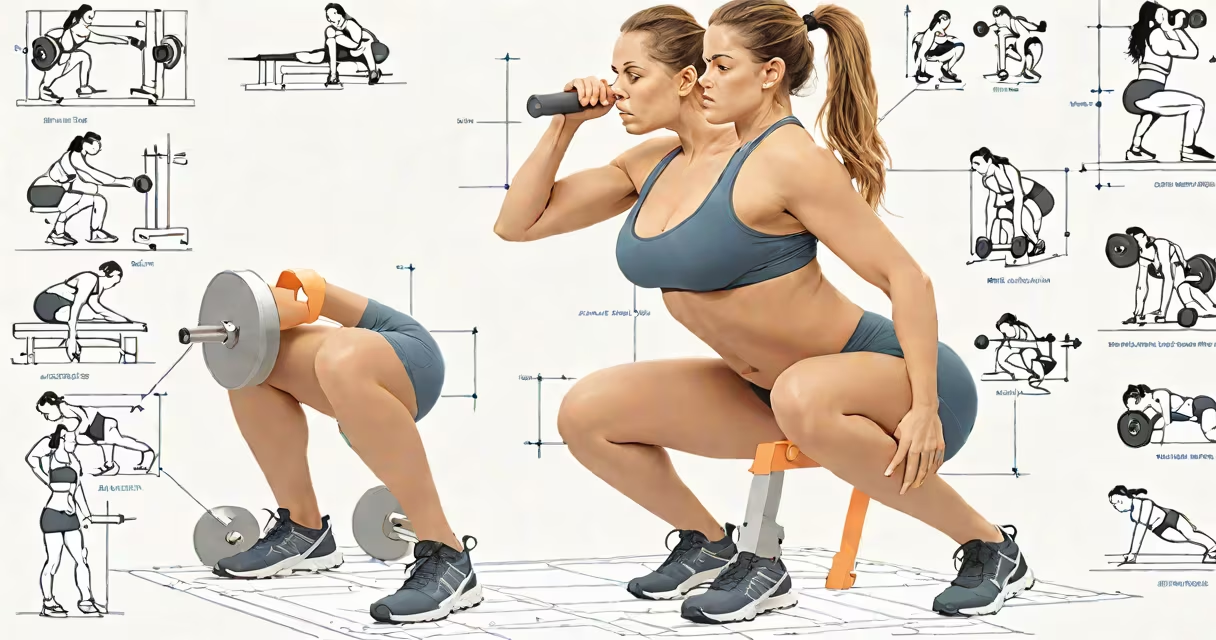
Targeted fat loss in the thighs and buttocks is not possible through exercise alone; fat reduction occurs systemically. To lose fat in these areas quickly, combine consistent resistance training, calorie-controlled nutrition, and cardiovascular activity while maintaining long-term adherence.
Fat is stored throughout the body in adipocytes, and when energy intake drops below expenditure, the body draws from fat stores uniformly. The idea that you can "spot reduce" fat from specific zones-like the hips or thighs-is unsupported by clinical evidence. A 2018 study published in Obesity found that participants who performed localized exercises (e.g., leg lifts) did not see greater fat loss in those regions compared to controls performing full-body workouts.
Despite this, many people report visible changes in their lower body during weight loss. This happens because muscle gains from resistance training increase tone and density, making the area appear slimmer even if fat loss is distributed. The key is creating a sustainable deficit while building lean mass.
When you consume fewer calories than your body burns, it accesses stored triglycerides in fat cells. These are broken down into glycerol and free fatty acids, which travel to muscles and organs to fuel activity. This process affects all fat deposits simultaneously, not just the ones you're targeting.
For example, a 160-pound person burning 2,500 kcal/day who reduces intake to 1,800 kcal/day creates a 700 kcal daily deficit. Over seven days, that's 4,900 kcal-equivalent to about 1.4 pounds of fat. The body uses fat from everywhere, including the thighs and glutes, but not preferentially.
Research from the University of Copenhagen confirms that fat loss patterns are genetically influenced. Some individuals lose fat from the abdomen first; others from the hips or arms. There is no way to override this biological pattern with exercise alone.
To visibly reduce thigh and buttock fat, focus on fat loss through structured habits. Prioritize strength training, balanced nutrition, and regular cardio.
A 12-week study in Journal of Strength and Conditioning Research showed that participants who combined resistance training with a 15% calorie deficit lost 4.5 kg of body fat, with significant reductions in both abdominal and lower body fat, despite no targeted exercises.
Many people try isolated exercises like leg curls or side-lying leg lifts, believing they'll shrink their thighs. These movements strengthen muscles but don't burn more fat in the area. They may improve tone but won't eliminate fat deposits.
Another error is relying solely on cardio. While effective for calorie burn, it doesn't preserve muscle. Without resistance training, you risk losing both fat and lean tissue, leading to a less toned appearance.
Some products claim to "melt" thigh fat with creams or wraps. These are ineffective. Topical applications cannot penetrate deep enough to affect subcutaneous fat cells. The FDA has issued warnings against such products.
Not all workouts produce equal results. Here's how different approaches affect lower body fat and muscle.
| Training Type | Primary Effect | Best For |
|---|---|---|
| Compound resistance training | Burns calories during and after session; increases resting metabolism | Long-term fat loss, muscle gain, improved body shape |
| High-Intensity Interval Training (HIIT) | Boosts post-exercise calorie burn; improves insulin sensitivity | Time-efficient fat loss; enhanced cardiovascular health |
| Isolated leg exercises | Strengthens muscles; minimal impact on fat loss | Improving muscle tone; rehabilitation |
| Low-intensity steady-state cardio | Consistent calorie burn; low injury risk | Beginners; recovery days |
I once trained a client who spent 45 minutes daily on leg machines and side leg raises. After six weeks, her body fat percentage dropped only 0.8%, and her thighs remained unchanged. Switching to full-body strength sessions and adjusting her diet led to a 3.2% drop in body fat and noticeable tightening in the lower body within eight weeks.
You cannot lose thigh and buttocks fat faster than other areas. The body redistributes fat based on genetics, sex hormones, and age. Women tend to store more fat in the hips and thighs due to estrogen's role in promoting subcutaneous fat deposition.
Even with optimal training and diet, you may not see dramatic changes in 2-3 weeks. Visible results typically emerge after 8-12 weeks of consistent effort. Patience and persistence beat quick fixes.
There is no safe or effective way to lose thigh and buttocks fat faster than other areas. Success comes from systemic fat loss via calorie control, strength training, and cardiovascular activity. Avoid gimmicks and focus on sustainable habits.