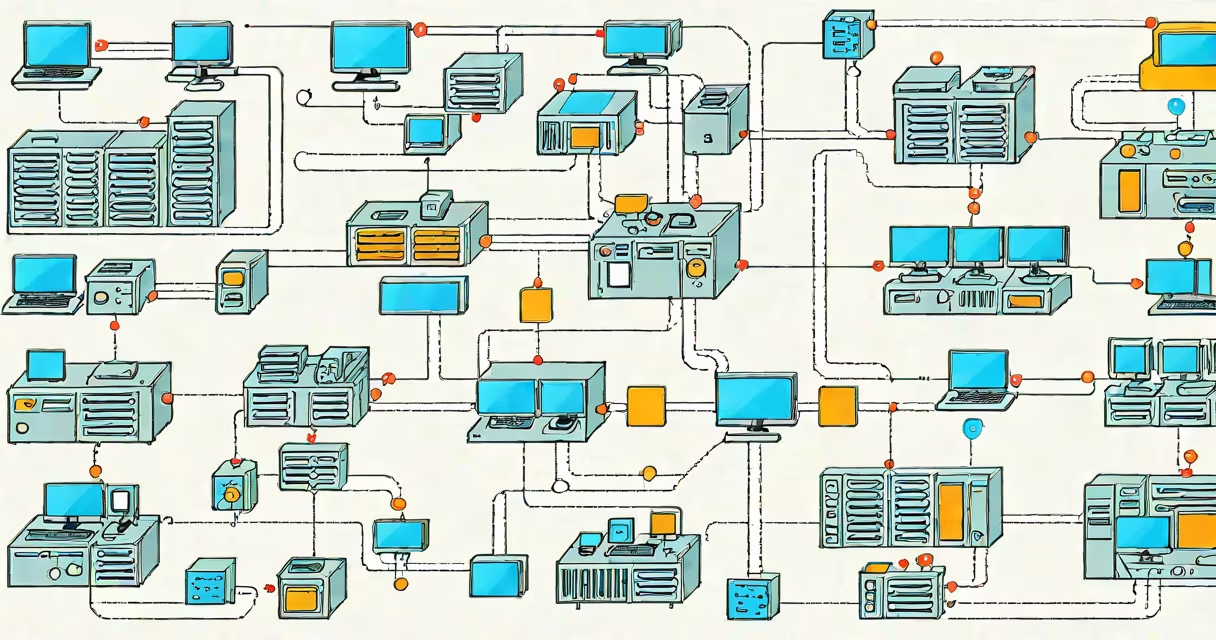
Examples of SDN demonstrate how software-defined networking centralizes control of network infrastructure through programmable logic, enabling automated, scalable, and agile network management. This model separates the control plane from the data plane, allowing administrators to manage entire networks via software rather than manually configuring individual devices.
SDN operates by placing a centralized controller between network hardware and applications. The controller uses protocols like OpenFlow to communicate with switches and routers, instructing them on how to forward traffic based on policies, security rules, or current load conditions. This setup allows rapid reconfiguration during outages, traffic optimization, and integration with cloud platforms.
Major vendors such as Cisco, Juniper, and VMware offer SDN solutions, but real-world implementations vary widely. Examples of SDN appear in enterprise data centers, service provider networks, and academic research environments. These deployments differ in scale, complexity, and goals-but all rely on the core principle: network behavior is defined by software, not hardware configuration.
At its core, SDN replaces static routing tables with changing decision-making driven by a central controller. When a packet arrives at a switch, the switch checks its flow table. If no matching rule exists, it forwards the packet to the controller, which evaluates the policy and sends back a new rule to apply. This process enables real-time adaptation to changing network demands.
For example, in a university campus network, SDN can detect a spike in video streaming traffic during a live lecture. The controller automatically allocates bandwidth to the relevant VLANs and blocks non-essential traffic. This happens within milliseconds-far faster than manual reconfiguration.
The controller communicates with network devices using standardized protocols. OpenFlow is the most common, though others like P4 and NETCONF are gaining traction. These protocols define how the controller commands switches, ensuring interoperability across different hardware vendors.
SDN is not a single product-it's a design philosophy applied in multiple ways. The primary categories are:
| Type | Description | Use Case Example |
|---|---|---|
| OpenFlow-based SDN | Uses OpenFlow protocol to separate control and data planes. Devices are programmable via a central controller. | Google's B4 network, which connects data centers globally using custom SDN controllers. |
| Overlay-based SDN | Creates virtual networks on top of physical infrastructure using VXLAN or GRE tunnels. Common in cloud environments. | VMware NSX manages thousands of virtual machines across data centers using overlay networks. |
| Hybrid SDN | Combines traditional routing with SDN features. Used during migration from legacy systems. | A hospital system gradually replacing older routers with SDN-capable switches while maintaining compatibility. |
Each type serves different needs. OpenFlow-based SDN offers maximum control but requires compatible hardware. Overlay SDN is ideal for multi-tenant clouds because it isolates traffic between users. Hybrid SDN reduces risk during phased rollouts.
Many assume SDN is synonymous with cloud computing or virtualization. That's incorrect. While SDN often runs in cloud environments, it functions independently. A data center can deploy SDN without using public cloud services.
Another myth is that SDN eliminates the need for network engineers. In reality, SDN increases demand for skilled personnel who understand both networking and programming. According to the Cisco Networking Academy, SDN roles require knowledge of Python, REST APIs, and network automation tools.
There's also confusion about SDN's security posture. SDN improves visibility and enforcement of policies-but it introduces new attack surfaces. A compromised controller can redirect all traffic. Best practices recommend strict access controls, encryption of controller-to-switch communication, and regular audits.
One of the earliest large-scale SDN deployments was Google's B4 network. Launched in 2010, B4 connected Google's global data centers using custom SDN controllers. The system reduced network congestion by 95% and cut costs by eliminating redundant hardware. Google reported that B4 handled over 100 terabits per second of traffic across 14 countries.
In education, the University of California, San Diego (UCSD) implemented an SDN testbed called "FiberNet." Using OpenFlow switches and a custom controller, researchers simulated traffic patterns under stress. They measured response times during DDoS attacks and optimized routing paths dynamically. Results showed a 60% improvement in fault recovery speed compared to traditional setups.
Enterprise adoption is growing too. A major U.S. bank deployed VMware NSX across its 20 regional data centers. The goal was to automate security policies across virtual machines. Instead of manually applying firewall rules per server, the SDN controller enforced micro-segmentation based on application role and user group. This reduced configuration errors by 80% and shortened incident response time from hours to minutes.
I built a small-scale SDN lab using Open vSwitch and Mininet. With a single Raspberry Pi running OpenDaylight, I simulated a network with five hosts and two switches. By writing a Python script to define flow rules, I could reroute traffic around a failed link in under 3 seconds. The experience confirmed that SDN isn't theoretical-it works reliably at scale with minimal hardware.
SDN is most effective in environments requiring frequent changes, high scalability, or tight integration with automation systems. Data centers benefit from SDN's ability to provision virtual networks instantly. Service providers use it to offer changing bandwidth allocation to customers. Campus networks use SDN for guest access control and IoT device segmentation.
According to a 2023 report by Gartner, 60% of large enterprises plan to adopt SDN in their core infrastructure by 2026. Adoption is slower in small businesses due to cost and expertise barriers, but managed SDN services are reducing entry thresholds.
SDN also supports emerging technologies. In 5G networks, SDN enables network slicing-creating isolated virtual networks for different services like autonomous vehicles, telemedicine, and smart cities. Each slice operates with distinct performance and security profiles, all managed through a single controller.
Examples of SDN show that the technology is not limited to theory or niche labs. Real deployments exist in global networks, universities, banks, and telecom providers. The shift from hardware-centric to software-driven network control brings measurable gains in efficiency, resilience, and agility. Understanding these examples helps clarify how SDN fits into modern IT strategy.