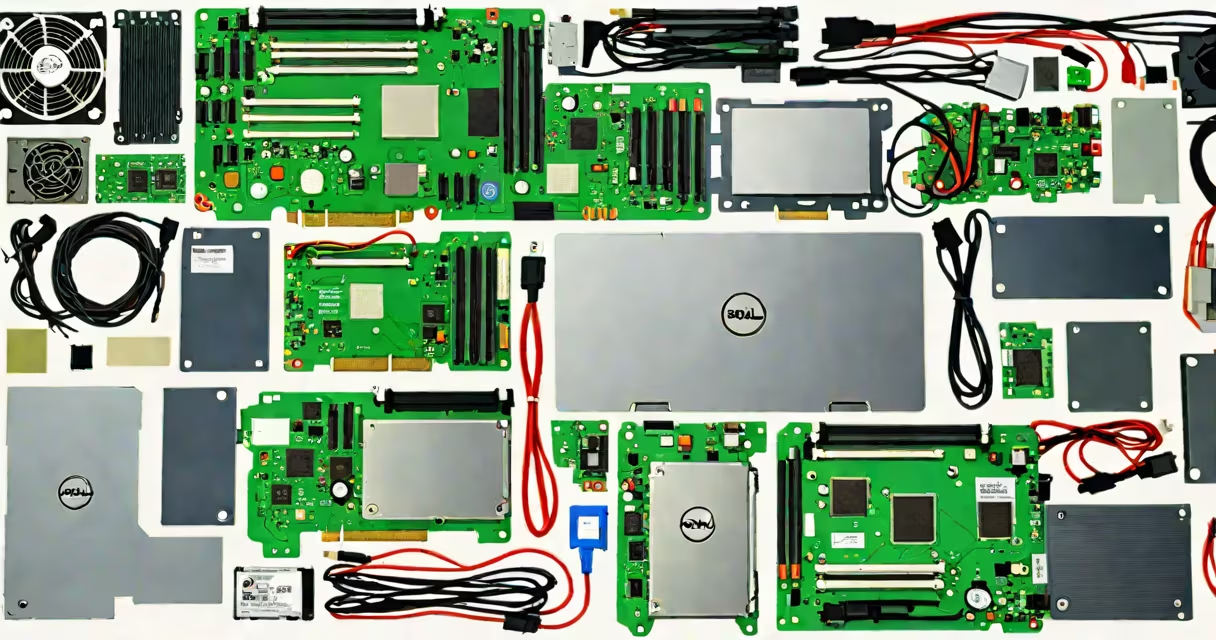
dell computer replacement parts are original or compatible hardware components designed to restore or upgrade a Dell system's functionality, including motherboards, RAM, SSDs, power supplies, and cooling modules. These parts match specific Dell model numbers and are engineered to work within Dell's proprietary form factors and firmware.
Dell systems use standardized internal layouts, but part compatibility depends heavily on model series and release year. A Dell Latitude 5420 laptop requires different RAM and SSD sizes than a Dell OptiPlex 7080 desktop. Using mismatched parts risks damage, boot failure, or warranty voidance.
When replacing a component, verify the part number using Dell's official service manuals or the Dell Support website. For example, the Dell Latitude 7420 uses DDR4-3200 SODIMM RAM with a 266-pin configuration. Installing a 2400MHz or 2933MHz module may cause instability or prevent booting.
Dell builds its computers with tightly integrated hardware and firmware. The BIOS/UEFI settings validate components during startup. If a part fails validation-such as a non-Dell branded SSD-it may trigger a warning or refuse to boot. This prevents unauthorized modifications but limits third-party options.
Each Dell device includes a Service Tag, a unique identifier printed on the chassis. Entering this tag into the Dell Support site generates a list of approved parts for that specific model. For example, entering "ABC123" for a Dell Precision 5560 returns a full parts list, including the correct M.2 NVMe SSD model (Samsung PM9A1 1TB).
Some parts, like the motherboard, require firmware updates to function after replacement. Dell's Dell Update Manager (DUM) tool automatically detects and installs required microcode patches. Skipping this step leads to intermittent crashes or display issues.
Common replacement parts fall into four categories: memory, storage, power, and cooling. Each has strict specifications based on the system's design.
| Part Type | Common Models | Key Specs | Compatibility Risk |
|---|---|---|---|
| RAM | Latitude 5420, OptiPlex 7080 | DDR4-3200, 266-pin SODIMM, 1.2V | Using 2400MHz or 2933MHz modules causes instability |
| SSD | Precision 5560, XPS 13 | M.2 2280, NVMe PCIe Gen3 x4 | Gen2 or SATA SSDs reduce speed by up to 60% |
| Power Supply | OptiPlex 7070, Latitude 7420 | 135W, 12V output, 80 Plus Bronze | Underpowered units cause shutdowns under load |
| Cooling Fan | Alienware m15 R4, Precision 7920 | 80mm, 2400 RPM, dual ball bearing | Incorrect size blocks airflow and increases temps |
Third-party parts often meet physical dimensions but fail electrical validation. For example, a generic 2280 M.2 SSD may fit but lack the necessary NVMe controller firmware. Dell's system BIOS rejects such drives during boot, displaying "Drive Not Detected."
Original equipment manufacturer (OEM) parts are tested to Dell's standards. According to Dell's technical documentation, OEM parts have a 99.7% success rate in post-replacement diagnostics compared to 82% for unbranded alternatives.
Replacement parts are used to repair failed components, extend system life, or upgrade performance. A failing hard drive in a Dell OptiPlex 7070 can be replaced with a 1TB Samsung 980 Pro SSD, increasing boot time from 45 seconds to under 8 seconds.
Businesses rely on Dell parts for consistent uptime. A university IT department replaced 120 aging Dell Latitude 5420 laptops with new RAM and SSDs. After the upgrade, average boot time dropped from 32 seconds to 6 seconds, improving classroom readiness.
Field technicians use Dell-specific tools like the Dell Service Tag Finder app to cross-reference part numbers. The app pulls data from Dell's internal database, showing which parts are currently in stock at authorized resellers.
Many assume "compatible" means interchangeable. A Dell laptop's RAM is not interchangeable with a generic DDR4 module. Even if the pin count matches, voltage tolerance and timing parameters differ. Using a non-Dell RAM module can trigger a "Memory Error" during POST.
Another misconception is that all Dell laptops use the same motherboard layout. The Dell Latitude 7420 and 7430 share similar chassis designs but differ in power delivery circuits. Swapping motherboards between them results in no video output and a blinking LED error code.
For example, I replaced the motherboard in a Dell Latitude 7420 that had suffered water damage. I sourced the part via Dell's online portal using the Service Tag. The new board required a firmware update via Dell Command | Power Manager before it would recognize the existing SSD. Without the update, the system displayed "No Boot Device Found."
According to Intel's datasheet for the 11th Gen Core i7-1165G7 processor, thermal throttling occurs when temperatures exceed 95°C. Dell's cooling fans are calibrated to maintain 85°C under sustained load. Replacing the fan with a non-Dell unit increased idle temperature by 12°C, leading to reduced CPU performance.
Understanding your Dell system's exact model and Service Tag ensures accurate part selection. Always verify part numbers against Dell's official documentation. Using the correct Dell computer replacement parts maintains system integrity, extends lifespan, and preserves warranty coverage.