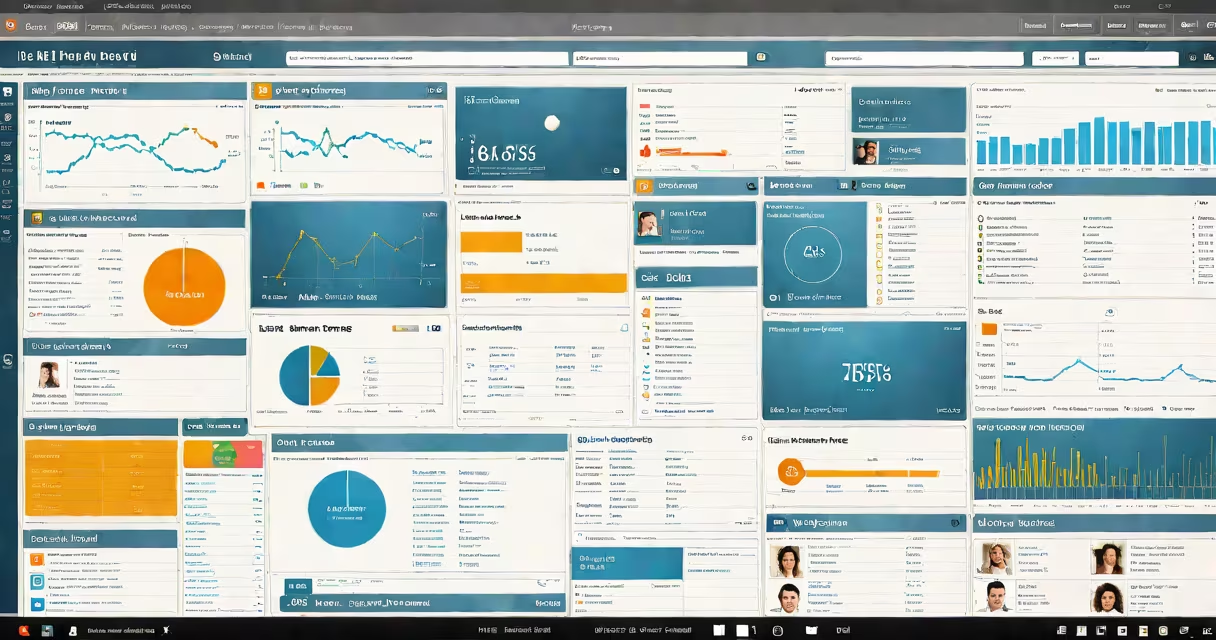
A web based hr management system is a cloud-hosted software platform that automates employee records, time tracking, payroll processing, performance reviews, and compliance reporting through a secure internet connection. It replaces manual HR tasks with centralized digital workflows accessible from any device with browser access.
These systems run entirely on remote servers managed by vendors. Employees and administrators log in via a web browser using unique credentials. All data is stored in encrypted databases hosted in data centers, not on local computers. This eliminates the risk of data loss from hardware failure and enables real-time updates across teams.
For example, a company with 150 employees in three U.S. states uses a web based hr management system to track work hours, manage vacation accruals, and generate federal tax forms. When an employee submits a leave request, the system automatically checks available balance, notifies their manager, and updates the calendar-all within 90 seconds. The same system generates quarterly payroll reports that comply with IRS Form W-2 requirements.
The core function of a web based hr management system is to digitize and automate HR operations. When a new hire is added, the system creates a profile with fields for personal details, emergency contacts, employment start date, and job title. It then triggers automated onboarding checklists, assigns training modules, and schedules orientation sessions.
Time and attendance features track clock-ins and out times through geolocation verification and biometric authentication options. Data flows into payroll engines that calculate gross pay, apply tax withholdings, and generate direct deposit files. The system integrates with external services like QuickBooks for accounting and ADP for tax filing.
Performance management modules allow managers to set goals, schedule reviews, and store feedback. Reports show team engagement levels, turnover rates, and diversity statistics. Alerts notify HR when an employee's performance drops below threshold or when a contract renewal is due.
Modern web based hr management systems offer tiered functionality based on business size and complexity. Basic plans focus on employee records and absence tracking. Advanced versions include AI-driven analytics, predictive attrition modeling, and integrated learning management systems.
| Type | Best For | Key Features | Typical Cost |
|---|---|---|---|
| Basic | Small businesses (<100 employees) | Employee database, leave tracking, basic reporting | $5-$10/user/month |
| Mid-tier | Growing companies (100-500) | Payroll integration, performance reviews, compliance alerts | $15-$25/user/month |
| Enterprise | Larger organizations (>500) | AI analytics, multi-country compliance, mobile app sync | $30+/user/month |
One non-obvious distinction: not all systems support offline mode. Some require constant internet access, while others cache data locally and sync when connectivity returns. A company with field staff in rural areas chose a system with offline capability to avoid losing time entries during network outages.
Many assume a web based hr management system is simply a digital version of a spreadsheet. That's incorrect. While spreadsheets can track employee IDs and salaries, they lack audit trails, role-based permissions, and automated compliance checks. A single error in a formula can affect hundreds of payroll calculations.
Another myth is that these systems replace HR professionals. They don't. Instead, they free HR staff from repetitive tasks. According to the Society for Human Resource Management (SHRM), organizations using such platforms report a 40% reduction in time spent on administrative duties. HR teams redirect that time toward strategic initiatives like talent development and culture building.
I once observed a small tech firm switch from Excel sheets to a web based hr management system. Within two weeks, they reduced payroll errors by 92% and cut onboarding time from five days to under 48 hours. The HR coordinator said, "I used to spend 15 hours a week fixing formulas. Now I focus on hiring quality candidates."
Industries with high employee turnover-retail, hospitality, healthcare-benefit most. These sectors rely on accurate scheduling, shift swapping, and compliance with labor laws. A restaurant chain with 20 locations uses its web based hr management system to auto-generate weekly schedules based on staffing needs, employee availability, and state minimum wage rules.
Remote-first companies depend on these systems for distributed workforce coordination. A SaaS startup with employees in 12 countries uses its platform to track work hours across time zones, enforce overtime policies, and ensure adherence to GDPR and CCPA data privacy regulations.
Security is a top concern. Reputable providers follow ISO 27001 standards for information security and undergo annual third-party audits. Data encryption occurs both in transit (TLS 1.3) and at rest (AES-256). Access is restricted by role-managers see team data only, HR admins see all records, and employees view only their own profiles.
When selecting a provider, verify whether the system supports single sign-on (SSO) via Microsoft Azure AD or Okta. This prevents password sprawl and reduces account takeover risks. The U.S. Department of Labor notes that unsecured HR portals are a common vector for phishing attacks targeting payroll data.
On-premise HR software runs on internal servers and requires IT staff to maintain. It offers greater control over data location but demands higher upfront costs and ongoing maintenance. Web based systems eliminate those burdens but require trust in the vendor's infrastructure.
Mobile management system apps provide limited functionality compared to full web platforms. They're useful for quick approvals or checking schedules on the go, but cannot handle complex payroll processing or compliance reporting. For complete HR oversight, a mobile interface is a supplement-not a replacement-for the full web application.
Web based hr management systems are not just tools-they are operational foundations for modern human resources. They enable consistent policy enforcement, reduce legal exposure, and improve employee satisfaction through transparency and timely responses.
Organizations that adopt them gain measurable efficiency. A 2023 SHRM survey found that companies using web based hr management systems had 34% lower employee turnover than those relying on manual processes. The difference stems from faster response times to issues like scheduling conflicts or benefits enrollment delays.
Every organization with people to manage should evaluate a web based hr management system as a standard part of its operational toolkit. It's not optional-it's foundational.