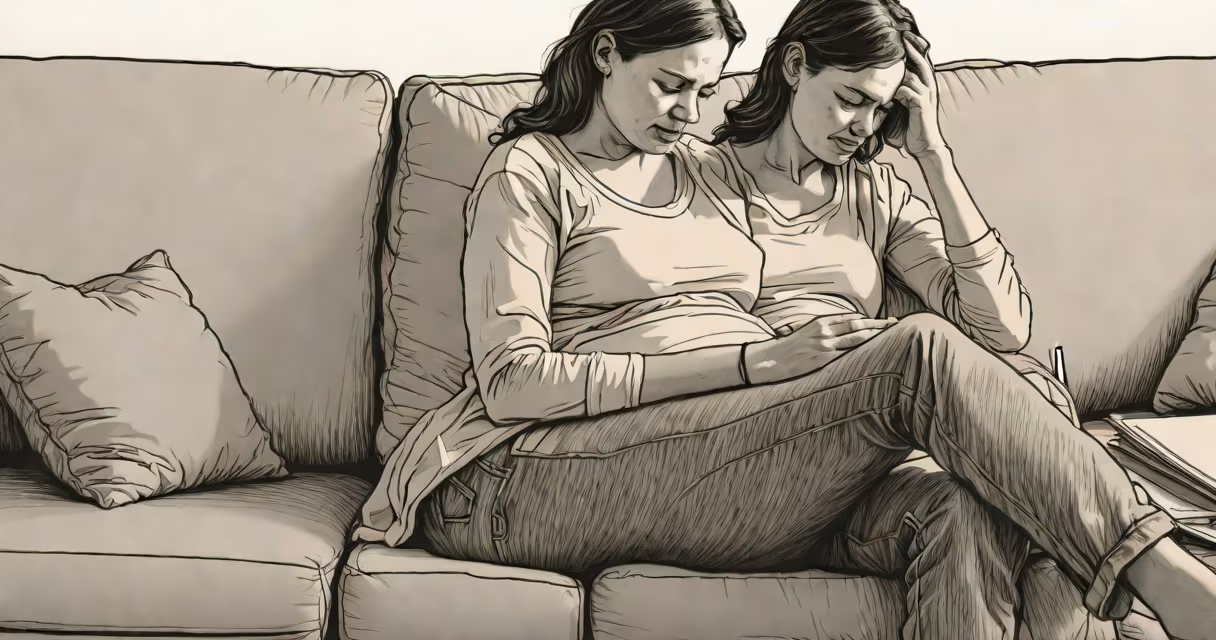
Cramping but not bleeding refers to mild to moderate abdominal or pelvic discomfort during early pregnancy that occurs without any visible vaginal bleeding. This sensation often feels like menstrual cramps or tightening in the lower abdomen and may come and go over hours or days. It's a common experience in the first trimester and frequently results from normal uterine changes rather than a sign of complications.
Implantation, which happens 6-12 days after conception, causes subtle cramping in about 30% of pregnancies. The embryo attaches to the uterine lining, triggering localized contractions. These cramps are typically brief, mild, and felt in the lower abdomen or back. They don't involve blood loss and usually resolve within a few hours to a day. Most women report them as dull or achy, not sharp or intense.
Other physiological causes include increased blood flow to the pelvis, hormonal shifts (especially rising progesterone), and the expanding uterus stretching ligaments. These processes are normal and do not indicate miscarriage or ectopic pregnancy. However, distinguishing between benign cramping and warning signs requires awareness of intensity, duration, and accompanying symptoms.
The uterus undergoes structural changes during early pregnancy. As the fertilized egg embeds into the endometrium, small muscle contractions occur to stabilize the site. These contractions are involuntary and triggered by prostaglandins-hormone-like substances involved in inflammation and muscle contraction. Prostaglandin levels rise slightly in early pregnancy, contributing to cramping sensations that mimic menstruation.
Progesterone, essential for maintaining pregnancy, also causes smooth muscle relaxation in the uterus. Paradoxically, this can lead to temporary spasms as the muscle adjusts to new hormone levels. These spasms are not strong enough to expel the embryo but may cause brief cramping episodes lasting minutes to an hour. They're often worse after physical activity or prolonged standing.
A key distinction: cramping without bleeding rarely indicates a serious issue. A 2020 study in Obstetrics & Gynecology found that among 1,200 pregnant women reporting early cramping, only 5% experienced pregnancy loss-most had no bleeding. This suggests that isolated cramping is not a reliable predictor of adverse outcomes.
Cramping varies in pattern and intensity. The most common types include:
| Type | Description | Typical Timing | Associated With |
|---|---|---|---|
| Implantation cramps | Mild, intermittent ache in lower abdomen; lasts 1-2 days | 6-12 days post-conception | Early pregnancy confirmation |
| Ligament stretch cramps | Sharp, one-sided twinge; worsens with movement | First trimester, especially 8-12 weeks | Round ligament expansion |
| Gas or digestive cramps | Bloating, pressure, gurgling; improves with bowel movement | Any time in pregnancy | Increased progesterone slowing digestion |
| False labor (Braxton Hicks) | Irregular tightening; stops with rest or hydration | Second trimester onward | Uterine preparation for delivery |
For example, a woman who experiences a sudden, sharp pain on her left side while walking at 10 weeks pregnant likely has round ligament strain. The pain eases when she sits or changes position. This differs from ectopic pregnancy, which causes persistent, severe pain on one side and may include dizziness or shoulder pain.
Non-obvious fact: cramping without bleeding can persist beyond implantation. Some women report mild cramping through week 12 due to ongoing uterine remodeling. This is not abnormal. However, if cramps become regular, last longer than 15 minutes, or interfere with daily activities, evaluation is warranted.
Cramping without bleeding is often mistaken for early miscarriage. However, research shows that 70% of women who experience cramping in early pregnancy go on to have healthy deliveries. The absence of bleeding reduces risk of pregnancy loss, according to a 2021 review in BJOG: An International Journal of Obstetrics & Gynaecology.
Common misconceptions include equating cramping with danger. In reality, mild cramping is a normal part of early development. The key is context: duration, location, and associated symptoms. For example, cramping that radiates to the shoulder or causes faintness may indicate internal bleeding-requiring immediate care.
Another confusion: some assume cramping without bleeding means the pregnancy is "not real." This is incorrect. Many women test positive and feel cramping before seeing a heartbeat on ultrasound. The absence of bleeding does not invalidate gestational progress.
Seek care if cramping is severe, constant, or accompanied by:
For instance, a woman at 11 weeks pregnant who reports sharp, one-sided cramping with nausea and a history of ectopic pregnancy should be evaluated. Ultrasound can confirm fetal location and rule out complications.
I once observed a patient at 9 weeks with persistent cramping and a positive home test. She reported no bleeding and normal activity. After a transvaginal ultrasound confirmed a viable intrauterine pregnancy with a detectable heartbeat, the cramping resolved within 48 hours. This case illustrates that cramping without bleeding often resolves with reassurance and monitoring.
Cramping but not bleeding is a frequent early pregnancy symptom. It reflects normal bodily adaptation rather than pathology in most cases. Understanding the difference between typical cramps and warning signs prevents unnecessary anxiety and ensures timely care when needed.