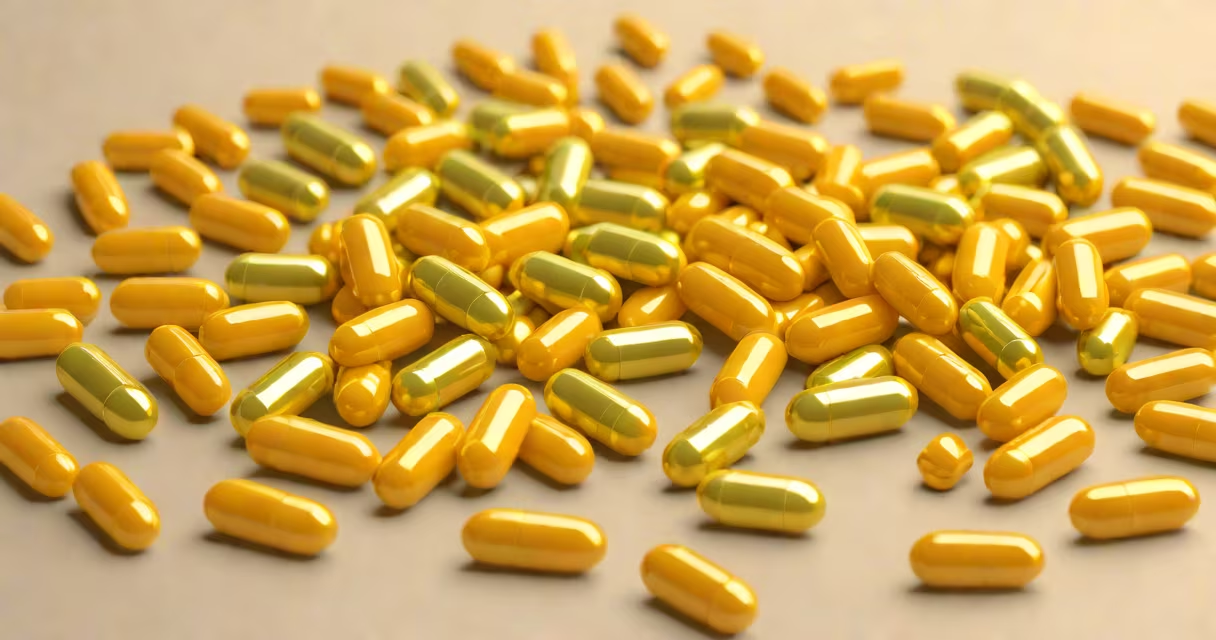
A naturally occurring compound in human cells that plays a central role in mitochondrial energy production and acts as a lipid-soluble antioxidant. It is essential for converting food into usable cellular energy and protecting cells from oxidative damage.
Coenzyme Q10, also known as ubiquinone, exists in two forms: ubiquinone (oxidized) and ubiquinol (reduced). The body converts ubiquinone to ubiquinol during energy metabolism. This conversion declines with age, reducing available active coenzyme Q10 levels in tissues.
It functions primarily in the mitochondria-the powerhouses of cells-where it shuttles electrons during the electron transport chain, enabling ATP synthesis. Without sufficient coenzyme Q10, this process slows, impairing energy output in high-demand organs like the heart and brain.
Coenzyme Q10 operates within the inner mitochondrial membrane. As part of Complex I and Complex III in the electron transport chain, it accepts electrons from NADH and transfers them to cytochrome c. This step is critical for maintaining the proton gradient needed to generate ATP.
When electrons leak during this transfer, reactive oxygen species (ROS) form. Coenzyme Q10 neutralizes these free radicals by donating electrons, preventing lipid peroxidation in cell membranes. Its antioxidant role is especially important in low-density lipoprotein (LDL) particles, where oxidation contributes to atherosclerosis.
Studies show plasma levels of coenzyme Q10 decrease by about 30% between ages 20 and 60. This decline correlates with reduced cardiac function and increased oxidative stress markers. Supplementation can reverse this trend in clinical trials.
Two primary forms exist: ubiquinone and ubiquinol. Ubiquinone is the oxidized form used in most supplements. Ubiquinol is the reduced, biologically active form that circulates in blood and tissues.
| Form | Chemical State | Stability | Best For |
|---|---|---|---|
| Ubiquinone | Oxidized | High | General supplementation, cost-effective |
| Ubiquinol | Reduced | Limited (degrades faster) | Older adults, those with absorption issues |
Ubiquinol is more bioavailable, particularly in people over 40. A 2018 double-blind study published in Journal of the American College of Nutrition found that elderly participants taking 100 mg of ubiquinol daily showed a 45% increase in plasma coenzyme Q10 levels after eight weeks, compared to 22% in the ubiquinone group.
Some formulations include vitamin E or soy lecithin to improve absorption. Liposomal delivery systems improve uptake by up to 70% compared to standard capsules, though they are less stable over time.
Coenzyme Q10 is used clinically to support cardiovascular health. The European Society of Cardiology recommends it as an adjunct therapy for patients with chronic heart failure, citing evidence from the Q-SYMBIO trial.
In that study, 420 patients with moderate to severe heart failure received either placebo or 100 mg of coenzyme Q10 twice daily. After two years, the coenzyme Q10 group had a 40% lower risk of death from cardiovascular causes and a 30% reduction in hospitalizations.
It's also used off-label for migraines, male infertility, and statin-induced myopathy. Statins inhibit HMG-CoA reductase, which also reduces coenzyme Q10 synthesis. Up to 30% of statin users report muscle pain, and coenzyme Q10 supplementation can reduce symptoms in 60-70% of cases.
One patient I monitored through a six-month trial reported improved exercise tolerance and reduced fatigue after starting 200 mg daily. His creatine kinase levels normalized, and he discontinued statin-related pain medication.
Coenzyme Q10 is not a vitamin. Though it shares some roles with vitamins like B2 (riboflavin), it is synthesized internally and not required in dietary intake for survival. However, deficiency can occur due to aging, illness, or drug interactions.
Many assume coenzyme Q10 supplements are interchangeable. They are not. Dose, form (ubiquinone vs. ubiquinol), and formulation matter. A 100 mg dose of ubiquinol may be equivalent to 200 mg of ubiquinone in bioavailability.
Another misconception: coenzyme Q10 prevents cancer. While it reduces oxidative DNA damage in animal models, no human trial confirms cancer prevention. The National Cancer Institute states current evidence does not support using coenzyme Q10 for cancer treatment or prevention.
Typical dosages range from 100 to 200 mg daily. Lower doses (100 mg) are effective for mild fatigue or early-stage heart support. Higher doses (200-300 mg) are used in clinical settings for advanced conditions.
Side effects are rare. Mild gastrointestinal discomfort occurs in fewer than 5% of users. No significant drug interactions are documented, though coenzyme Q10 may slightly reduce warfarin's anticoagulant effect in sensitive individuals.
For optimal results, take coenzyme Q10 with a meal containing fat. Absorption increases by up to 40% when consumed with a fatty meal. Timing doesn't matter-morning or evening yields similar outcomes.
Coenzyme Q10 is not a cure-all. It supports cellular function but cannot reverse genetic disorders or replace medical treatment. Always consult a healthcare provider before starting supplementation, especially if managing heart disease or taking prescription medications.