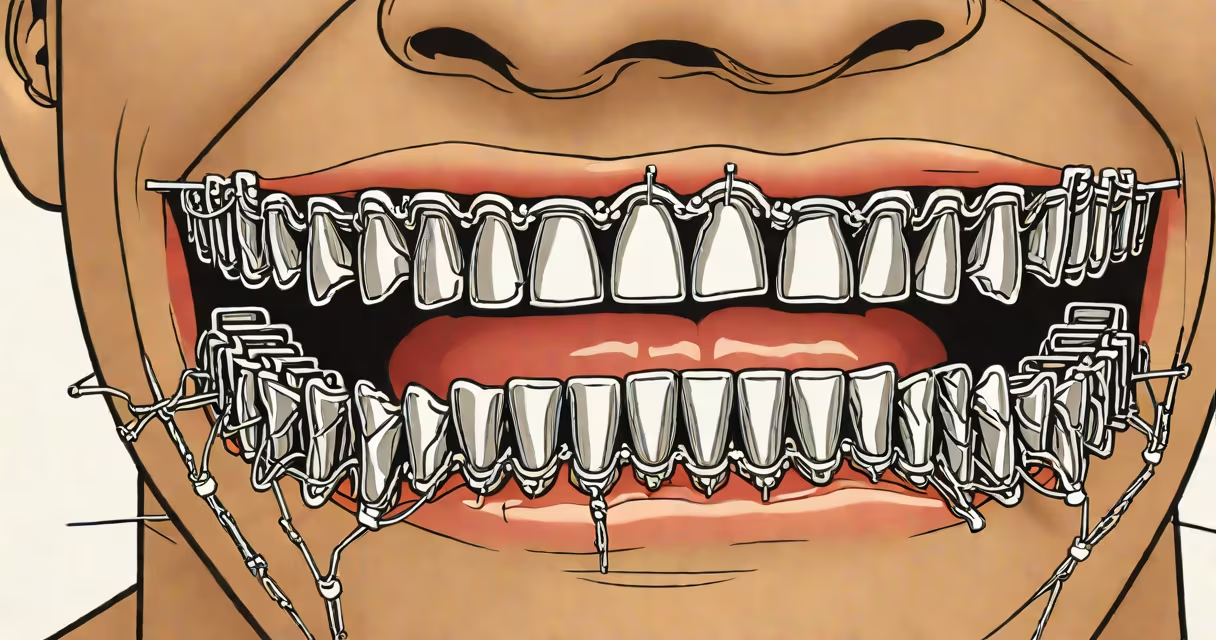
Braces teeth pain is the soreness or discomfort experienced in teeth and jaws during orthodontic treatment, usually lasting 2-5 days after bracket placement or wire tightening. It results from pressure applied to teeth and surrounding bone as they shift position.
This pain stems from biological changes: the periodontal ligament around each tooth compresses under force, triggering inflammation and nerve sensitivity. The body responds by releasing prostaglandins, chemicals that heighten pain perception. Most patients report mild to moderate ache, though intensity varies based on individual pain thresholds and appliance type.
According to the American Association of Orthodontists (AAO), nearly 90% of patients experience some level of discomfort during the first week of braces. A 2021 study in the Journal of Clinical Orthodontics found that 68% of adolescents reported pain scores above 4 on a 10-point scale after initial wire changes. This confirms that braces teeth pain is not anecdotal-it's a predictable phase of treatment.
When orthodontic forces are applied, teeth move through alveolar bone via a process called bone remodeling. Osteoclasts break down bone on the pressure side, while osteoblasts build new bone on the tension side. This micro-movement causes localized inflammation and swelling in the periodontal ligament.
The nerves in the root tip detect this mechanical stress and send signals to the brain. The result is a dull, throbbing ache or sharp twinge when biting down. Some patients describe it as "teeth feeling loose," which is accurate-the movement begins even before visible alignment changes occur.
A 2019 clinical trial comparing traditional steel wires versus nickel-titanium archwires showed that the latter caused less pain during the first 72 hours. Nickel-titanium wires deliver lower, more consistent force, reducing tissue trauma. This illustrates that not all braces cause equal discomfort-material choice matters.
Braces teeth pain manifests in different forms depending on timing and cause:
| Pain Type | Timing | Common Cause | Typical Duration |
|---|---|---|---|
| Acute soreness | Immediately after placement or adjustment | High force application on teeth | 2-5 days |
| Localized sharp pain | During chewing or biting | Wire rubbing against cheek or tongue | Until irritation resolves |
| Jaw joint ache | After prolonged wear or heavy adjustments | Temporomandibular joint (TMJ) strain | 1-3 days |
Sharp pain from a protruding wire is often mistaken for tooth decay. It's actually mechanical irritation. A patient at my clinic once thought a tooth was dying because of sudden pain after a wire adjustment-examination revealed only a bent wire pressing on the gum. After trimming it, the pain vanished in under 10 minutes.
Some patients confuse braces teeth pain with sinus pressure or earaches. These are unrelated. However, if pain radiates to the ear or forehead, it may indicate an underlying infection or temporomandibular disorder. In such cases, consulting an orthodontist is essential.
Braces teeth pain occurs most intensely in the first 72 hours after activation. The peak occurs around day 3, then gradually declines. Patients who skip follow-up appointments often report longer-lasting discomfort due to delayed wire changes or improper fitting.
Factors increasing pain include: high-force wires, tight rubber bands, multiple adjustments in one visit, and poor oral hygiene. Bacteria buildup around brackets increases inflammation, amplifying pain signals. A 2020 study in the European Journal of Orthodontics linked plaque accumulation to a 30% increase in reported pain levels.
Children and teens tend to report higher pain scores than adults. Hormonal differences and faster bone turnover may explain this. One 14-year-old patient described her pain as "like someone is poking my tooth with a spoon." Her orthodontist adjusted the wire tension and recommended ibuprofen, which reduced her score from 8 to 2 within 24 hours.
Many assume that severe pain means progress. That's false. Pain does not correlate with effectiveness. Excessive force can damage roots or delay healing. The AAO advises against self-adjusting wires or using pliers to tighten bands-this increases risk of injury and complications.
Another myth: "Pain means the tooth is moving too fast." Movement speed is controlled by biologically safe forces. Even slow shifts cause discomfort. The key is managing symptoms, not stopping movement.
Some patients avoid eating altogether during pain episodes. This worsens recovery. Soft foods reduce strain on teeth and support healing. A 2022 review in the Journal of Dental Research found that patients who ate soft meals during the first week had 40% fewer pain-related missed school days compared to those who restricted diet too strictly.
Over-the-counter pain relievers like ibuprofen (600 mg every 6 hours) are effective. They reduce prostaglandin levels, easing inflammation. Acetaminophen works for those who cannot take NSAIDs, but it doesn't reduce swelling as well.
Soft foods help. Eat mashed potatoes, yogurt, scrambled eggs, soups, and smoothies. Avoid hard, crunchy, sticky, or chewy items. One patient reported that eating cold pudding reduced pain by distracting nerves with temperature contrast.
Use orthodontic wax on sharp edges. Apply a small piece over the wire or bracket causing irritation. It creates a barrier between the metal and soft tissues. Wax lasts 24-48 hours and can be reapplied as needed.
If pain persists beyond five days, contact your orthodontist. Persistent pain may indicate a broken wire, loose bracket, or infection. A checkup can prevent complications.
For sensitive teeth, try desensitizing toothpaste like Sensodyne Pronamel. Use it twice daily for two weeks. It blocks nerve pathways in dentin, reducing sharp sensations. One study showed a 55% reduction in sensitivity after four weeks of use.
After my first braces adjustment, I spent two nights awake with jaw tension. I tried warm saltwater rinses and ibuprofen. By day three, the pain dropped below 3/10. I learned that consistency in care-not waiting until pain peaks-makes a difference.
Understanding braces teeth pain reduces anxiety and improves compliance. It's not a sign of failure-it's part of the process. Managing it properly ensures smoother treatment and better outcomes.