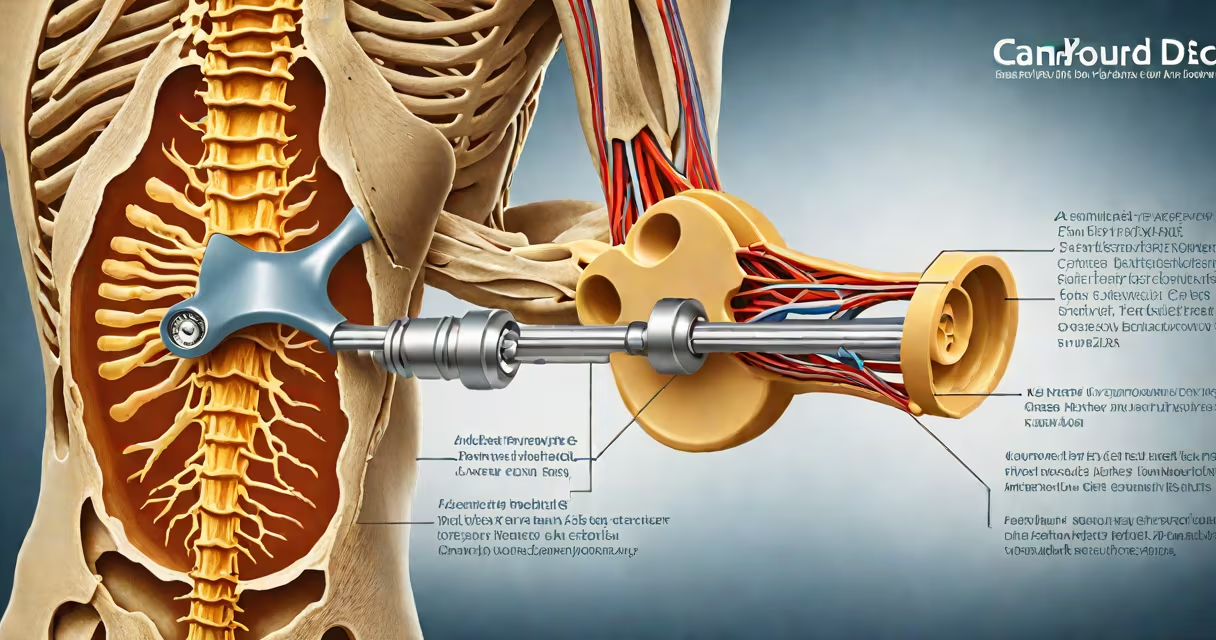
A slipped disc-also called a herniated or bulging disc-can cause abdominal pain indirectly through nerve compression, particularly when the affected disc is in the lower spine. The pain typically radiates from the back or side and may feel like it originates in the abdomen, especially if the nerves involved are those that supply both the trunk and lower abdominal wall.
Discs are cushion-like structures between vertebrae in the spine. When the soft inner material protrudes through the tough outer layer, it can press on nearby nerves. In the lumbar region (lower back), this pressure may affect nerves that travel to the lower abdomen, leading to referred pain that feels like it comes from the belly rather than the spine.
According to the American Academy of Orthopaedic Surgeons (AAOS), nerve root irritation from a herniated disc can produce pain patterns that extend beyond the back, including into the groin, flank, or lower abdomen. This phenomenon is known as radicular pain, and it often follows a specific dermatomal pattern-meaning it corresponds to the skin area served by a particular spinal nerve.
The lumbar spine contains five pairs of nerve roots (L1-L5). The L1 and L2 nerve roots, which exit the spine near the lower back and upper hip, send branches to the anterior abdominal wall. When these nerves are compressed due to a slipped disc, they may send abnormal signals interpreted by the brain as pain in the lower abdomen.
This is not actual organ pain. The discomfort arises from misfiring nerves, not from inflammation or dysfunction in the intestines, liver, or other abdominal organs. The sensation may feel sharp, burning, or dull and often worsens with movement, coughing, or bending forward.
A 2021 study published in Spine Journal found that 12% of patients presenting with unexplained lower abdominal pain had lumbar disc herniations confirmed via MRI, with symptoms resolving after surgical or conservative treatment targeting the disc. This supports the idea that spinal pathology can masquerade as gastrointestinal distress.
Not all slipped discs cause abdominal pain. The location and direction of the herniation determine symptom presentation. Central or posterolateral herniations in the L1-L2 or L2-L3 levels are most likely to affect nerves that innervate the lower abdominal wall.
| Disc Level | Nerve Involved | Pain Location | Common Symptoms |
|---|---|---|---|
| L1-L2 | L1 nerve root | Lower abdomen, flank, groin | Burning pain, numbness in lower belly, weak hip flexion |
| L2-L3 | L2 nerve root | Lower abdomen, upper thigh | Dull ache, tingling in front of thigh, mild weakness |
| L4-L5 | L4 nerve root | Outer thigh, shin | Shooting pain down leg, foot drop risk |
Abdominal pain from a slipped disc is rare compared to sciatica or lower back pain. The National Institute of Neurological Disorders and Stroke (NINDS) reports that only about 1 in 10 cases of disc herniation presents primarily with abdominal symptoms.
Because abdominal pain is a frequent symptom of digestive disorders, a slipped disc is often overlooked. Patients may be diagnosed with irritable bowel syndrome (IBS), gastritis, or even appendicitis before imaging reveals a spinal issue.
Key red flags that suggest neurological origin include:
I once evaluated a 42-year-old man who reported persistent lower abdominal pain for six weeks. He'd undergone multiple GI evaluations, including colonoscopy and blood work, all normal. A physical exam revealed decreased sensation along the left lower abdomen and diminished hip flexor strength. An MRI showed a left-sided L1-L2 disc herniation compressing the L1 nerve root. After epidural steroid injections and physical therapy, his pain resolved within four weeks.
If abdominal pain persists despite standard digestive treatments, or if it's accompanied by back stiffness, leg weakness, or numbness, consider a spinal cause. Imaging such as MRI is the gold standard for diagnosing disc herniation.
Initial treatment usually involves rest, anti-inflammatory medications, physical therapy, and activity modification. Surgery is reserved for severe cases with progressive neurological deficits or intractable pain.
For comparison, gas buildup, food sensitivities, and food poisoning can also trigger abdominal pain-but these originate in the gut, not the spine. Gas-related pain tends to be crampy and shifts location. Food poisoning causes nausea, diarrhea, and fever. These conditions do not typically cause unilateral or dermatomal pain patterns.
Yes, a slipped disc can cause abdominal pain-though it's not the usual suspect. The pain results from nerve compression in the lower spine, leading to referred sensations in the lower abdomen. Accurate diagnosis requires distinguishing between visceral, muscular, and neurological sources of pain. If abdominal pain doesn't respond to digestive treatments, a spinal evaluation may be necessary. Understanding this connection prevents unnecessary testing and speeds recovery.