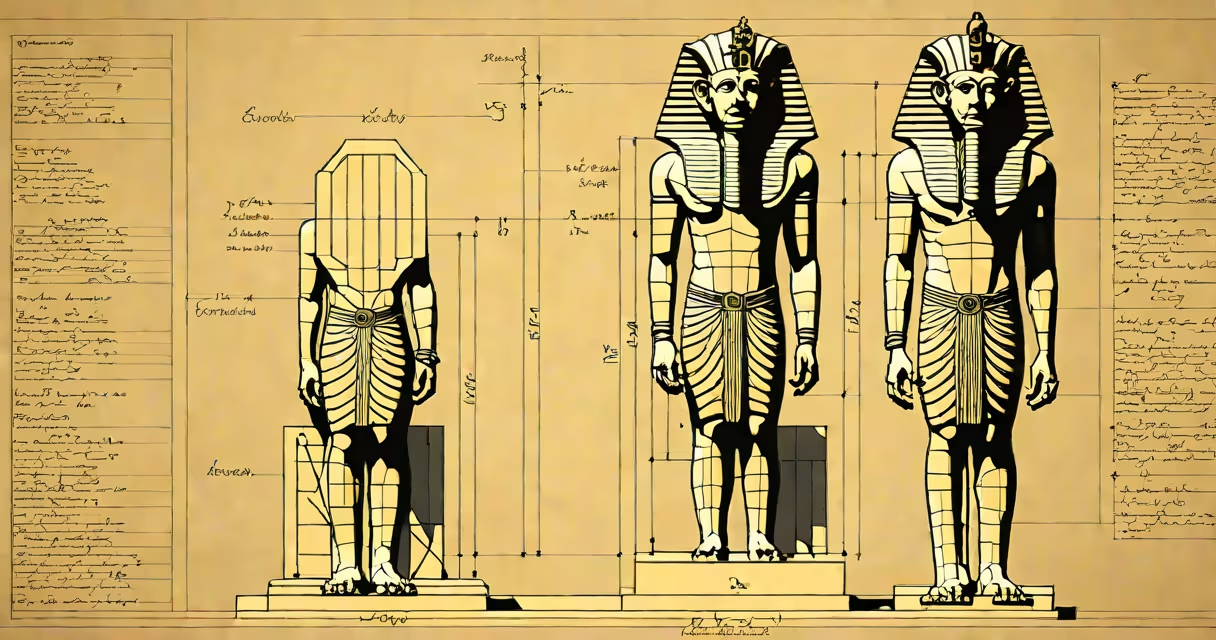
A pharaoh appears as a divine monarch in stylized ancient Egyptian art, depicted with a narrow face, almond-shaped eyes, a long nose, and a false beard. He wears a nemes headdress with a cobra (uraeus) on the forehead, a broad collar (wesekh), and layered linen garments. His posture is rigid and frontal, emphasizing eternal power and connection to the gods.
Pharaohs were not just rulers-they were living gods on Earth. Their appearance in reliefs, statues, and tomb paintings followed strict artistic conventions. These images weren't meant to be realistic portraits but symbolic representations of divine authority. The human form was simplified: shoulders wide, chest forward, legs apart, arms held in formal poses. This style remained consistent for over 3,000 years across dynasties.
The most accurate visual records come from temple carvings and funerary art. For example, the statue of Ramses II at the Temple of Abu Simbel shows him with a lion's mane-like wig, a double crown (pschent), and a crook and flail-symbols of kingship and justice. His face is idealized: no wrinkles, no asymmetry. This wasn't vanity-it was theology. A pharaoh had to appear perfect, eternal, and unchanging.
Artists used standardized proportions. The body was divided into 18 equal parts from head to toe, with the head measuring one-sixth of the total height. This system ensured consistency across artworks. Even when a pharaoh was shown in battle, his pose remained rigid, with one foot forward and arms raised in prayer or combat.
Materials varied. Stone statues were carved from sandstone, granite, or diorite. Wooden figures were painted with pigments derived from minerals-lapis lazuli for blue, malachite for green, ochre for red. Gold leaf covered crowns and jewelry. The color palette carried meaning: blue for rebirth, green for fertility, red for chaos and protection.
One example is the colossal statue of Amenhotep III at Luxor Temple. Standing nearly 10 meters tall, it shows the pharaoh with a serene expression, a short false beard, and a nemes headdress. His hands rest on his thighs, palms open-a gesture of offering. His feet are massive, symbolizing strength and permanence. This statue still stands today, weathered but intact, showing how enduring the image of the pharaoh was.
Each feature served a ritual or theological purpose. Here's what each element meant:
| Feature | Material/Design | Symbolic Meaning |
|---|---|---|
| Nemes headdress | Striped linen, often gold-edged | Divine authority; associated with Horus and Ra |
| False beard | Woven or sculpted, sometimes with a metal tip | Symbol of godhood; linked to Osiris and Amun |
| Uraeus (cobra) | Gold or lapis lazuli, worn on the forehead | Protection; divine wrath; sovereignty |
| Crook and flail | Staffs with animal heads (shepherd's crook, flail) | Rule over people (crook) and fertility (flail) |
| Broad collar (wesekh) | Beaded necklace with amulets | Immortality; protection; status |
These symbols were not decorative-they were functional in the spiritual worldview. A pharaoh without them was not a pharaoh. Even in death, the mummy was buried with replicas of these items. The Book of the Dead includes spells to ensure the deceased king retains his regalia in the afterlife.
Many assume pharaohs looked like modern celebrities-dressed in flowing gowns, with dramatic makeup. That's incorrect. Ancient Egyptian art avoided realism. Faces were not individualized. A pharaoh's likeness was about function, not identity. Two thousand years of art show the same facial structure: high cheekbones, narrow jaw, elongated neck.
Another myth is that pharaohs wore full-body gold suits. They did not. Gold was reserved for jewelry, crowns, and sacred objects. Clothing was lightweight linen, often dyed in bright colors. Priests and nobles wore more elaborate garments, but pharaohs wore minimal clothing except during rituals.
There's also confusion between pharaohs and priests. While both wore white linen and carried staffs, pharaohs were always male and held supreme political and religious power. Priests served temples and performed daily rites-but they never ruled. The pharaoh was the only person who could speak directly to the gods.
The gold funerary mask of Tutankhamun, discovered in 1922, is the most famous representation of a pharaoh's appearance. It measures 54 cm tall and weighs 11 kg. The face is idealized: smooth skin, closed eyes, a thin mouth. The nemes headdress covers the back of the head, and the uraeus sits above the brow. The beard is false, made of gold and lapis lazuli.
This mask was not worn during life. It was placed over the mummy's face to protect the soul in the afterlife. Yet it remains the definitive image of what a pharaoh looks like-because it reflects the core principles of Egyptian iconography: divine perfection, eternal form, and symbolic accuracy.
I once stood in front of this mask at the Egyptian Museum in Cairo. The gold caught the light in a way that made the eyes seem to follow you. You didn't see a man-you saw a god. That moment clarified something I'd read in academic texts: the pharaoh wasn't a person. He was a role. And his appearance was designed to reflect that.
When someone asks "what does a pharaoh look like," they're not asking for a photo. They're asking about the idea of absolute power, divine rule, and eternal order. The answer lies in the conventions of ancient Egyptian art-not in realism, but in ritual.
Modern depictions in films or video games often distort this. Think of the exaggerated crowns in "The Mummy" series or the muscular, heroic pharaohs in "Gods of Egypt." Those aren't accurate. Real pharaohs were shown as calm, still, and distant-like statues carved from stone, not flesh.
When you see a pharaoh in a museum or textbook, remember: this isn't a portrait. It's a message. The face is blank because the pharaoh is not a man-he is a concept. And his appearance is the language of eternity.