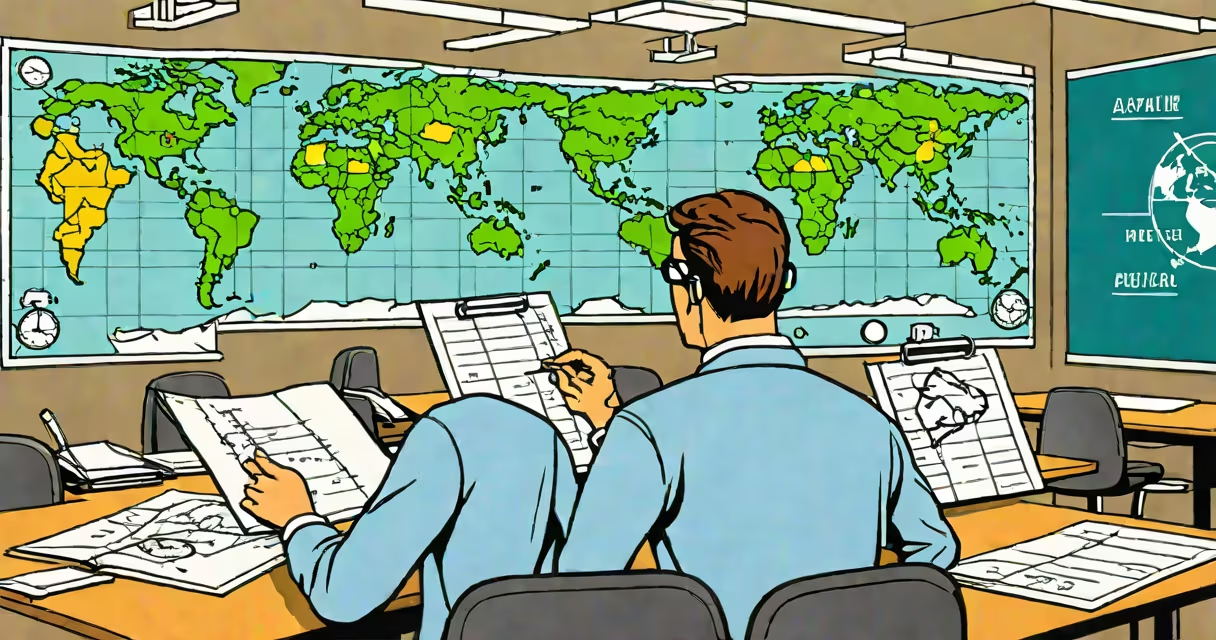
A Bachelor of Arts in Aviation is an undergraduate degree that combines academic study of air transportation systems, aviation regulations, and industry operations with practical skills in flight planning, safety management, and transportation policy. It is designed for students aiming to enter managerial, administrative, or policy-focused roles in the aviation sector rather than pilot training.
The program typically spans four years and includes coursework in aeronautics, air law, airport operations, human factors in aviation, and transportation economics. Unlike a Bachelor of Science in Aviation, which emphasizes technical and flight-related training, a BA in Aviation focuses on the business, legal, and organizational aspects of air travel. Graduates often pursue careers in airline administration, airport management, aviation consulting, or government regulatory agencies.
According to the Federal Aviation Administration (FAA), over 10,000 new aviation jobs are projected annually through 2030 due to fleet expansion and infrastructure upgrades. A BA in aviation equips students with the analytical and leadership skills needed to manage complex systems within this growing field. The degree is offered by universities with accredited aviation programs, including Embry-Riddle Aeronautical University and Purdue University's School of Aviation and Transportation Technology.
Students enrolled in a BA in aviation program take a mix of core courses and electives. Core classes cover topics such as aviation safety, air traffic control systems, international civil aviation law, and transportation logistics. These courses build a foundation in how aircraft move through airspace, how airports coordinate passenger and cargo flows, and how national and global policies affect flight operations.
Electives allow specialization in areas like aviation sustainability, crisis management in air transport, or aviation data analytics. For example, a course in aviation environmental policy may examine how carbon emissions from commercial flights are regulated under the International Civil Aviation Organization (ICAO) Carbon Offsetting and Reduction Scheme for International Aviation (CORSIA).
Many programs require a capstone project or internship. At Purdue, students complete a 12-week internship with airlines or federal agencies like the FAA. One student reported working with a regional carrier's scheduling department, analyzing flight delays using historical data and recommending staffing adjustments that reduced on-time performance gaps by 18% during peak holiday periods.
While the BA in aviation shares foundational elements with other aviation degrees, its structure differs from technical tracks. The following table outlines key distinctions:
| Feature | BA in Aviation | Bachelor of Science in Aviation | Associate in Aviation Technology |
|---|---|---|---|
| Primary Focus | Management, policy, operations | Flight science, aircraft systems, piloting | Hands-on maintenance, ground operations |
| Typical Coursework | Aviation law, transportation economics, risk assessment | Flight mechanics, instrument flying, aerodynamics | Engine systems, avionics, aircraft repair |
| Career Pathways | Airline operations manager, airport planner, aviation compliance officer | Commercial pilot, flight instructor, aircraft dispatcher | Aircraft mechanic, ramp agent, ground handler |
A BA in aviation does not lead to a pilot's license. Students who wish to fly must enroll in a separate flight training program, often requiring additional funding and time commitments. The degree itself is not flight-based but prepares individuals to oversee and improve flight operations from a strategic perspective.
Employers in the aviation sector use the BA in aviation to fill roles that require decision-making, regulatory understanding, and coordination across departments. Airline companies hire graduates for positions in customer service operations, crew scheduling, and safety compliance. For example, Delta Air Lines' Operations Control Center uses BA-trained analysts to assess weather impacts on flight routes and adjust departure times to minimize delays.
Government agencies also rely on this degree. The FAA's Office of Aviation Safety employs BA in aviation graduates as policy analysts responsible for evaluating new safety regulations. One analyst reviewed data from 2019-2021 on runway incursions and contributed to a revised guidance document that reduced incidents by 12% across major U.S. airports.
International organizations like ICAO use BA holders in regional aviation development projects. A graduate from the University of Southern California's aviation program was assigned to a project in Southeast Asia to help modernize air traffic control systems in Indonesia, focusing on integrating satellite-based navigation into legacy infrastructure.
One widespread misunderstanding is that a BA in aviation qualifies someone to fly commercial aircraft. This is incorrect. The degree does not include flight hours, flight simulator training, or certification exams required for a pilot's license. A student with a BA in aviation cannot serve as a cockpit crew member without completing a separate flight training program.
Another confusion arises between a BA in aviation and a degree in aviation management. While both focus on oversight and strategy, "aviation management" is often a concentration within a broader business or public administration degree. A BA in aviation is a standalone degree with a defined curriculum approved by the FAA and the National Association of State Aviation Officials (NASAO).
A lesser-known fact is that many BA in aviation programs offer dual-degree pathways. For instance, the University of North Dakota allows students to earn a BA in aviation alongside a minor in cybersecurity, preparing them for roles in securing air traffic communication networks against cyber threats-a growing concern since the 2020 ICAO report on cyber vulnerabilities in aviation systems.
During my time teaching a course on aviation policy at a mid-sized university, I observed that students who had taken a BA in aviation were more likely to identify systemic issues in air traffic flow than those from engineering backgrounds. Their training emphasized institutional frameworks and decision-making under uncertainty, giving them an edge in analyzing how policy changes affect real-world outcomes.
A BA in aviation is not a flight training credential. It is a structured academic program that trains professionals to manage, regulate, and improve the efficiency and safety of air transportation systems. Its value lies in preparing individuals for leadership roles in a complex, high-stakes environment where precision, policy awareness, and operational insight are essential.