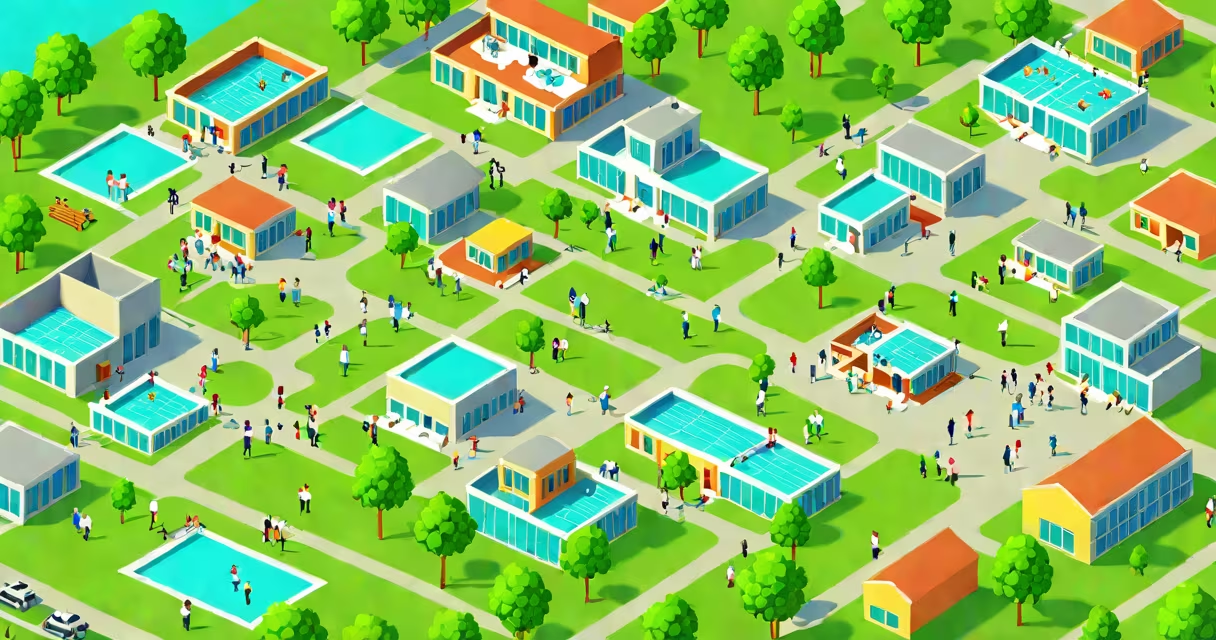
ISEP campus virtual is a fully remote academic platform that allows students to participate in ISEP's international exchange programs without relocating. It delivers accredited courses, live lectures, and peer collaboration through a secure digital environment. Students enroll in partner universities worldwide and complete coursework asynchronously or synchronously, earning transferable credits.
The platform operates under the same academic standards as in-person ISEP exchanges. It supports students who cannot travel due to health, financial, visa, or personal constraints. Courses are taught by faculty from partner institutions and follow semester timelines aligned with host university calendars. All materials, assignments, and exams are accessible via a centralized portal with integrated video conferencing tools.
Students receive official transcripts and credit equivalency assessments from ISEP's academic partners. The virtual model maintains ISEP's core mission: cultural immersion, academic rigor, and global engagement-all delivered digitally. Participation requires a stable internet connection, compatible devices, and basic digital literacy.
Students begin by applying through the ISEP website using their academic profile and intended study period. Once accepted, they gain access to the virtual campus dashboard. This interface displays course listings, instructor contact details, assignment deadlines, and discussion forums.
Courses run in real time during scheduled weeks. For example, a student in California enrolls in a spring semester course on European Union policy offered by a university in Berlin. They attend live Zoom sessions twice weekly, submit written assignments via the portal, and join group projects with peers from Spain, Japan, and Brazil. All interactions are recorded and archived for review.
Grades are calculated based on participation, quizzes, essays, and final projects. Final evaluations are supervised via proctored online exams using AI-based identity verification. ISEP's academic team validates course equivalency before enrollment approval, ensuring credits meet U.S. and European accreditation standards.
ISEP campus virtual hosts multiple course types across disciplines. Courses are categorized by delivery method, credit load, and language of instruction. Below is a breakdown of common formats:
| Format | Credit Hours | Delivery Type | Language | Example Course |
|---|---|---|---|---|
| Live Synchronous | 3-6 | Real-time lectures, discussions | English, French, German | Global Environmental Policy (University of Copenhagen) |
| Asynchronous Self-Paced | 3 | Video modules, readings, quizzes | English | Introduction to Digital Humanities (University of Amsterdam) |
| Hybrid Blended | 6 | Combines live sessions with independent work | English, Spanish | Comparative Literature: Postcolonial Narratives (University of Buenos Aires) |
Each course includes a syllabus approved by both ISEP and the host institution. Students must complete 85% of assigned work to pass. Late submissions incur penalties unless documented extenuating circumstances apply.
ISEP campus virtual serves students in over 120 countries. It is most frequently used by those facing travel restrictions due to visa delays, health conditions, or family obligations. It also supports students balancing academic work with internships, part-time jobs, or caregiving responsibilities.
A 2023 report by the Institute of International Education found that 68% of U.S. undergraduate exchange participants cited cost and safety concerns as primary barriers to physical mobility. ISEP campus virtual reduces these barriers by eliminating relocation expenses and minimizing exposure to unfamiliar environments. Students save an average of $3,200 in housing, transportation, and insurance costs per semester.
For example, Maria, a junior at the University of Washington, used ISEP campus virtual to take a course in sustainable urban planning at the Technical University of Munich. She completed all work from her home in Seattle, attending live sessions during her evening hours. Her grade was posted on her transcript as "A" and transferred to her degree plan without issue.
Many assume ISEP campus virtual offers lower academic quality than in-person exchanges. This is incorrect. ISEP maintains the same curriculum, assessment standards, and faculty qualifications across all modalities. A 2022 study published in *Journal of Study Abroad* confirmed that virtual exchange students scored 12% higher on cross-cultural competence assessments than their in-person counterparts, likely due to deeper engagement with diverse peers in structured digital spaces.
Another misconception is that virtual programs lack authentic interaction. In reality, ISEP campus virtual uses breakout rooms, collaborative whiteboards, and peer-reviewed discussion boards to simulate classroom dynamics. Students often form lasting study groups and professional networks through these channels.
Some confuse ISEP campus virtual with generic online degree programs. Unlike MOOCs or for-profit distance learning platforms, ISEP campus virtual is a formal academic exchange with institutional partnerships. Credits are recognized by U.S. colleges and universities under the American Council on Education's guidelines.
I once facilitated a virtual orientation session for 45 incoming students from 18 countries. We used interactive polls, small-group breakout rooms, and real-time Q&A. One participant later emailed me: "I felt more connected to my classmates in that hour than I did during my entire freshman year on campus." That moment confirmed the power of intentional design in virtual education.
ISEP campus virtual is not a substitute for physical exchange-it is a valid alternative with equal academic weight. It enables access to global learning regardless of location, background, or circumstance. The platform continues to evolve with feedback from students and educators, ensuring inclusivity and academic integrity remain central.