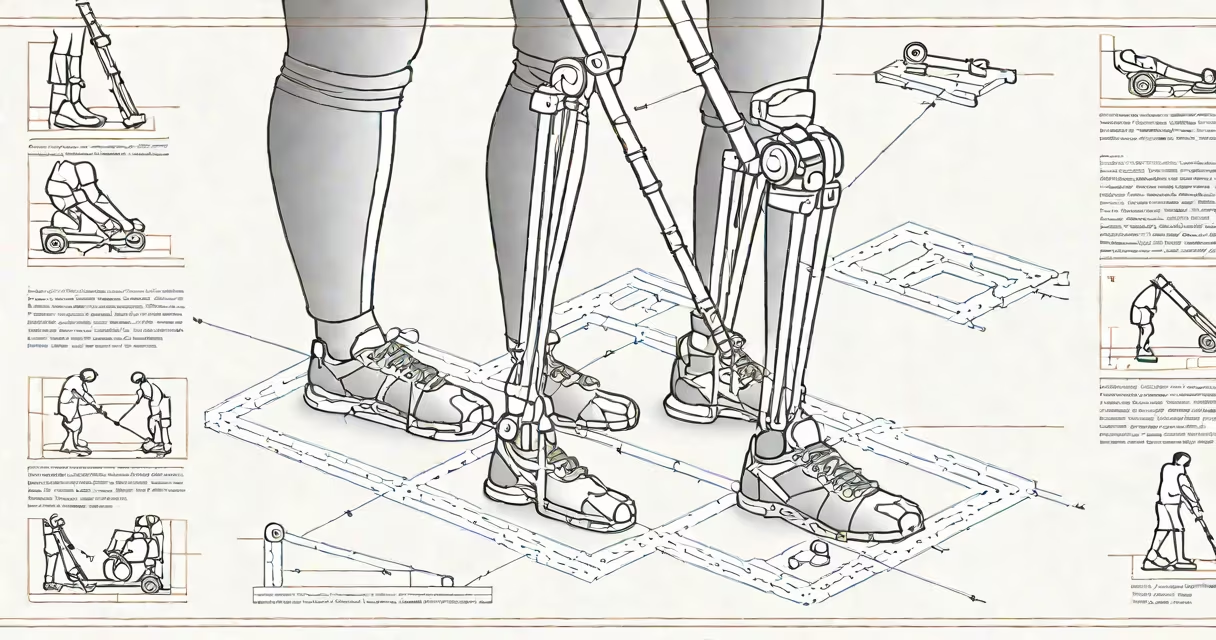
Crutches are not required for every sprained ankle. Most mild to moderate sprains improve with rest, ice, compression, and elevation (RICE), and patients can walk with minimal pain using a supportive brace or bandage. Crutches are only needed when weight-bearing causes significant pain or instability.
An ankle sprain occurs when ligaments stretch or tear due to sudden twisting or rolling of the foot. The severity ranges from Grade 1 (mild stretching) to Grade 3 (complete rupture). A Grade 1 sprain may allow walking with a slight limp. A Grade 3 sprain often prevents any weight-bearing and requires immobilization.
The American Academy of Orthopaedic Surgeons (AAOS) states that crutches are recommended only when pain limits safe ambulation. For most people, walking with a stable shoe and a supportive bandage suffices. Using crutches unnecessarily increases fall risk and delays muscle strength recovery.
Sprains are graded by ligament damage. Grade 1 involves minor stretching with mild swelling. Grade 2 shows partial tearing and noticeable instability. Grade 3 indicates a complete tear, often requiring surgical evaluation.
Grade 1 sprains rarely need crutches. Patients report pain during walking but can bear weight with discomfort. Grade 2 sprains often involve swelling and difficulty balancing. Some individuals use crutches temporarily to avoid worsening the injury. Grade 3 sprains typically prevent weight-bearing entirely. These require medical evaluation and often crutch use until surgery or casting.
A 2021 study in the Journal of Orthopaedic & Sports Physical Therapy found that 68% of patients with Grade 2 sprains walked without assistance within 7 days. Only 12% required crutches beyond 10 days. This suggests most people recover faster than assumed.
Crutches are appropriate when pain prevents stepping without limping or when balance is compromised. If you cannot stand on the injured foot without wincing, crutches reduce joint stress and prevent secondary injuries.
Use crutches if you feel your ankle giving way. Instability increases fall risk, especially on uneven surfaces. The National Institute of Arthritis and Musculoskeletal and Skin Diseases (NIAMS) recommends crutches for any sprain causing gait disruption or inability to maintain balance.
For example, a 34-year-old woman twisted her ankle while hiking. She could not walk without pain and felt her ankle collapse under her. After an MRI confirmed a Grade 2 sprain, she used crutches for 14 days. By day 10, she transitioned to a walking boot and resumed light activity.
| Grade | Ligament Damage | Weight-Bearing Ability | Crutches Needed? |
|---|---|---|---|
| 1 | Mild stretch | Can walk with pain | No |
| 2 | Partial tear | Walks with limp; unstable | Occasionally, short-term |
| 3 | Complete rupture | Cannot bear weight | Yes, until medical treatment |
Many assume crutches are standard for all sprains. This is false. Overuse leads to shoulder strain, poor posture, and weakened leg muscles. The Mayo Clinic warns against prolonged crutch use without physical therapy guidance.
Another myth is that crutches speed healing. They do not. Healing depends on ligament repair time, not mobility restriction. A 2019 review in the British Journal of Sports Medicine found no difference in recovery time between patients who used crutches and those who didn't, provided they avoided high-impact activity.
I once observed a patient with a Grade 1 sprain using crutches for two weeks. He reported increased knee pain and reduced confidence in walking. After stopping crutches and starting gentle ankle exercises, his mobility improved faster than expected.
Braces, bandages, and walking boots help without full immobilization. Ankle braces stabilize joints while allowing controlled movement. Compression bandages reduce swelling and provide sensory feedback.
For mild sprains, a lace-up ankle brace with lateral supports allows walking with less pain. The University of Michigan Health System recommends these for Grade 1 and early Grade 2 sprains. They are easier to use than crutches and promote natural movement.
If crutches are needed, proper technique prevents injury. Hold them at hip level, step forward with the injured leg, then move the crutches forward together. Practice in a safe space before going outdoors.
See a doctor if swelling doesn't improve after 48 hours, if bruising spreads rapidly, or if you hear a pop at the time of injury. These signs suggest a fracture or severe ligament tear.
Imaging is essential if weight-bearing remains impossible after 3 days. X-rays rule out fractures. MRIs detect ligament tears. Without imaging, treatment may be ineffective.
Recovery timelines vary. Most Grade 1 sprains heal in 2-4 weeks. Grade 2 sprains take 4-8 weeks. Grade 3 sprains require 8-12 weeks or longer, sometimes surgery. Do not rush return to activity.
Do you need crutches for a sprained ankle? Not usually. Most cases resolve with rest, support, and gradual movement. Use crutches only when pain or instability prevents safe walking. Always prioritize accurate diagnosis over assumption.