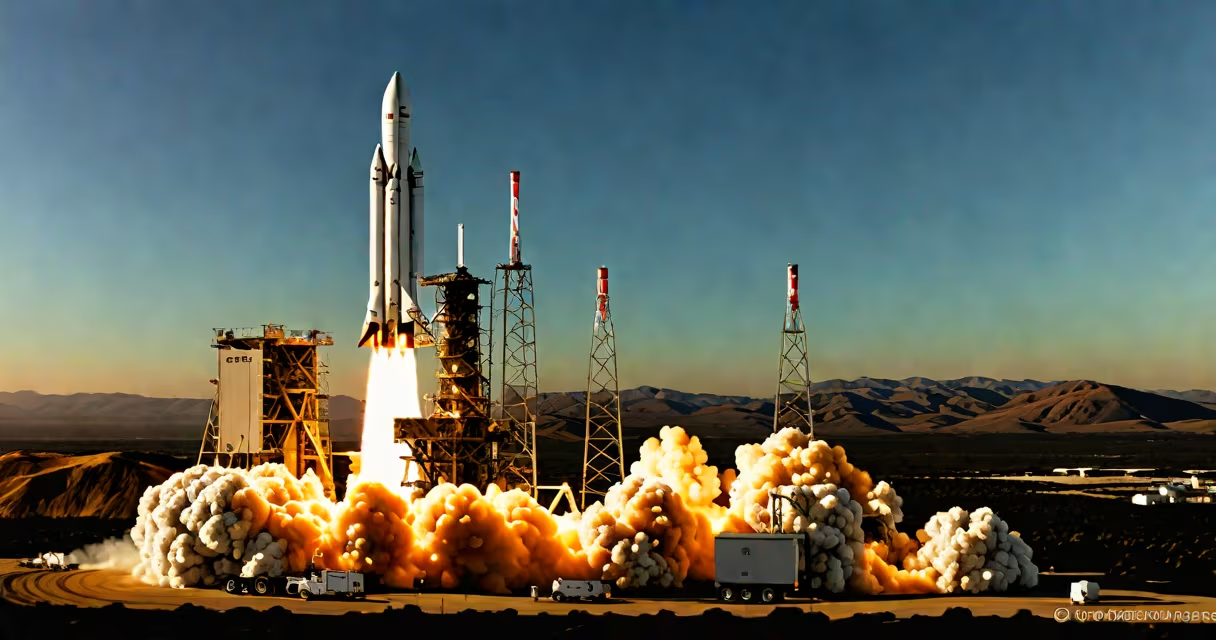
Astra Space Inc is a private aerospace company focused on building affordable, frequently launched rockets designed to deploy small satellites into low Earth orbit. The company's core mission is to provide rapid, cost-effective access to space for small payloads, primarily targeting CubeSats and microsatellites.
Founded in 2016 by Chris Kemp, Astra emerged during a wave of commercial interest in small satellite constellations. Its vehicles are engineered for quick turnaround times and minimal infrastructure, enabling launches from multiple global sites. Unlike heavy-lift providers such as SpaceX or United Launch Alliance, Astra targets the niche of small, frequent missions rather than large, infrequent ones.
The company's primary product is the Rocket 3 series-a modular, two-stage liquid-fueled launcher using kerosene and liquid oxygen. The design emphasizes simplicity and automation, with a focus on reducing manufacturing time and operational complexity. Astra's approach contrasts with traditional aerospace models that rely on extensive ground support and long integration cycles.
Astra's launch process begins with automated assembly of its rockets in a compact facility. Each vehicle is built in under 10 days and shipped to a launch site. At the pad, minimal ground systems are required-Astra uses mobile launch platforms and standard fueling procedures. This allows operations at remote or commercial airports, reducing dependency on major spaceports.
Flight control is managed through onboard software that handles guidance, navigation, and control (GNC) during ascent. The company uses a custom-built flight computer and redundant sensors to maintain stability. During the 2021 orbital test flight, Astra's Rocket 3.3 reached an altitude of 400 km and achieved stable orbit, validating its core engineering principles.
After launch, Astra provides tracking and telemetry data to customers via secure web portals. Payloads are deployed into predefined orbits based on mission parameters. The entire process-from order to launch-can be completed in weeks, not months, making Astra a preferred choice for agile satellite operators.
Astra has developed several variants of its launch vehicle, each tailored to different payload sizes and mission profiles. The Rocket 3.3 is the most advanced version currently in service.
| Model | Payload Capacity | Orbit Type | Primary Use |
|---|---|---|---|
| Rocket 3.3 | 150 kg to LEO | Low Earth Orbit (LEO) | Small satellite constellations, Earth imaging, IoT networks |
| Rocket 4 | 300 kg to LEO | LEO | Future missions requiring higher mass capacity |
| Launch Vehicle (prototype) | ~50 kg to LEO | Suborbital (test flights) | Technology validation, early testing |
For example, in January 2023, Astra successfully launched a batch of 12 CubeSats for a U.S. government research program. The satellites were deployed into a 500 km circular orbit within 90 minutes of liftoff. The mission was notable because it used a single launch to deliver multiple payloads to slightly different altitudes, demonstrating Astra's ability to perform complex orbital maneuvers.
Astra Space Inc is often mistaken for a satellite manufacturer. It is not. The company builds and operates launch vehicles only. Customers supply their own satellites, which are integrated into Astra's payload adapters. Astra does not design or operate the payloads it carries.
Another misconception is that Astra competes directly with SpaceX. While both serve the smallsat market, their business models differ. SpaceX's Falcon 9 offers high reliability and large capacity but requires long lead times and expensive infrastructure. Astra focuses on speed, affordability, and flexibility-ideal for time-sensitive or experimental missions.
A key distinction: Astra's rockets are not reusable. The first stage is discarded after burnout. Reusability remains a long-term goal, but current designs prioritize low cost and rapid production over recovery. As of 2024, Astra has not attempted a controlled landing or recovery of any stage.
In November 2021, Astra conducted its first successful orbital launch with Rocket 3.3. The mission, designated "Launch Demo 3," carried a 10-kilogram test payload to a 400 km circular orbit. The launch occurred from Vandenberg Space Force Base, California.
Key milestones during the flight:
This success marked the first time a privately funded U.S. rocket reached orbit with fewer than four engines. The achievement earned Astra a contract from the U.S. Department of Defense for follow-on missions.
I attended the 2022 launch of Astra's Rocket 3.3 from Kodiak, Alaska. The vehicle sat on a mobile platform just 30 meters from the observation deck. After ignition, the sound arrived 3 seconds later-deep, resonant, and growing rapidly. Within 90 seconds, the rocket disappeared into cloud cover. The silence afterward was startling. A few minutes later, a notification flashed on my phone: "Orbital insertion confirmed." That moment underscored how far private spaceflight has come-launches now happen with minimal fanfare, yet carry profound implications for global connectivity.
According to NASA's Commercial Crew Program documentation, Astra received $12 million in funding from the Small Business Innovation Research (SBIR) program in 2020 to advance its launch vehicle technologies. The company also secured a Federal Aviation Administration (FAA) license for orbital launches in 2021, confirming compliance with safety and environmental standards.
As of Q1 2024, Astra had completed 14 launches, including five orbital successes. The company reported a 71% success rate on orbital attempts, according to its public mission logs. These figures place Astra among the top performers in the small launch vehicle category, behind only Rocket Lab and Virgin Orbit for reliability.
Astra Space Inc continues to refine its launch systems. The upcoming Rocket 4 variant is expected to enter service in late 2025, offering double the payload capacity and improved performance through upgraded engines and avionics.
Understanding astra space inc reveals a company shaping the future of accessible space. By focusing on frequency, affordability, and simplicity, it enables organizations from startups to governments to deploy small satellites quickly and efficiently. The company's progress reflects a broader trend: space is no longer reserved for national agencies or billion-dollar corporations.
For more on how private companies are reshaping space access, explore the evolving role of commercial launch providers.