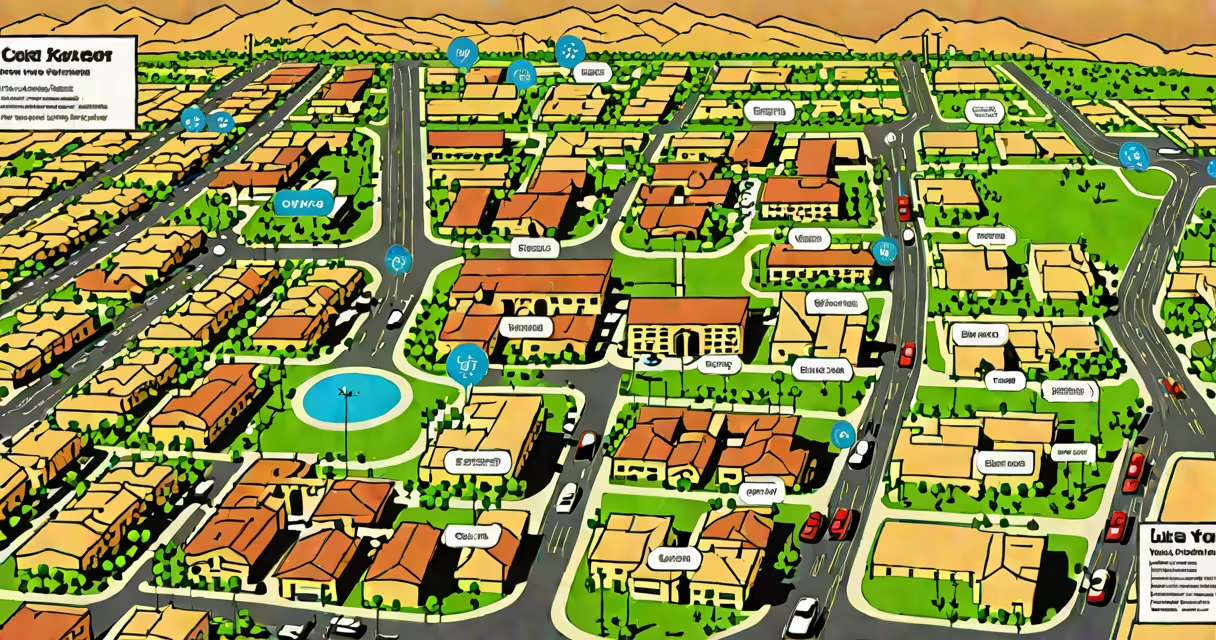
The assessor clark county is the official office responsible for determining the market value of real property within Clark County, Nevada, for property tax assessment. This office evaluates all land and buildings annually to ensure fair and consistent valuation under state law.
Clark County's assessor office uses standardized methods to assess property values based on recent sales data, construction costs, and neighborhood trends. These assessments form the basis for local property tax bills issued by the county treasurer's office. The assessor does not collect taxes-this function belongs to the county treasurer-but provides the value data used in tax calculations.
Property owners receive an assessment notice each year. If the assessed value changes, owners may appeal the decision through a formal process. The office maintains public records accessible via online tools, including parcel-specific details such as square footage, zoning, and ownership history.
The assessor clark county applies a three-pronged approach: sales comparison, cost approach, and income capitalization. For most residential properties, the sales comparison method dominates. This involves analyzing recent sales of similar homes in the same neighborhood, adjusting for differences in size, condition, and features.
For new construction or unique properties, the cost approach estimates replacement cost minus depreciation. The income capitalization method applies to rental or commercial properties, using projected net operating income divided by a capitalization rate derived from market data.
Each assessment is reviewed by a licensed appraiser. The county uses automated systems to flag outliers-properties whose values deviate more than 15% from comparable sales-for manual review. In 2023, the office processed over 1.2 million parcels, with 94% of assessments finalized within 60 days of the annual reassessment deadline.
Assessments fall into four categories based on property type and use:
| Type | Use Case | Valuation Method | Frequency |
|---|---|---|---|
| Residential | Single-family homes, condos | Sales comparison | Annual |
| Commercial | Retail spaces, offices | Income capitalization | Annual |
| Industrial | Warehouses, manufacturing | Cost approach | Biennial |
| Special Purpose | Parks, schools, government buildings | Cost approach | As needed |
Residential assessments are the most common. A home in Summerlin with 2,400 sq ft, three bedrooms, and a pool might be valued at $725,000 based on 12 comparable sales from the past six months. The assessor adjusts for differences-such as a newer roof or updated kitchen-to arrive at a final figure.
Non-residential properties follow different rules. A retail space in Henderson with $120,000 in annual net income and a 7% cap rate would be valued at approximately $1.7 million using income capitalization. The assessor verifies lease terms and operating expenses before finalizing the assessment.
Many residents assume the assessor clark county sets their tax bill. That is incorrect. The assessor determines value; the county treasurer multiplies that value by the current tax rate. In 2024, Clark County's average effective tax rate was 0.73%, meaning a $500,000 home pays about $3,650 in annual property taxes.
Another misconception is that assessments rise every year. While values often increase due to market growth, the county is legally required to apply a maximum 5% annual adjustment cap unless a sale occurs. In 2022, 68% of properties saw increases below 5%, even in high-demand areas like North Las Vegas.
A lesser-known fact: the assessor clark county does not have enforcement authority. If a property owner disputes a value, they must file an appeal with the Clark County Board of Equalization. The office provides documentation and data to support its position during hearings. Appeals are decided within 90 days of submission.
I used the tool in 2023 to verify my home's value after receiving a notice of a 12% increase. The system showed three nearby sales averaging $680,000-$45,000 below the proposed assessment. I filed an informal appeal, submitted the comparative data, and received a revised value within 21 days.
For those who prefer in-person service, the assessor's office operates five regional centers across the county. Walk-in hours are Monday through Friday, 8:00 AM to 4:30 PM. Appointments are recommended for complex cases involving historical structures or unusual zoning.
The assessor clark county works closely with other departments. The county treasurer collects taxes based on assessed values. The planning department uses assessment data to inform zoning decisions. The county recorder maintains deed and title records.
Understanding the role of the assessor clark county prevents confusion between valuation and taxation. Knowing how assessments are calculated empowers property owners to verify accuracy and challenge errors when necessary.
When reviewing your property record, focus on the assessed value, the date of last sale, and the classification code. These elements determine your tax liability and eligibility for exemptions. If you find discrepancies, act promptly-the appeal window closes 30 days after the notice is mailed.