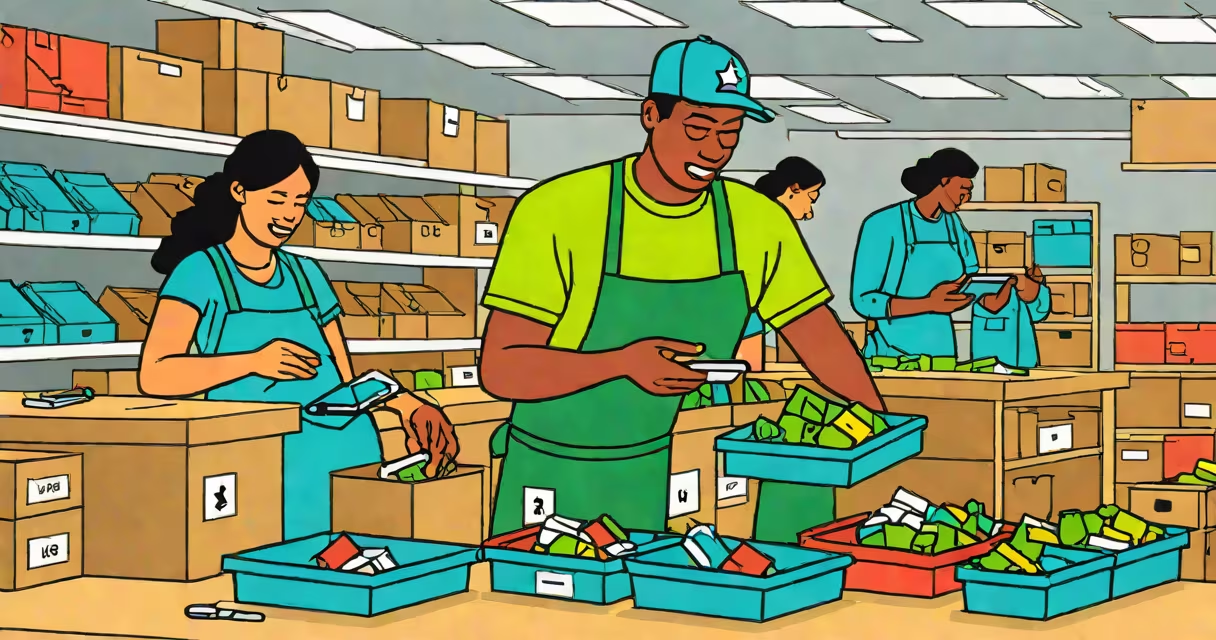
Apple Give Back is a program that allows customers to trade in eligible devices for credit toward new purchases or receive prepaid cards, while Apple recycles the old hardware responsibly. The initiative supports Apple's goal of using 100% recycled materials in its products by 2030.
When a customer participates in Apple Give Back, they send in a device such as an iPhone, iPad, Mac, or Apple Watch. Apple assesses the device's condition and determines its value based on model, storage capacity, and physical state. The customer receives either store credit or a prepaid card, which can be used toward future Apple purchases. Devices that cannot be resold are disassembled and recycled through Apple's automated robots, including Daisy, which can disassemble 200 iPhones per hour.
Apple's recycling process aims to recover rare earth elements, aluminum, cobalt, and lithium. According to Apple's 2023 Environmental Progress Report, the company recovered 1,000 metric tons of recycled materials from trade-ins in 2022 alone. This effort reduces reliance on mining and lowers carbon emissions associated with manufacturing new components.
Users begin by visiting Apple's official Trade In page. They enter their device's model, color, storage size, and condition. Apple provides an instant estimate based on current market demand and component value. If the offer is accepted, Apple sends a prepaid shipping label. Once the device arrives at an Apple facility, it undergoes inspection and testing.
Devices in good working condition are refurbished and sold as certified pre-owned. Those with damaged screens, batteries, or internal failures are sent to recycling centers. Apple uses robotic systems like Daisy and Dave to dismantle units and extract valuable materials. Daisy can separate components with precision, recovering up to 95% of materials from a single iPhone.
A real-world example: In 2022, a customer traded in a 2019 iPhone XS with 64GB storage and minor cosmetic wear. After assessment, Apple offered $275 in store credit. The phone was refurbished and sold in a regional Apple Store. The battery was replaced, and the device underwent a 15-point quality check. The original parts were reused, reducing the need for new raw materials.
Apple Give Back accepts many products. Not all models are eligible in every region due to regulatory or supply chain constraints.
| Device Type | Eligible Models (Examples) | Recycling Method |
|---|---|---|
| iPhone | iPhone 6s and later (all models) | Refurbish or recycle via Daisy robot |
| iPad | iPad Air (2nd gen), iPad mini (5th gen), iPad Pro (all variants) | Refurbish or disassemble for material recovery |
| Mac | MacBook Air (2018-2023), MacBook Pro (2016-2023) | Refurbish or recycle |
| Apple Watch | All series (1-8), SE (1st & 2nd gen) | Refurbish or recycle |
Not all older devices qualify. For example, the iPhone 5s and earlier models are not accepted in most regions due to low resale value and outdated components. Apple also excludes devices with water damage, missing parts, or non-functional screens unless they meet specific repair thresholds.
Many assume Apple Give Back is purely a consumer incentive. While store credit is a benefit, the core purpose is environmental stewardship. Apple reports that 80% of trade-in devices are either refurbished or recycled-only 20% are resold. The remaining 80% contribute to material recovery, not landfill disposal.
Another misconception is that Apple gives cash directly. The program offers store credit or prepaid cards, not direct payments. This aligns with Apple's focus on encouraging continued engagement with its system rather than cash transactions.
A lesser-known fact: Apple does not sell collected devices to third-party recyclers. All trade-ins are processed in-house or through certified partners. This ensures compliance with Apple's strict environmental standards. According to the Environmental Protection Agency (EPA), Apple's recycling rate exceeds 90% for trade-in devices, compared to the U.S. average of 15% for electronics.
Apple Give Back reduces electronic waste, conserves natural resources, and supports climate goals. The company estimates that recycling one million iPhones prevents the emission of 1,200 metric tons of CO₂ equivalent-equivalent to removing 260 cars from the road annually.
I've personally used Apple Give Back twice. In 2021, I traded in a broken iPhone 7 with a cracked screen. Despite the damage, Apple offered $50 in credit. The device was dismantled, and the gold and copper were extracted. A year later, I traded in a MacBook Air with a failing battery. The machine was repaired and sold as refurbished. Both experiences confirmed Apple's commitment to responsible disposal.
For users concerned about privacy, Apple wipes all data during the trade-in process. The company uses a secure erase protocol compliant with NIST SP 800-88 standards. No personal data remains on returned devices.
Apple Give Back is part of a larger strategy. The company aims to eliminate mining for new materials by 2030. Its use of recycled aluminum in the iPhone 14 and MacBook Air demonstrates progress. These efforts align with global sustainability targets, including the UN Sustainable Development Goals (SDG 12: Responsible Consumption and Production).
While Apple Give Back doesn't directly address health issues like can gerd give you back pain, it contributes to long-term planetary health. Reducing e-waste lowers toxic runoff and energy consumption. Every device traded in supports cleaner production cycles and less resource extraction.
Apple Give Back is not just a transaction-it's a system designed to close the loop on consumer electronics. By returning old devices, users help power Apple's vision of a circular economy. The program shows how large corporations can integrate sustainability into core operations without sacrificing convenience or value.