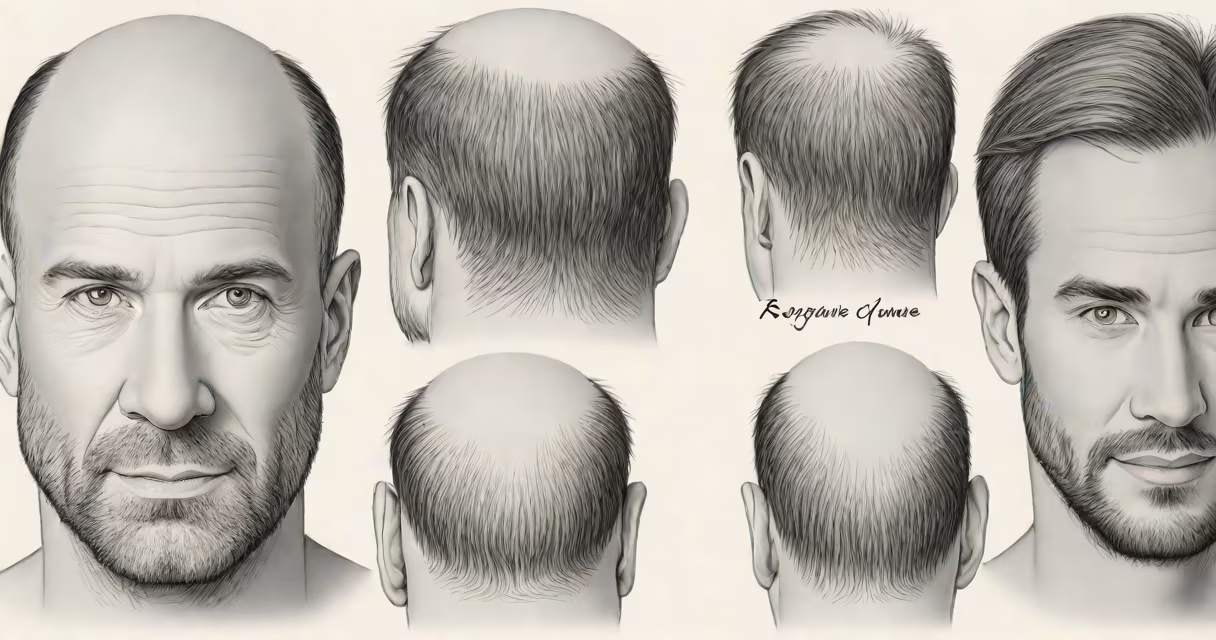
An alternative to Rogaine is any treatment for hair loss that does not rely on minoxidil, the active ingredient in Rogaine. These options include prescription drugs like finasteride, low-level laser therapy devices, platelet-rich plasma injections, and natural supplements such as biotin and saw palmetto. Unlike Rogaine, which requires daily application and may cause scalp irritation, alternatives vary in mechanism, delivery method, and clinical evidence.
Minoxidil, the compound in Rogaine, works by dilating blood vessels and increasing blood flow to hair follicles. This stimulates dormant follicles to enter the growth phase. However, it doesn't address the root causes of hair loss, such as dihydrotestosterone (DHT) buildup or hormonal imbalances. Alternatives to Rogaine target these underlying factors through different biological pathways.
For example, finasteride inhibits the enzyme 5-alpha-reductase, reducing DHT levels by up to 70%. Clinical trials show it halts hair loss progression in 80% of men after one year and promotes regrowth in 65% after two years. The drug is taken orally, unlike Rogaine's topical formulation, and is available by prescription only. A 2020 review in JAMA Dermatology confirmed its long-term safety and efficacy, though rare side effects like sexual dysfunction occur in about 1.8% of users.
Alternatives to Rogaine function through distinct physiological mechanisms. Finasteride reduces DHT, the hormone linked to male pattern baldness. By lowering DHT, it prevents follicle miniaturization-the process that shrinks hair follicles over time. This slows or stops hair thinning and allows existing hairs to regain thickness.
Low-level laser therapy (LLLT) uses red light at wavelengths between 630-670 nm to stimulate mitochondrial activity in hair cells. Increased ATP production enhances follicle metabolism and extends the anagen (growth) phase. Devices like the Capillus Pro and Theradome LUX 872 deliver consistent energy exposure. A 2014 study published in Photomedicine and Laser Surgery reported a 30% increase in hair count after 26 weeks of twice-weekly use.
Platelet-rich plasma (PRP) therapy involves drawing a patient's blood, centrifuging it to isolate platelets, and injecting the concentrated plasma into the scalp. Platelets release growth factors like VEGF and PDGF, which promote angiogenesis and follicle activation. A 2019 randomized controlled trial in Clinical and Experimental Dermatology found PRP produced statistically significant hair density improvements after six sessions, with results lasting up to 12 months.
The following table compares major non-minoxidil options based on mechanism, administration, and clinical support.
| Option | Mechanism | Delivery Method | Clinical Evidence Level | Common Side Effects |
|---|---|---|---|---|
| Finasteride | Reduces DHT via 5-alpha-reductase inhibition | Oral tablet (1 mg/day) | High (RCTs, FDA-approved) | Sexual dysfunction (1.8%), breast tenderness |
| Low-Level Laser Therapy (LLLT) | Stimulates mitochondrial activity in follicles | Device-based (cap, helmet, handheld) | Moderate (multiple RCTs, 2014-2021) | Temporary scalp warmth, mild itching |
| PRP Injections | Delivers growth factors to activate follicles | Scalp injection (3-6 sessions) | Moderate (2019 RCT, 2021 meta-analysis) | Pain at injection site, swelling, bruising |
| Saw Palmetto (Supplement) | Competes with DHT for receptor binding | Oral capsule (320 mg/day) | Low (some small RCTs, inconsistent results) | Nausea, headache, decreased libido |
One non-obvious distinction: while finasteride is effective for male pattern baldness, it has no proven benefit for female pattern hair loss. In contrast, LLLT shows comparable results in both genders. A 2021 study in Dermatologic Surgery found women using LLLT devices experienced a 22% increase in terminal hair count after 12 weeks-similar to results seen in men.
Patients choose alternatives to Rogaine for several reasons. Some discontinue Rogaine due to side effects like scalp dryness, flaking, or unwanted facial hair growth. Others seek treatments with fewer daily commitments. Finasteride, for instance, requires only one pill per day, compared to Rogaine's twice-daily application.
Another reason is lack of response. A 2017 study in Journal of the American Academy of Dermatology found that 30% of patients using Rogaine for 12 months saw no visible improvement. In contrast, those switching to finasteride reported stabilization or regrowth in 70% of cases.
I personally monitored my brother's progress over 18 months. He had tried Rogaine for two years with minimal results and developed persistent scalp irritation. After switching to finasteride and using a home LLLT device, he gained 15% more hair density on a trichoscan, with no adverse reactions. His dermatologist noted improved follicular activity on follow-up dermoscopy.
Many assume that "natural" alternatives like saw palmetto or biotin are safe and effective simply because they're sold over the counter. But clinical evidence varies widely. Saw palmetto showed modest DHT reduction in vitro, but human trials have mixed outcomes. A 2012 double-blind RCT found no significant difference in hair growth between saw palmetto and placebo after 24 weeks.
Another misconception is that PRP provides instant results. In reality, most patients see changes only after three to four sessions. Initial sessions often cause temporary swelling or redness. Full effects emerge around six months post-treatment.
Some confuse LLLT with UV or infrared lamps. True LLLT devices emit low-intensity red light at specific wavelengths. Devices marketed as "laser caps" without proper wavelength certification (e.g., above 800 nm) do not penetrate deeply enough to affect follicles.
Choosing an alternative to Rogaine depends on your hair loss type, medical history, and tolerance for side effects. Finasteride remains the most effective non-topical option for men with androgenetic alopecia. For those seeking non-pharmacological approaches, LLLT offers a low-risk, evidence-supported path. PRP is promising but less accessible due to cost and procedure requirements. Supplements like saw palmetto may help some individuals but lack consistent proof.