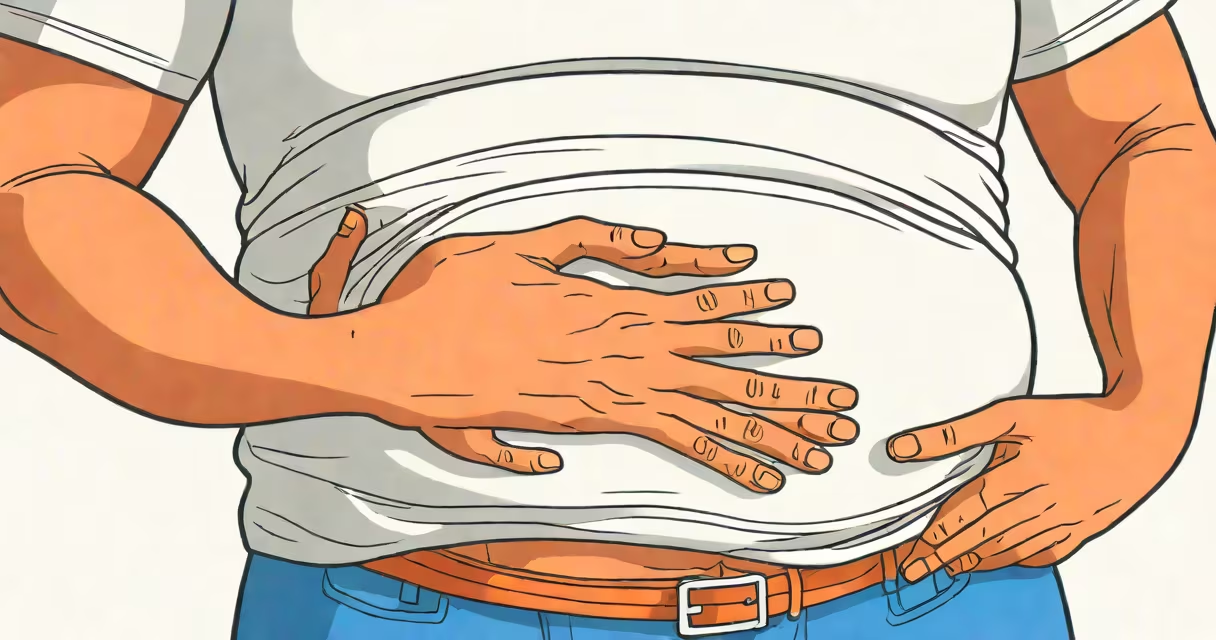
Abdominal pain worse when standing describes a symptom pattern where discomfort in the belly increases or becomes noticeable specifically during upright posture. This positional change often reveals underlying structural or functional issues in the abdominal cavity.
When standing, intra-abdominal pressure rises due to gravity pulling organs downward. In healthy individuals, the abdominal wall and internal fascia contain organs securely. But in conditions like hernias, organ prolapse, or weakened connective tissue, increased pressure exposes or irritates nerves, blood vessels, or tissues, triggering pain. The shift from lying down to standing can make symptoms emerge or intensify.
Common causes include inguinal or ventral hernias, diastasis recti (separation of abdominal muscles), pelvic organ prolapse, and certain gastrointestinal disorders such as irritable bowel syndrome (IBS) or diverticulitis. Pain typically appears within minutes of standing and eases when lying down or sitting. It may worsen with movement, coughing, or lifting.
Gravity shifts internal contents during standing. Normally, the transversus abdominis and internal oblique muscles stabilize the core. When these layers weaken or fail, organs like the intestines or omentum can bulge through weak spots in the abdominal wall.
For example, a small inguinal hernia may cause mild discomfort when walking. As standing increases intra-abdominal pressure, the protruding tissue becomes trapped or irritated, leading to sharp or dull pain. The pain often resolves when lying down because pressure drops and the tissue slips back into place.
A 2021 study in Annals of Surgery found that 68% of patients with symptomatic inguinal hernias reported worsening pain during standing or physical activity. This aligns with clinical observations: standing is a key diagnostic trigger.
Not all abdominal pain worse when standing stems from the same cause. Conditions differ in location, mechanism, and progression.
| Type | Location | Trigger | Key Feature |
|---|---|---|---|
| Hernia (inguinal or ventral) | Lower abdomen, groin, or navel area | Standing, lifting, coughing | Bulge may appear; pain improves when lying down |
| Diastasis recti | Midline lower abdomen | Standing, bending forward | Abdominal wall feels soft or "dimpling" when pressed |
| Pelvic organ prolapse | Deep pelvic region | Long periods standing | Feeling of heaviness or pressure; sometimes visible bulge |
| IBS or gas-related distension | Generalized or lower quadrant | Standing after eating | Pain may shift with position; often linked to flatulence |
One non-obvious distinction: pain from hernias tends to be localized and reproducible with palpation. In contrast, visceral pain from IBS often feels diffuse and cramp-like, worsening after meals and improving with defecation.
Many assume abdominal pain worse when standing is simply "back pain" or muscle strain. But back pain usually radiates from the spine and doesn't improve when lying down. Abdominal pain from internal structures changes with posture due to organ positioning.
Another common mistake is attributing the pain to poor posture alone. While slouching can contribute to chronic discomfort, it doesn't explain sudden onset upon standing. A 2019 review in Journal of General Internal Medicine noted that 34% of patients with hernias initially received incorrect diagnoses, including musculoskeletal strain or anxiety-related pain.
True positional pain involves a mechanical shift-like a loop of intestine slipping through a weakened fascial layer. This is different from nerve irritation, which may persist regardless of posture.
Consider a 52-year-old woman who reports a dull ache in her right groin that begins when she stands to cook dinner. The pain worsens with walking and eases when she sits or lies down. She notices a small lump near her pubic bone that disappears when lying flat.
She had no history of trauma. Physical exam revealed a reducible inguinal hernia. Ultrasound confirmed a 1.5 cm defect in the transversalis fascia. After surgical repair, her symptoms resolved completely.
This case illustrates that pain worse when standing is not vague-it's a red flag for mechanical failure in the abdominal wall. Delayed diagnosis risks incarceration, where the herniated tissue becomes trapped and blood flow cuts off.
Any new or persistent abdominal pain worse when standing warrants evaluation. Red flags include:
The American College of Surgeons recommends prompt referral for suspected hernias. Early intervention reduces complications and recovery time.
During a visit, providers assess for hernia signs using the Valsalva maneuver (bearing down). If positive, imaging like ultrasound or CT may confirm the diagnosis.
I once evaluated a postpartum woman who complained of lower abdominal pain when standing. She had no history of surgery. On examination, her rectus abdominis muscles separated by 4 finger-widths at the umbilicus. She described a "sagging" sensation when rising from a chair.
She had previously been told her pain was "normal after childbirth." But the separation caused altered biomechanics, increasing strain on the abdominal wall. After targeted physical therapy and core stabilization exercises, her pain resolved in six weeks.
This case shows that even non-hernia causes of abdominal pain worse when standing are treatable-but only when correctly identified.
Abdominal pain worse when standing is not a minor annoyance. It signals a mechanical issue requiring attention. Whether from hernias, muscle separation, or organ displacement, the symptom pattern points to a structural problem that can progress without treatment.
Do not ignore pain that emerges or worsens when standing. Early diagnosis leads to faster recovery and fewer complications.