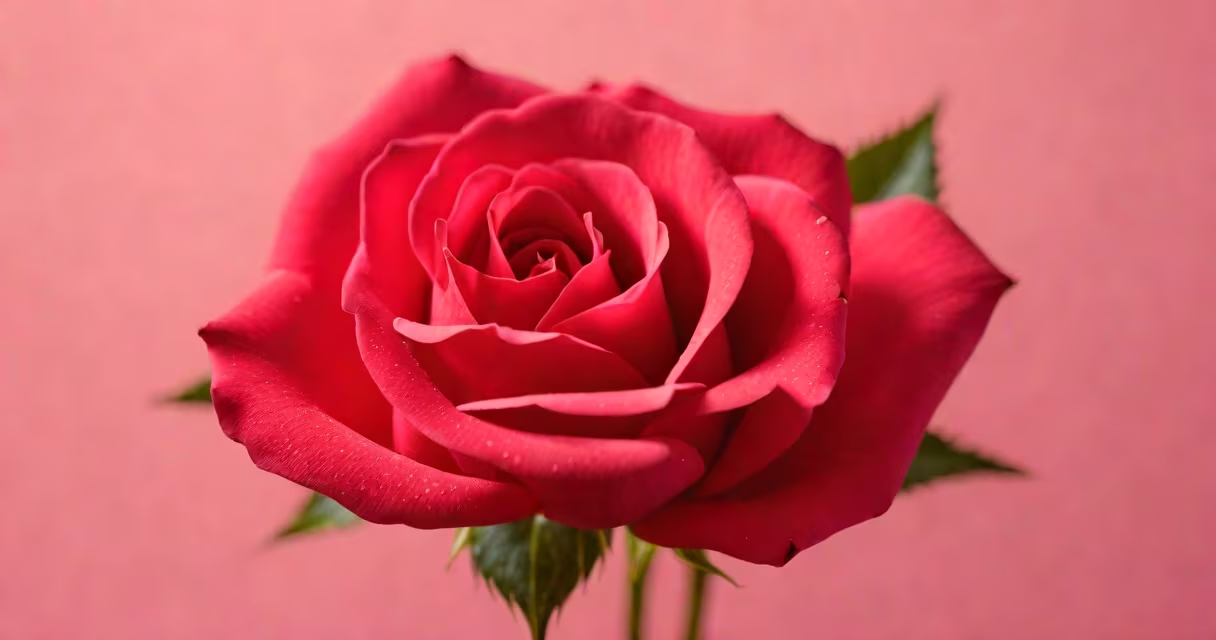
A picture of a flower is a two-dimensional visual record of a flowering plant, captured through photography, drawing, or digital rendering. It shows specific details like petal shape, color gradients, and stem structure at a single moment in time.
These images serve both practical and artistic purposes. They document species for scientific study, aid in plant identification, and appear in media such as magazines, websites, and social platforms. A single photograph can convey the complexity of a bloom's design-its symmetry, surface texture, and light interaction-without motion or sound.
Modern tools allow high-resolution capture using DSLR cameras, smartphones, or drones. Some images are enhanced digitally to emphasize contrast or correct lighting. Others remain unedited to reflect authentic conditions.
Photography remains the most common method. A camera lens focuses light onto a sensor, which converts photons into electrical signals. These signals are processed into pixel data forming the image. Exposure settings-shutter speed, aperture, ISO-control brightness and depth of field.
For example, a 1/250 sec shutter speed freezes dew droplets on a daisy's petals. An f/2.8 aperture blurs the background, isolating the flower. The resulting image shows fine detail: individual stamens, subtle veining in petals, and the way light reflects off wet surfaces.
Digital editing software like Adobe Lightroom or Photoshop allows adjustments to exposure, white balance, and sharpness. But even raw, unprocessed images carry meaning. A photo taken at sunrise reveals warm tones and long shadows, suggesting early morning in a meadow.
Floral images vary by purpose, technique, and context. The following table outlines key categories:
| Type | Description | Use Case | Example |
|---|---|---|---|
| Macro photography | Extreme close-up showing tiny structures like pollen grains or insect legs on petals | Scientific research, educational materials | Image of a bee landing on a sunflower head, with visible pollen on its legs |
| Wide-angle field | Shows the flower within its environment-soil, other plants, sky | Nature documentaries, travel blogs | Field of lavender stretching across a hillside under blue sky |
| Studio still life | Controlled lighting and background; often arranged for aesthetic effect | Commercial product shots, art exhibitions | White rose placed on black velvet, lit with softbox lights |
| Time-lapse sequence | Multiple frames compiled into video showing blooming process | Botanical education, social media storytelling | Video of a tulip opening over 12 hours, sped up to 30 seconds |
Each type serves different goals. Macro shots reveal biological intricacies invisible to the naked eye. Wide-angle scenes show ecological relationships. Studio images prioritize composition and mood. Time-lapse sequences illustrate change over time-something a single frame cannot.
Many assume a picture of a flower is purely decorative. But it can function as evidence. For instance, a photo of a rare orchid in the wild may confirm its existence in a region previously thought uninhabitable for the species. This supports conservation efforts.
Another misconception is that all floral photos are accurate representations. In reality, many are altered. A photographer might adjust saturation to make colors pop. Or a designer might combine parts from multiple flowers into one image-a composite. According to the Nature Conservancy, such edits can mislead viewers about natural variation.
Even the term "flower" can be misleading. Not all blooms are flowers in the botanical sense. A dandelion's "bloom" is actually a composite of many small florets. A picture of it may look like a single flower, but it's a cluster of hundreds. Mislabeling leads to confusion in identification guides.
In 2021, I spent three weeks photographing wildflowers along the Pacific Crest Trail. Using a Canon EOS R5 with a 100mm macro lens, I captured over 1,200 images. One shot-a close-up of a western blue lupine-showed a single bee trapped in a petal fold. The image was later used in a citizen science project tracking pollinator behavior.
This experience confirmed that a picture of a flower isn't just a snapshot. It's a data point. When combined with location, date, and environmental notes, it becomes part of a larger dataset. The U.S. Department of Agriculture's USDA Plant Database relies on such records to track species distribution and migration patterns.
A picture of a flower can trigger emotional responses. Studies published in *Frontiers in Psychology* have shown that viewing floral images reduces cortisol levels-indicating stress reduction. Even a single image of a daffodil can improve mood in clinical settings.
A picture of a flower differs from a painting or a 3D model. While all represent the same subject, their medium changes interpretation. A painting may emphasize mood-using color and brushwork to evoke feeling. A 3D model allows rotation and scale manipulation, useful in virtual gardens or medical simulations.
Finally, a picture of a flower is not inherently beautiful. Beauty is subjective. A photo of a wilted marigold in a storm may be technically precise but emotionally stark. A well-composed image of a cracked petal under rain can communicate resilience. Context shapes perception.
A picture of a flower is not just an image-it's a moment frozen in light, a tool for science, a trigger for memory, and a canvas for meaning. Whether taken with a smartphone or a professional camera, it holds weight beyond appearance.