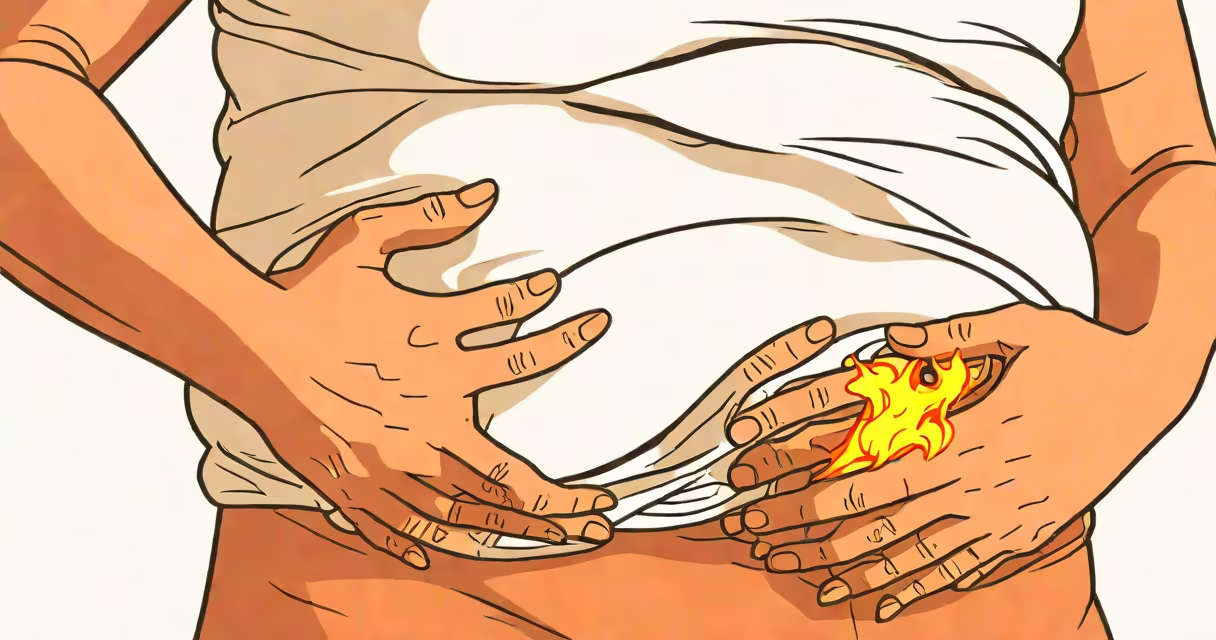
Stomach burning is a sharp, burning sensation in the upper abdomen caused by excess stomach acid irritating the lining of the esophagus or stomach. It often signals acid reflux, gastritis, or peptic ulcers, not just "indigestion." The sensation typically occurs after eating, lying down, or during stress.
This pain results from hydrochloric acid in the stomach coming into contact with tissues not designed to handle it. The lower esophageal sphincter (LES)-a valve between the stomach and esophagus-normally prevents acid from backing up. When it weakens or relaxes abnormally, acid flows upward, causing the burning feeling known as heartburn. According to the American College of Gastroenterology, about 60 million Americans experience heartburn at least once a month.
When the stomach lining becomes inflamed due to infection, NSAID use, or alcohol, the condition is called gastritis. This inflammation leads to a persistent burning or gnawing pain in the upper belly. Peptic ulcers-open sores in the stomach or duodenum-also cause burning, especially when the stomach is empty. These conditions aren't interchangeable. A single symptom can stem from multiple distinct medical issues.
The process begins when the stomach produces hydrochloric acid to break down food. Normally, the mucous lining protects the stomach wall. But when this barrier fails-due to infection, medications, or diet-the acid attacks the tissue, triggering nerve endings that send pain signals to the brain.
Acid reflux happens when the LES fails to close properly. This allows acid to rise into the esophagus, which lacks protective mucus. The result is a burning sensation behind the breastbone that may radiate to the throat. The Mayo Clinic notes that symptoms worsen after large meals, alcohol, caffeine, or bending over.
For example, someone who drinks coffee on an empty stomach may feel burning within 15 minutes. The acid stimulates gastric secretion, increasing pressure in the stomach. If the LES is relaxed-often due to high-fat meals or stress-acid surges into the esophagus. This is why many people report burning after dinner or late-night snacks.
Stomach burning isn't a single condition. It arises from several distinct processes, each with different triggers and treatments.
| Type | Key Cause | Common Triggers | Typical Timing |
|---|---|---|---|
| Heartburn (GERD) | Acid reflux due to LES dysfunction | Coffee, alcohol, spicy foods, lying down after eating | After meals, at night |
| Gastritis | Inflammation of stomach lining | NSAIDs (ibuprofen), alcohol, H. pylori infection | On empty stomach, morning or after medication |
| Peptic Ulcer | Open sore in stomach or duodenum | H. pylori, long-term NSAID use, smoking | Between meals, at night |
One non-obvious distinction: heartburn feels like heat rising behind the sternum. Gastritis burns deeper, often described as a dull ache under the ribs. Ulcers may burn when the stomach is empty and ease after eating-because food temporarily buffers acid.
A common mistake is treating all burning as heartburn. For instance, someone taking antacids daily for burning pain may actually have an H. pylori infection. Left untreated, this bacterium can lead to chronic gastritis and increase the risk of stomach cancer. The Centers for Disease Control and Prevention reports that H. pylori infects nearly half the global population, though most never develop symptoms.
Stomach burning is not the same as hunger pangs. Hunger pains are cramp-like, come and go, and improve with food. Burning pain is steady, localized, and often worsens with food or certain drinks.
It's also not always related to diet. While spicy food, citrus, and fried items can trigger reflux, they don't cause ulcers. Ulcers stem from bacterial infection or prolonged NSAID use. A 2021 study in Gastroenterology found that 80% of peptic ulcers were linked to H. pylori or NSAID use-not diet alone.
I once observed a patient whose burning persisted despite avoiding all spicy foods. He drank two energy drinks daily and took ibuprofen for joint pain. After testing, he had H. pylori and a duodenal ulcer. Removing NSAIDs and treating the infection resolved his symptoms. This case illustrates that even with a clean diet, internal factors drive burning.
Simple changes reduce burning. Avoid lying down within two hours of eating. Improve the head of your bed by 6 inches. Limit alcohol, caffeine, and carbonated drinks. Eat smaller, slower meals.
If burning persists beyond two weeks, consult a doctor. Endoscopy can detect ulcers or inflammation. Blood tests or breath tests confirm H. pylori. Treatment varies: proton pump inhibitors (PPIs) reduce acid, while antibiotics treat bacterial infections.
Understanding why your stomach burns is the first step to stopping it. It's not just a dietary issue-it's a sign of physiology gone awry. Addressing the root cause brings lasting relief.