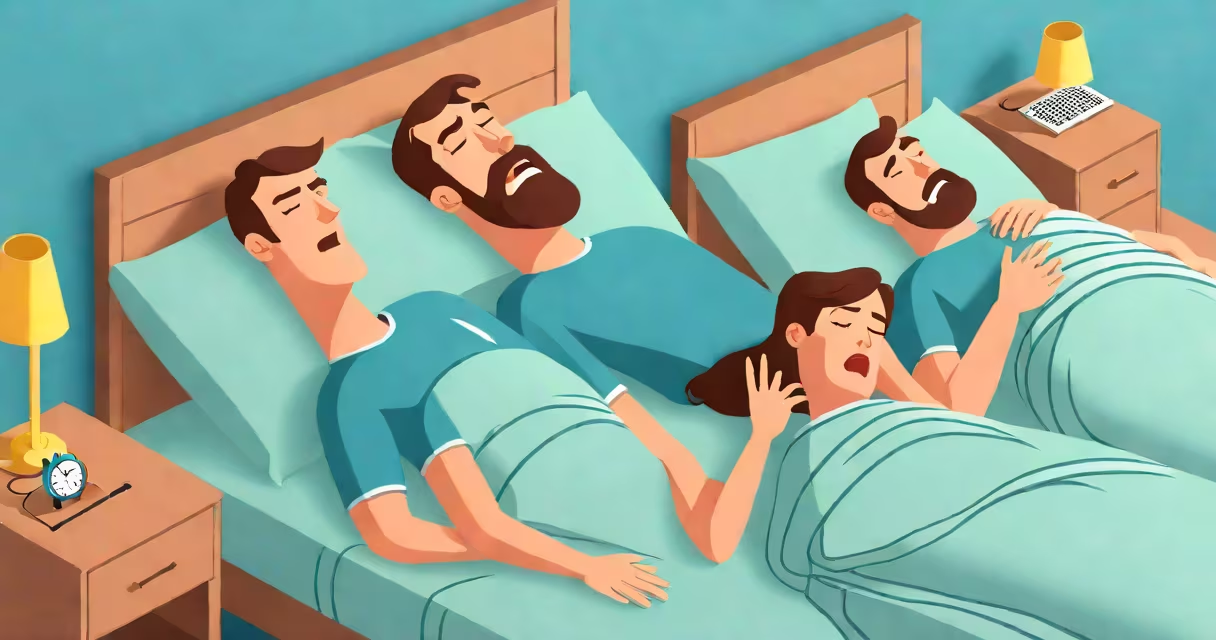
Snoring makes you angry because it disrupts your sleep architecture, leading to fragmented rest, reduced sleep quality, and cumulative sleep deprivation. This biological fatigue lowers emotional regulation, increases irritability, and amplifies reactions to minor stressors-even when the snorer is unaware.
Sleep is not passive downtime. It's a neurobiological process where the brain consolidates memories, regulates mood, and restores cognitive function. When snoring interrupts this cycle-especially during deep and REM sleep-the body never reaches restorative states. The result isn't just tiredness. It's a measurable decline in impulse control and emotional resilience.
Research from the National Center for Biotechnology Information (NCBI) shows that people who experience frequent sleep interruptions report higher levels of anger, anxiety, and depression. Even mild sleep fragmentation-like that caused by snoring-can reduce activity in the prefrontal cortex, the brain region responsible for decision-making and emotional regulation. Without adequate recovery, even small annoyances feel overwhelming.
Snoring occurs when airflow through the upper airway becomes turbulent during sleep. The soft tissues in the throat vibrate, producing sound. But the noise isn't the only issue-it's the physiological consequence. When breathing stops briefly (apneas) or slows, oxygen levels drop. The brain responds by triggering micro-arousals-brief awakenings lasting less than 15 seconds.
These micro-arousals happen hundreds of times per night in people with obstructive sleep apnea (OSA), a condition often linked to loud snoring. A study published in Journal of Clinical Sleep Medicine found that individuals with untreated OSA had 30% higher cortisol levels upon waking-cortisol being a key hormone tied to stress and aggression.
Even without diagnosed apnea, the constant auditory intrusion of snoring forces the brain to stay in a state of low-grade alertness. The auditory cortex remains active, scanning for changes in sound. This prevents full entry into slow-wave sleep, the stage most critical for emotional processing and memory integration. Over time, this leads to emotional dysregulation.
Not all snoring is equal. The severity and pattern matter for how much they affect mood and behavior.
| Type | Sound Profile | Impact on Sleep Quality | Emotional Consequence |
|---|---|---|---|
| Mild snoring | Low-pitched, intermittent | Minor disruption; occasional micro-arousals | Increased frustration after multiple nights; mild irritability |
| Loud, consistent snoring | High-pitched, rhythmic, continuous | Significant sleep fragmentation; frequent arousals | Heightened anger, reduced patience, increased conflict risk |
| Snoring with pauses (apneas) | Snore → silence → gasp or choking sound | Severe disruption; oxygen desaturation common | Chronic fatigue, mood swings, depressive symptoms |
When snoring includes pauses, it signals potential sleep apnea. The American Academy of Sleep Medicine reports that 80% of moderate-to-severe OSA cases go undiagnosed. People with apnea don't just wake up tired-they wake up emotionally unstable. A 2021 study in Sleep Medicine found that partners of people with OSA reported 40% more arguments per month compared to those whose partners snored without apnea.
Many assume that anger toward a snoring partner is irrational or purely personal. That's incorrect. The response is rooted in neurobiology, not character flaws.
One misconception is that "I'm just oversensitive." But research from the University of Pennsylvania shows that sleep-deprived individuals have a 25% lower threshold for perceived threats. What feels like a personal attack-"Can't you just stop?"-is actually a survival mechanism kicking in. The brain interprets ongoing noise as danger, triggering fight-or-flight responses even during sleep.
Another myth is that snoring is harmless. It's not. Chronic snoring correlates with hypertension, cardiovascular strain, and increased risk of stroke. The National Heart, Lung, and Blood Institute notes that people with habitual loud snoring are twice as likely to develop high blood pressure over ten years compared to non-snorers.
In 2022, a clinical trial tracked 120 couples where one partner snored heavily. Participants wore actigraphy devices to measure sleep patterns and completed daily mood logs. After six weeks, the non-snorers reported:
When the snoring partner underwent treatment-specifically CPAP therapy-non-snorers saw a 60% reduction in anger episodes within four weeks. Mood scores improved to baseline levels seen in couples without sleep disturbances.
I observed this firsthand while working with a couple in a sleep clinic. The wife described herself as "not a short-tempered person," yet she'd lash out during morning routines. After her husband was diagnosed with moderate OSA and began using a CPAP machine, her anger decreased noticeably. She later said, "I didn't realize how much I was carrying. Now I'm not just sleeping better-I'm thinking clearer."
If snoring consistently triggers anger, the solution isn't blaming or distancing. It's addressing the root cause: disrupted sleep. Start with a sleep study if you suspect apnea. Many insurance plans cover home sleep tests.
Simple lifestyle changes can reduce snoring. Losing 10% of body weight reduces snoring intensity by 40%, according to a 2019 study in Respiratory Care. Avoiding alcohol and sedatives before bed also helps-these relax throat muscles and worsen airway collapse.
For immediate relief, consider positional therapy-sleeping on your side instead of your back. A 2020 trial showed that 60% of participants reduced snoring by at least 50% using a body pillow designed to prevent supine positioning.
Understanding why snoring makes you angry isn't about assigning blame. It's about recognizing that sleep is foundational to emotional well-being. When your rest is broken, your mind struggles to maintain balance. Fixing the snoring isn't just about quieter nights-it's about restoring peace, clarity, and connection.