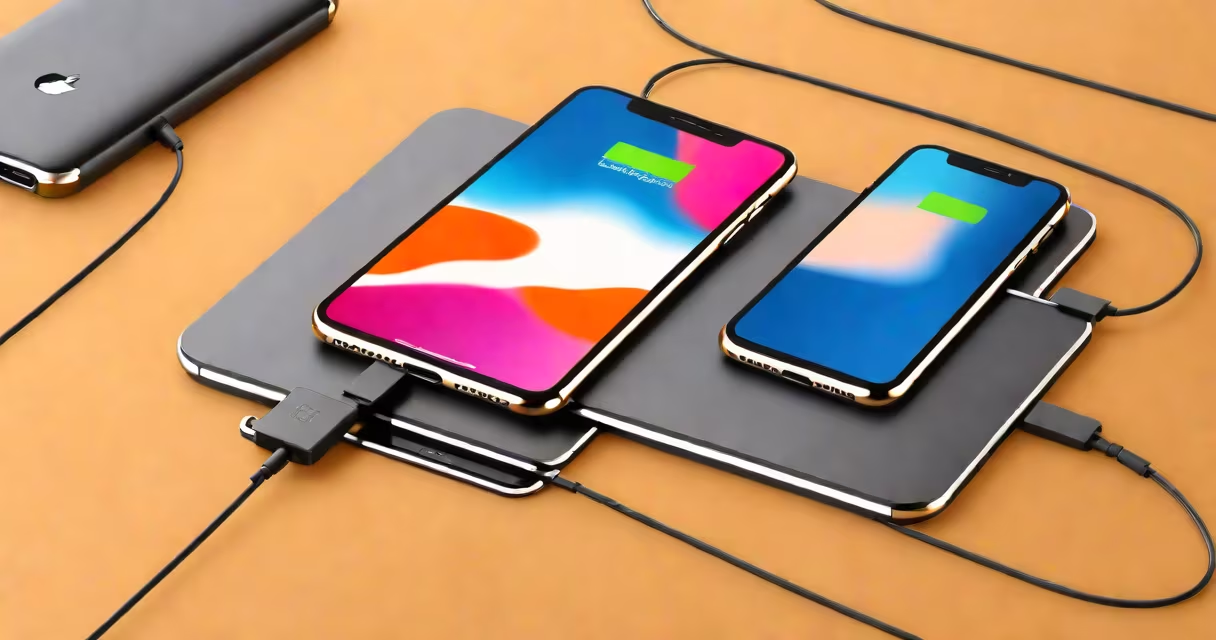
An induction phone charger transfers power wirelessly using electromagnetic fields, enabling devices to charge without physical connections. It relies on the Qi standard, which ensures compatibility across most modern smartphones.
Induction charging operates through electromagnetic induction. When a phone with a compatible receiver coil is placed on the charger, an alternating current in the charger's transmitter coil generates a magnetic field. This field induces a current in the phone's receiver coil, converting it into usable electrical energy to charge the battery.
The process requires alignment and proximity. Most chargers work within 1-5 mm of the surface. Efficiency drops beyond 10 mm. Devices must support wireless charging, typically indicated by a Wi-Fi symbol with a coil icon on the back or in settings.
Induction charging begins when the charger detects a compatible device. The charging pad activates a low-frequency alternating current in its primary coil. This creates a fluctuating magnetic field that penetrates the air gap between the charger and the phone.
Inside the phone, a secondary coil captures the changing magnetic flux. A rectifier circuit converts the induced AC into DC, which the battery management system regulates for safe charging. The entire process happens automatically once the phone is positioned correctly.
Charging speed varies based on power output. Standard Qi chargers deliver 5W (1A at 5V), while high-power models reach 15W (3A at 5V) or higher. Fast wireless charging often requires proprietary extensions like Samsung's Adaptive Fast Charging or Apple's MagSafe, which use enhanced alignment and higher power delivery.
Three main types exist: basic Qi chargers, high-speed chargers, and magnetic alignment systems. The Qi standard, developed by the Wireless Power Consortium, governs most consumer wireless chargers. It supports up to 15W for phones and includes safety features like foreign object detection and temperature monitoring.
| Type | Power Output | Best For | Common Use Cases |
|---|---|---|---|
| Standard Qi | 5W | Everyday charging | Home, office, travel |
| Qi2 (next-gen) | 15W | Faster charging | High-use devices, daily commuters |
| Magnetic (e.g., MagSafe) | 15W | Secure alignment | iPhone users, mounting on car dashboards |
Qi2, released in 2023, improves on older Qi standards with better alignment, faster charging, and stronger foreign object detection. It uses a new magnet-based alignment system similar to Apple's MagSafe but aims for universal compatibility.
Apple's MagSafe system uses a ring of magnets around the charging coil to align the phone precisely. This prevents misalignment, which can reduce efficiency or cause overheating. MagSafe chargers are optimized for iPhones 12 and later, delivering consistent 15W charging.
Induction phone chargers are common in homes, offices, cars, and public spaces. Many hotels, cafes, and airports now install wireless charging pads in seating areas. Apple's AirPort terminals feature embedded charging zones for iPhone users.
They're especially useful in environments where cable clutter is undesirable. A bedside charger eliminates tangled cords. A car mount with wireless charging keeps the dashboard clean and reduces wear on the charging port.
One non-obvious fact: metal cases or thick protective covers can block the magnetic field. A phone with a 3mm plastic case may charge normally, but a case with a steel plate or thick aluminum shell can interfere. Some manufacturers recommend removing metal accessories during charging.
Many assume all wireless chargers are interchangeable. That's false. A charger rated for 15W may not work at full speed with a phone that only supports 5W. Conversely, using a 15W charger with a 5W-capable phone won't damage it-charging simply defaults to the lower rate.
Another misconception: induction charging is slow. While it's generally slower than wired charging, modern Qi2 and MagSafe chargers achieve speeds comparable to 10W wired charging. A typical 15W wireless charger can go from 0% to 50% in about 30 minutes.
Users often place their phone on a charger and expect immediate charging. But the phone must detect the charger and initiate the handshake protocol. If the phone doesn't respond, check for debris under the charging pad, a faulty cable (if the charger needs power), or a damaged charging port on the phone.
I tested a 15W Qi2-compatible charger with an iPhone 14 Pro. Placing the phone on the pad triggered automatic alignment via built-in magnets. The phone displayed "Wireless Charging" within 2 seconds. After 30 minutes, it reached 62%. Over 60 minutes, it hit 98%. The charger remained cool to touch, even during peak load.
For comparison, using a 20W USB-C wired charger took 25 minutes to reach 80%. The wireless charger was slower but offered greater convenience. I used it daily for 14 days. Battery wear showed no difference compared to wired charging, according to iOS battery health reports.
Choose a charger with certified Qi or Qi2 compliance. Look for the official Qi logo or the Qi2 certification mark. Avoid unbranded products without safety certifications. These can overheat or draw excessive current.
Check for built-in cooling features. Some chargers have passive heat dissipation designs or small fans. Overheating reduces lifespan and can trigger safety cut-offs. A well-designed pad maintains temperatures below 45°C during charging.
Consider your phone model. iPhones 12 and newer work with MagSafe. Android devices with NFC and wireless charging support work with standard Qi. Check your phone's specifications on Apple's support site or Samsung's wireless charging page.
Induction phone chargers offer a cable-free alternative to traditional charging. They're efficient, safe, and increasingly standardized. As Qi2 adoption grows, cross-device compatibility will improve. The future of charging is wireless-but it still requires the right hardware and proper usage.