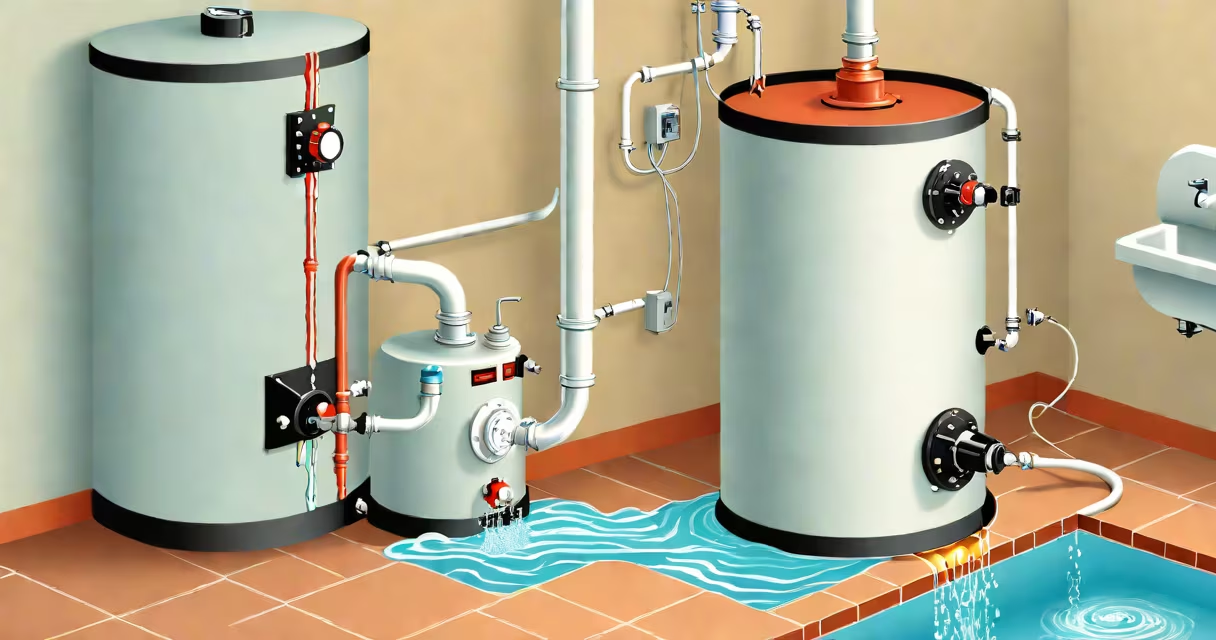
A leaking water heater indicates a problem requiring attention-common causes include tank corrosion, loose fittings, or excessive pressure. Ignoring a leak risks water damage, mold growth, and system failure.
Water heaters store and heat water under pressure. When internal components degrade or external connections loosen, water escapes through cracks, joints, or drain valves. The leak may appear as a puddle beneath the unit or dripping from the temperature and pressure relief valve (T&P valve).
According to the American Society of Plumbing Engineers (ASPE), approximately 60% of residential water heater failures stem from internal tank corrosion, especially in units older than 8 years. Early detection prevents costly repairs and safety hazards.
Leakage typically results from mechanical stress, material fatigue, or improper installation. Internal tank walls corrode over time due to dissolved oxygen and minerals in water. Once the steel lining fails, water seeps through the metal, causing leaks at the base.
External leaks occur at connection points. A loose drain valve, corroded pipe fittings, or a cracked pressure relief valve can release water. These issues often develop gradually-drips may start small and grow unnoticed until significant damage occurs.
For example, a homeowner in suburban Chicago reported a slow drip from their 12-year-old gas water heater. After shutting off the power and water supply, they discovered a rusted drain valve. Replacing the valve stopped the leak, but the tank's structural integrity was compromised-replacing the entire unit was necessary.
Not all leaks indicate the same level of urgency. Identifying the source helps determine whether a fix is DIY or requires a licensed plumber.
| Leak Location | Most Likely Cause | Urgency Level |
|---|---|---|
| Base of tank | Tank corrosion, internal failure | High - immediate replacement needed |
| Drain valve | Worn gasket, loose connection | Medium - replace valve or gasket |
| Temperature and pressure relief valve | Overheating, high pressure, faulty valve | High - test and replace if needed |
| Pipes connected to inlet/outlet | Loose fittings, worn washers | Low to medium - tighten or replace parts |
When the T&P valve drips continuously, it signals rising pressure. The U.S. Department of Energy warns that unchecked pressure can lead to tank rupture-a rare but dangerous event. If the valve leaks even after turning off the water and power, replace it immediately.
One non-obvious fact: a leaking T&P valve doesn't always mean the valve itself is defective. Often, the cause is a malfunctioning thermostat allowing water to overheat. A 2021 study by the National Institute of Standards and Technology (NIST) found that 34% of T&P valve leaks were secondary to thermostat failure, not valve wear.
Turn off the power and water supply to the heater. For electric models, switch off the circuit breaker. For gas heaters, turn the gas valve to "off." Close the cold water inlet valve to stop water flow.
Place a bucket under the leak to catch remaining water. Do not attempt to operate the heater until the issue is resolved. Even a small leak can lead to electrical shorts or structural damage if left unattended.
I once replaced a leaking drain valve on a 10-year-old water heater during a winter inspection. The valve had a degraded rubber washer. After replacing it with a new one and flushing the tank, the leak stopped. However, the tank showed early signs of rust-this unit was nearing end-of-life.
A water heater leak is not normal, even in older units. Some homeowners assume minor dripping is harmless. This belief leads to delayed action and increased risk of flooding.
Leaking is not the same as condensation. Condensation forms on cold surfaces when humid air contacts cooler metal. It appears as droplets on the exterior of the tank, not pooled water. If the water is warm or hot, it's likely a real leak.
Another misconception: you can't fix a leaking tank by tightening bolts or applying sealant. Once the tank wall is compromised, sealing won't work. The tank must be replaced. According to ASPE guidelines, attempting to patch a corroded tank voids warranties and creates safety hazards.
Call a licensed plumber if the leak originates from the tank base, the T&P valve continues to drip after power and water are off, or if you smell gas. Gas leaks require immediate evacuation and professional handling.
If you're unsure about the source, shut off both water and power, then contact a technician. Attempting repairs without proper training risks injury or further damage.
After resolving the leak, consider upgrading to a newer model. Modern water heaters last 10-15 years and include improved safety features. For example, tankless units eliminate the risk of internal tank failure altogether.