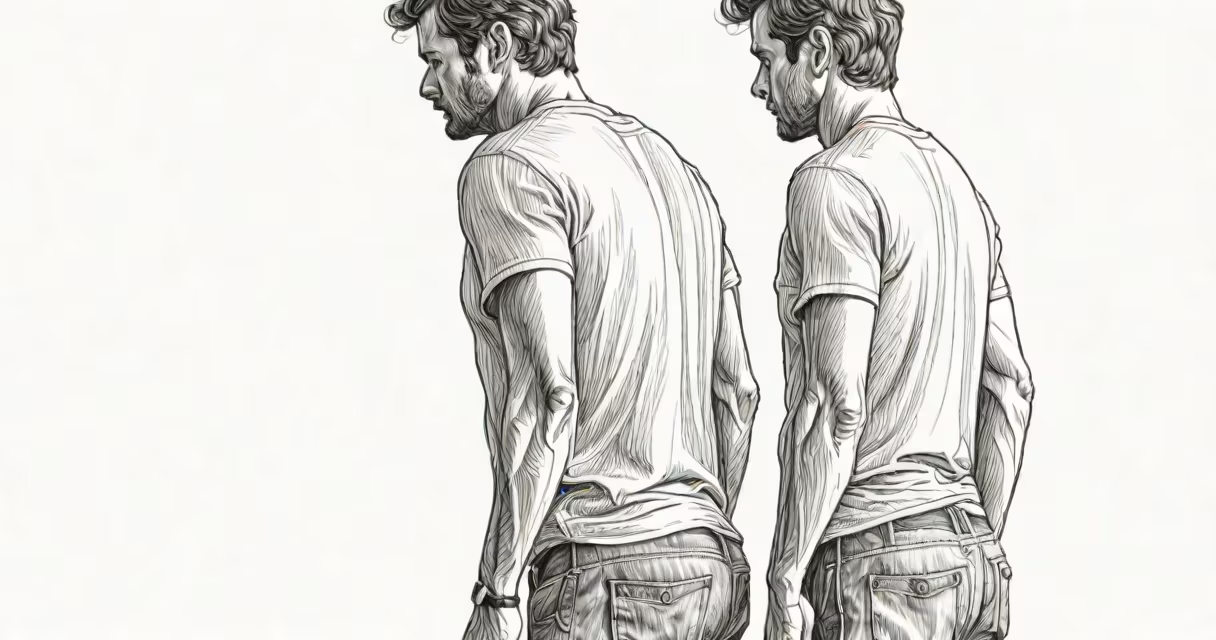
Your lower back curves inward due to natural spinal curvature called lumbar lordosis-a slight forward bend in the lower spine designed to absorb shock and maintain balance during upright movement. This curve is normal and necessary for efficient biomechanics.
Lumbar lordosis develops during childhood and stabilizes by adolescence. The curve is maintained by coordinated action between the spine's vertebrae, intervertebral discs, and supporting muscles including the erector spinae, multifidus, and core stabilizers. When properly aligned, this structure supports weight distribution and reduces stress on joints and ligaments.
Abnormal inward curving-often described as "excessive lordosis" or "swayback"-results from muscular imbalances, poor posture, or structural changes such as spondylolisthesis (where one vertebra slips forward over another). These shifts alter load patterns, increasing strain on posterior spinal structures and potentially triggering pain.
The lumbar spine consists of five vertebrae (L1-L5) stacked vertically, separated by fibrocartilaginous discs that act as shock absorbers. The natural inward curve begins around L1 and peaks at L4-L5. This shape allows the center of gravity to remain over the pelvis and feet during standing and walking.
When you stand upright, the spine forms a gentle S-shape: cervical lordosis (neck), thoracic kyphosis (upper back), lumbar lordosis (lower back), and sacral kyphosis (base of spine). This configuration minimizes energy expenditure and prevents excessive joint loading.
Excessive inward curvature can stem from several distinct conditions:
| Type | Common Cause | Typical Symptoms |
|---|---|---|
| Postural lordosis | Prolonged sitting, weak core muscles, tight hip flexors | Lower back pain, stiffness, visible swayback when viewed from side |
| Pathological lordosis | Spondylolisthesis, congenital anomalies, disc degeneration | Neurological symptoms (numbness, tingling), gait disturbances |
| Compensatory lordosis | Leg length discrepancy, pelvic tilt, scoliosis | Asymmetrical posture, uneven wear on hips and knees |
Postural lordosis is the most common form and often reversible through targeted exercise and ergonomic adjustments. For example, someone who sits for 8 hours daily with poor chair support may develop tight hip flexors and weakened glutes, pulling the pelvis into anterior tilt and exaggerating the lower back curve.
Many assume that a pronounced inward curve always indicates injury or poor health. That's incorrect. Normal lumbar lordosis varies widely among individuals based on height, gender, and body composition. A 2018 MRI analysis from the National Institutes of Health found that healthy adults without back pain had lordosis angles ranging from 35° to 70°.
Another misconception: people think "straightening" the lower back eliminates pain. In reality, removing the natural curve increases compressive forces on discs and joints. The spine evolved with curves-not straight lines-for stability under changing loads.
Some confuse lumbar lordosis with scoliosis. While both involve spinal deviation, scoliosis features lateral (side-to-side) bending and rotation, whereas lordosis is purely sagittal (front-to-back) curvature. A physical exam or imaging test is needed to distinguish them.
Consider a 38-year-old office worker who reports persistent lower back pain after 6 months of remote work. She uses a reclining chair, places her monitor too low, and spends 10 hours daily seated. Her posture shows excessive anterior pelvic tilt and hyperlordosis.
Imaging reveals a 72° lumbar lordosis angle-above the typical 40°-60° range. Physical therapy diagnosed tight hip flexors (psoas major), weak gluteus medius, and reduced core endurance. After 8 weeks of corrective exercises-including dead bugs, bird-dogs, and foam rolling-her lordosis decreased to 52°, and pain resolved.
This case illustrates that while the curve itself isn't the problem, its exaggeration due to lifestyle habits leads to dysfunction. Corrective training restored balance without altering the spine's natural design.
See a healthcare provider if you notice sudden changes in posture, radiating pain into legs, or loss of bladder/bowel control. These may indicate nerve compression or structural pathology.
Self-assessment tools exist-such as the Thomas test for hip flexor tightness-but they don't replace clinical evaluation. If pain persists beyond two weeks despite rest and stretching, consult a specialist.
Understanding why your lower back curves in begins with recognizing that the curve is functional, not flawed. Abnormalities arise not from the curve itself, but from imbalances that disrupt its intended role. Addressing root causes-posture, muscle strength, activity patterns-leads to lasting relief.