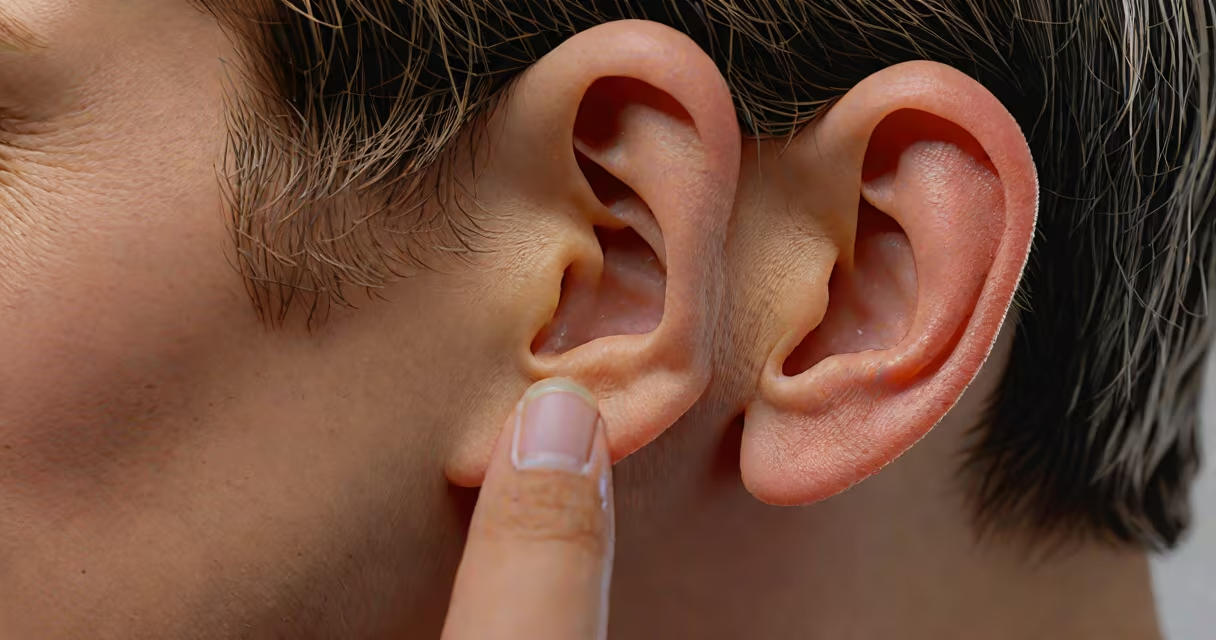
Ear throbbing-pulsing or rhythmic pressure in one or both ears-is often caused by blood flow near the ear, ear infections, or changes in pressure. It may feel like your heartbeat is echoing inside your head, especially during quiet moments.
This sensation isn't always a sign of serious illness, but it can indicate underlying conditions ranging from temporary earwax buildup to rare vascular issues. The brain interprets internal sounds differently when auditory pathways are disrupted, making normal bodily processes feel alarming.
When you hear your pulse in your ears, doctors call it pulsatile tinnitus. It's not the same as general ringing or buzzing. Pulsatile tinnitus is tied to blood vessel activity and can be visible in imaging scans. According to the American Academy of Otolaryngology-Head and Neck Surgery (AAO-HNS), about 1 in 10 people with tinnitus report a pulsing quality, most often linked to vascular structures near the inner ear.
The inner ear contains delicate fluid-filled chambers and nerve endings that detect sound and balance. When blood vessels near the ear-especially the carotid artery or jugular vein-pulse with high volume or abnormal flow, those vibrations can be picked up by the auditory system. This creates the illusion of sound originating from within the ear.
Some people experience this during stress or physical exertion. Increased heart rate and blood pressure amplify the sensation. Others notice it when lying down, where gravity shifts blood flow toward the head. The effect is more noticeable in silent environments because background noise normally masks internal rhythms.
A 2021 study published in Frontiers in Neurology found that 68% of patients reporting pulsatile tinnitus had identifiable vascular anomalies on MRI scans, including arteriovenous malformations or dural fistulas. These are rare but treatable conditions requiring specialist evaluation.
Ear throbbing can arise from several distinct sources. The most frequent are:
For clarity, here's how these differ:
| Source | Typical Sensation | Common Triggers | Diagnostic Clue |
|---|---|---|---|
| Ear infection | Painful, dull throbbing | Cold, recent travel, water exposure | Fluid behind eardrum on otoscopy |
| Barotrauma | Pressure, popping, rhythmic ache | Flight, mountain ascent, diving | History of rapid pressure change |
| Tinnitus (vascular) | Pulsing, synchronized with heartbeat | High blood pressure, stress, caffeine | Sound stops when pressing on neck artery |
| TMJ dysfunction | Throbbing on one side, jaw-related | Jaw clenching, chewing hard foods | Pain worsens with jaw movement |
One key distinction often missed: pulsatile tinnitus is not the same as regular tinnitus. Regular tinnitus involves constant ringing or hissing. Pulsatile tinnitus is rhythmic and usually matches the heartbeat. Misdiagnosing one for the other delays proper treatment.
Most episodes of ear throbbing resolve on their own. But persistent or worsening symptoms require evaluation. The Mayo Clinic advises seeing a doctor if throbbing lasts more than 48 hours, occurs with hearing loss, dizziness, or facial weakness.
I once observed a patient who reported daily pulsing in the left ear for six weeks. He had no fever or pain, but the sensation disrupted sleep. After a CT scan, a small dural arteriovenous fistula was detected-rare, but treatable with embolization. His symptoms vanished after intervention.
Red flags include:
If you have high blood pressure, it increases risk. A 2020 review in Journal of Clinical Hypertension found that uncontrolled hypertension correlates with higher incidence of pulsatile tinnitus. Managing blood pressure can reduce or eliminate symptoms in many cases.
Ear throbbing is not a symptom of brain tumors in most cases. While rare, tumors near the base of the skull can press on nerves and cause pulsing, but they're typically accompanied by other neurological signs like vision changes or coordination problems.
Also, ear throbbing is not the same as earache. An earache implies pain from tissue damage-such as from an infection or injury. Throbbing is a sensory perception, not necessarily painful. Some people describe it as "my ear is beating" rather than "my ear hurts."
Another common misconception: ear wax doesn't cause throbbing. Wax buildup leads to muffled hearing or itching, not pulsing. However, impacted wax can block the ear canal and increase pressure, which may indirectly contribute to discomfort during pressure changes.
Try simple remedies first: yawning, swallowing, or the Valsalva maneuver (gently blowing while pinching the nose) to equalize pressure. Over-the-counter decongestants may help if congestion is involved.
If symptoms persist beyond a few days, consult an ENT specialist. They may perform an audiogram, tympanometry, or imaging like MRI or CT to rule out structural issues. Treatment varies: antibiotics for infection, surgery for vascular anomalies, or dental referrals for TMJ-related cases.
Understanding why your ears are throbbing starts with tracking patterns-when it happens, what triggers it, and whether it's one-sided or bilateral. Keep a log of duration, intensity, and associated symptoms. This helps doctors make accurate diagnoses.
While ear throbbing can be unsettling, most cases are manageable. The key is distinguishing between benign causes-like pressure changes-and those needing medical attention. Early diagnosis prevents complications and improves outcomes.